

After a bumpy 10 minute tuktuk ride into the city centre, we arrived at Villa Pumalin, the guesthouse where we had booked in for six nights. We always try and give the kids a settled period after a few days of back to back travel, and we were so glad we had chosen to do this in Luang Prabang. Over the following week, this charming little city would nourish our bodies with fresh, tasty food, delight our senses with its architecture, temples and stunning natural beauty, and steal our hearts with its vibrant, soulful character and laid-back, friendly people.
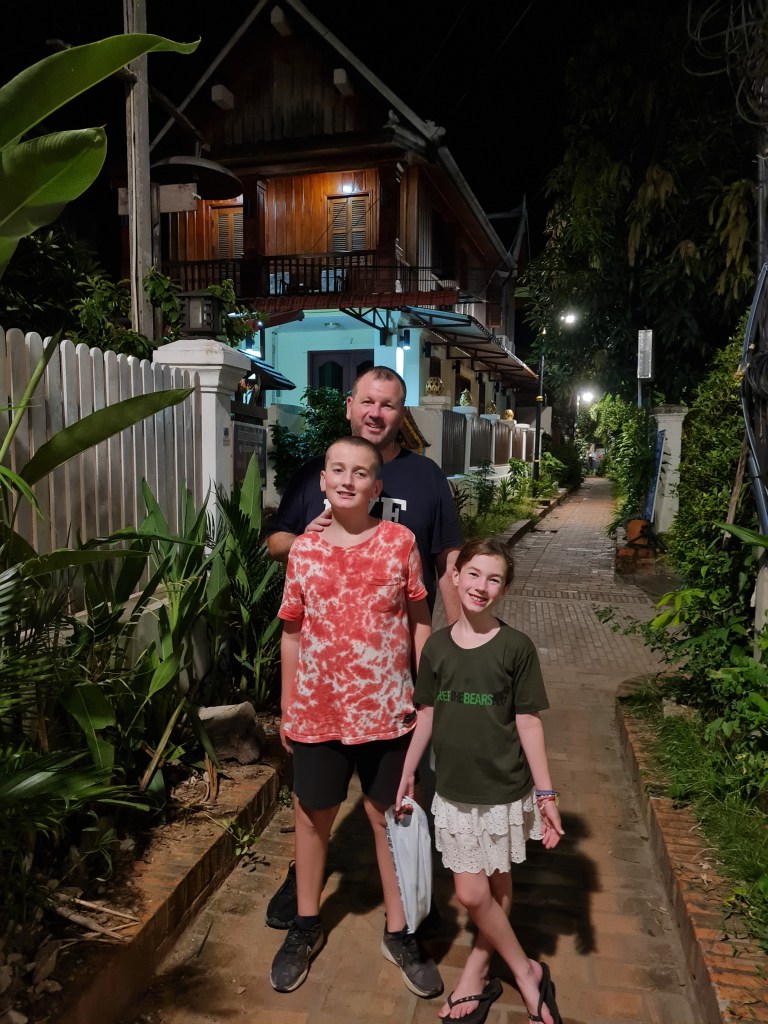
The Night Market
By the time we had dropped our bags off, we were all pretty hungry and ready for dinner, so we headed out to the night market. The kids went straight for fried dumplings and spring rolls for the first course, both of which were delicious. We followed this up with several different meat skewers cooked on a charcoal grill. Of these, only the chicken was tender and juicy…the rest were all a bit tough or too fatty to really enjoy. Why is it that pork always looks so good cooked on a grill, yet seldom matches these looks in taste?
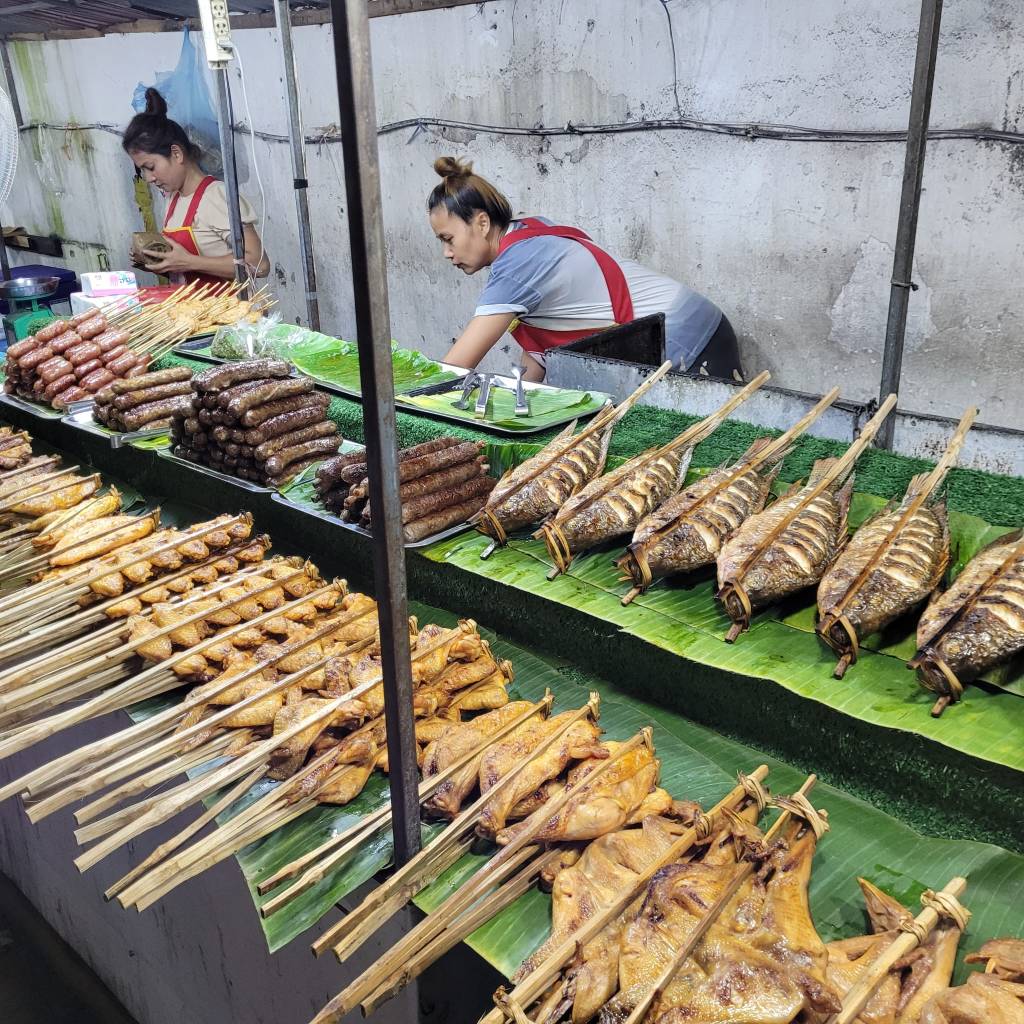
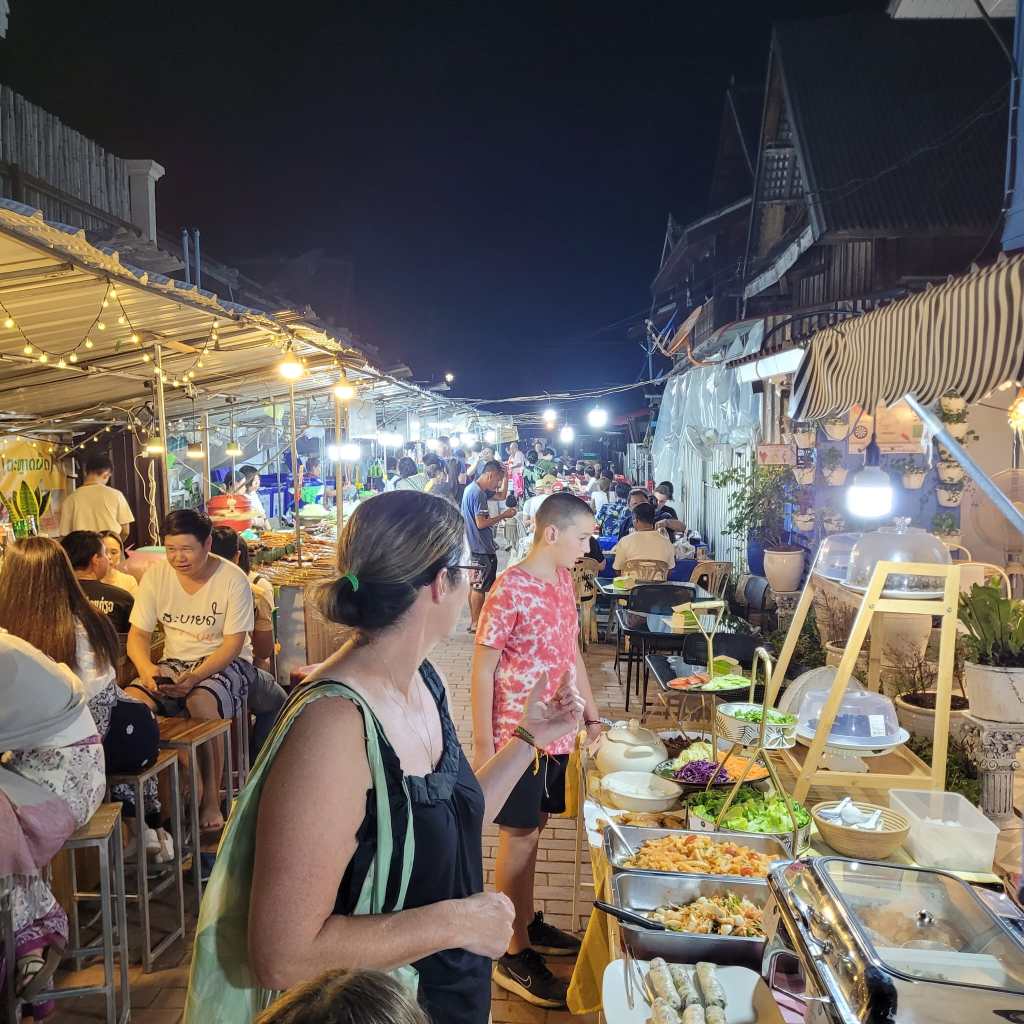
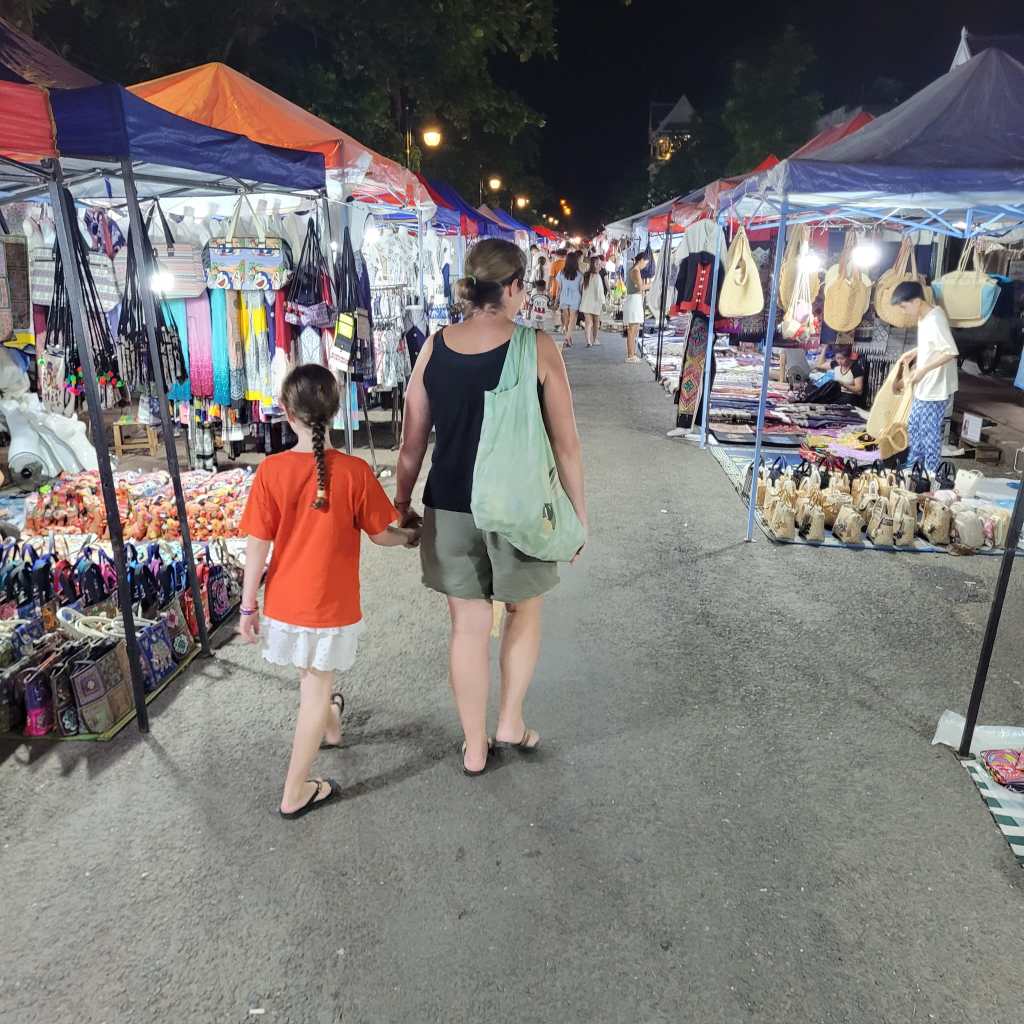
Anna and I ordered fruit shakes to go with a few more dumplings and spring rolls to fill us up, and after a wee stroll through the rest of the market, we headed home for bed.
UXO Museum
After an excellent night’s sleep in comfy beds, we had a relaxing morning, enjoying the cooked breakfast included with our room and having some downtime.
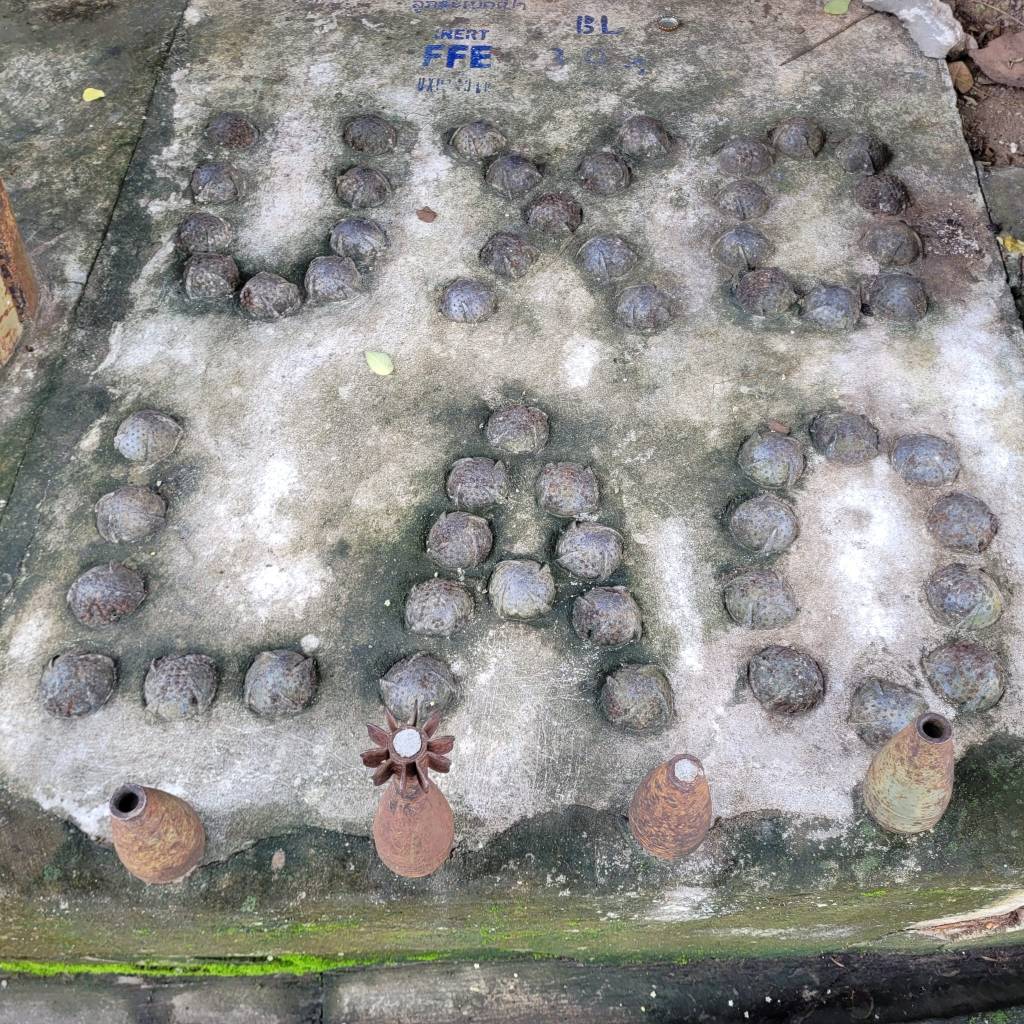
We then headed out to the UXO museum, which we decided to take the kids to after Leo had learnt that Laos has the unfortunate title of being the most bombed country ever. In numbers, this equates to being bombed every 8 minutes, 24 hours a day, for 9 years by the United States in an undeclared, secret war, leaving a legacy of vast amounts of unexploded ordinance, known as UXO.
From our reading up on this, we learned this was an attempt by the CIA to assist the Royal Lao Government to suppress the Pathet Lao and prevent the spread of Communism in Southeast Asia. The aim was to disable the Ho Chi Min route through the Southeast of Laos, as many Communist training camps were established along the border with Vietnam and it was thought that this was a major route for getting munitions and supplies to the Viet Cong. At the time, Laos was allegedly a neutral country. This ‘secret war’ is also known as the Laos Civil War, because the CIA recruited and trained the Hmong minority in the northern mountains of Laos to fight against the Pathet Lao. Of the 350,000 people who died, 50,000 were innocent civilians.
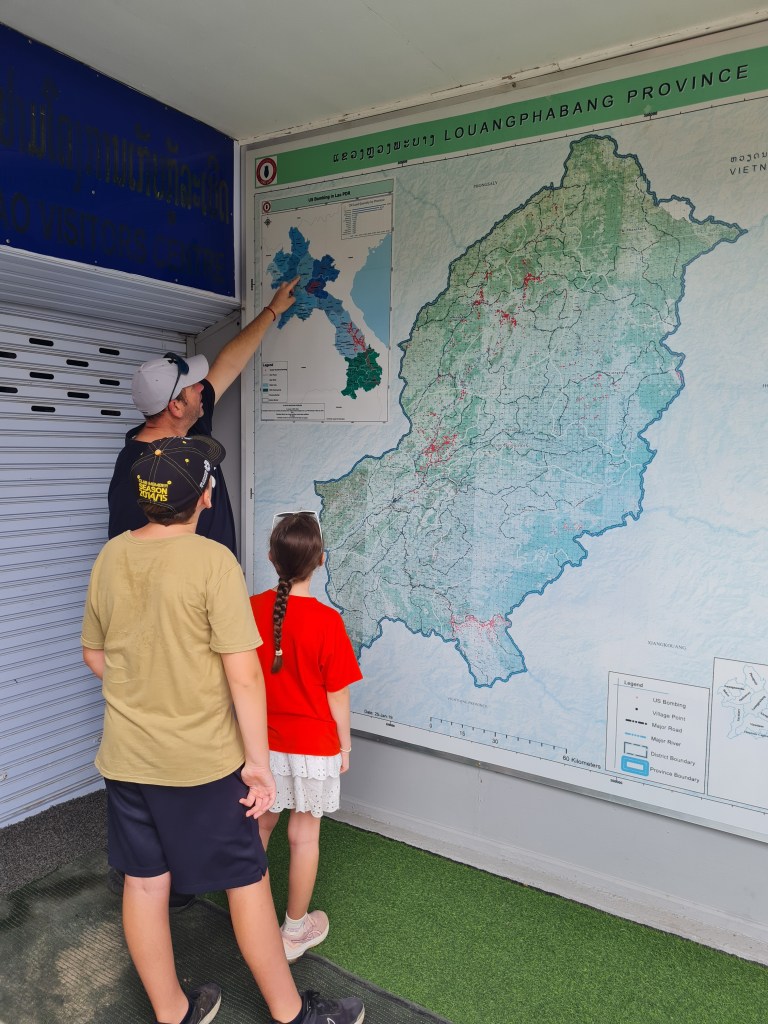
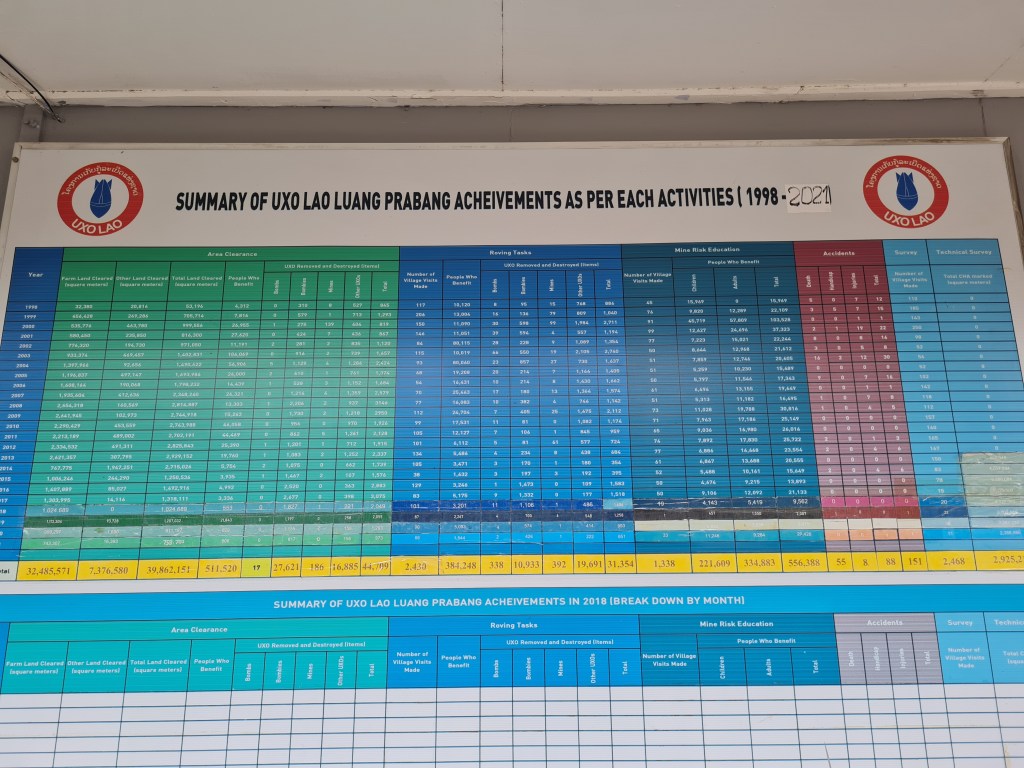
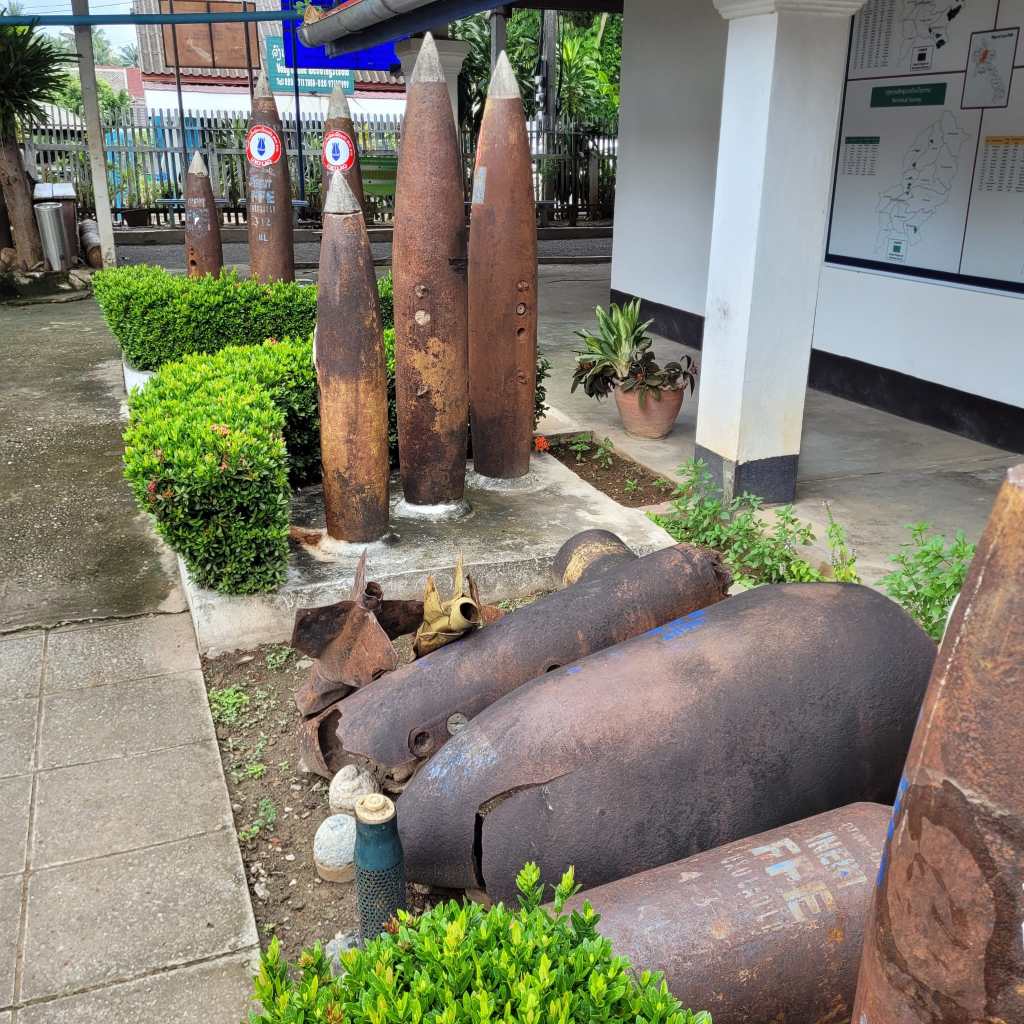
While called a ‘museum’, it is more of a display outside the working headquarters of UXO Lao.
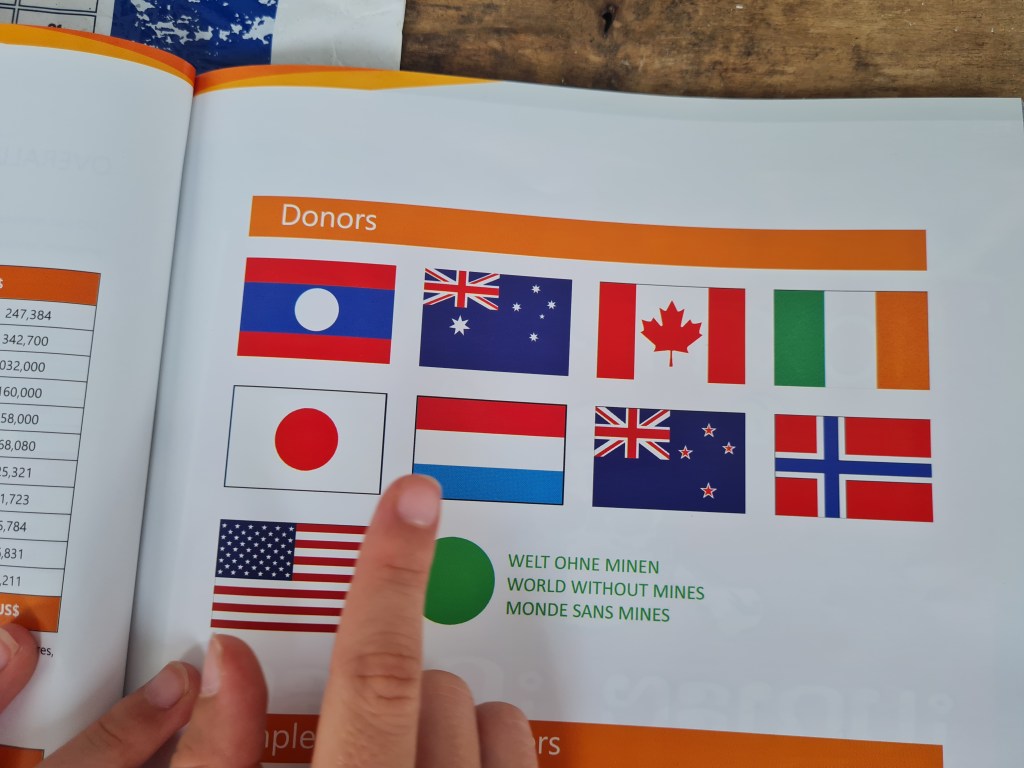
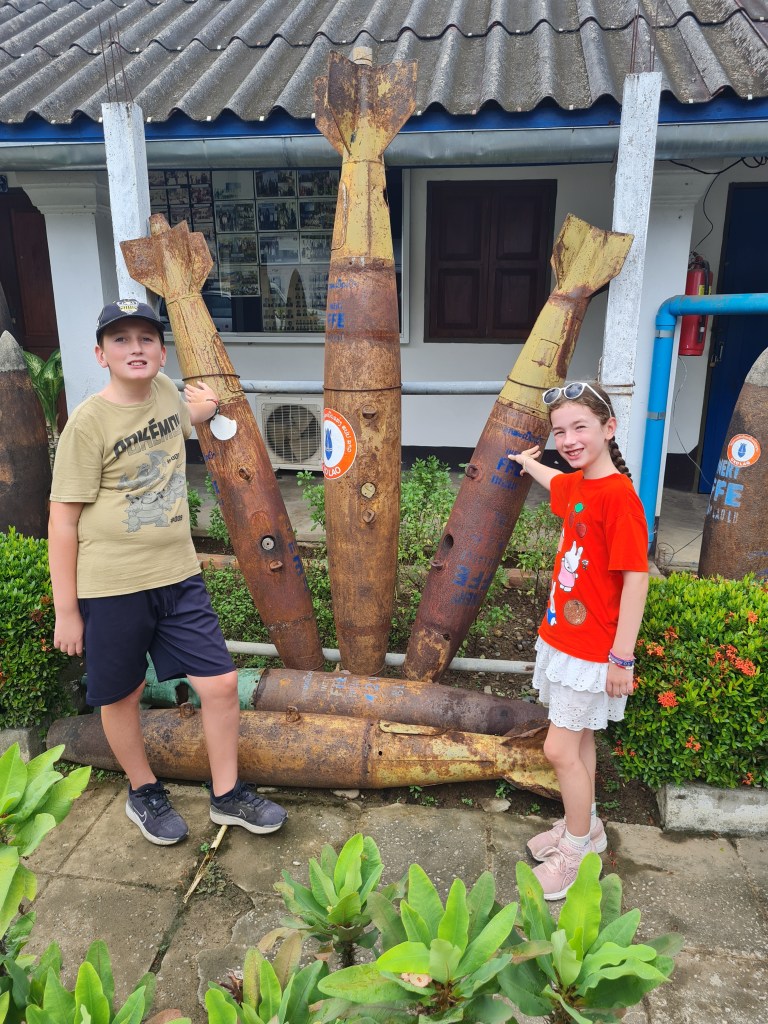
Leo and Anna were simultaneously fascinated and shocked by the range and size of UXOs on display. We learnt that more than 25,000 people have been killed or injured by unexploded ordinance since the bombing stopped in 1973, and that while there have been fewer casualties in recent years, more than 50 people are still injured or killed each year by UXO, of which 40% are children.
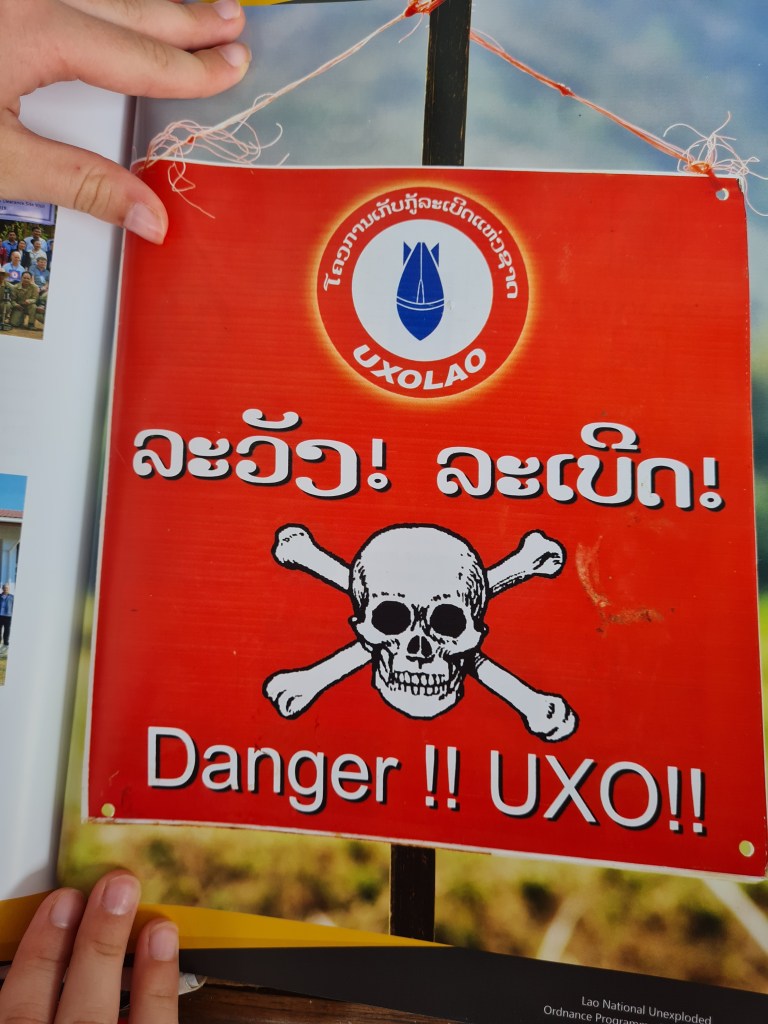
The small cluster bombs resemble balls or toys (see UXO picture above, where they are embedded in cement), and many a child has unearthed one thinking they have found a new plaything. One of the things that surprised me the most was the disparity between the amount of money that the United States put towards bombing Laos and the amount of money they put towards repairing the damage.
“Between 1993 and 2016, the U.S. contributed on average $4.9M per year for UXO clearance in Laos; the U.S. spent $16M per day (in 2023 dollars) for nine years bombing Laos.”
https://www.legaciesofwar.org/legacies-library
You can read more about it here if you are interested.
https://www.legaciesofwar.org/legacies-library
A Sweet Little Lunch Place
After our sobering visit, we walked through town to a little place I had found online called Break For A Bread. From my research it ticked a lot of boxes to keep the family happy: cold soda drinks, filled baguettes, bun cha, satay and pork skewers and homemade chicken nuggets, all for exceptionally reasonable local prices, rather than tourist prices.
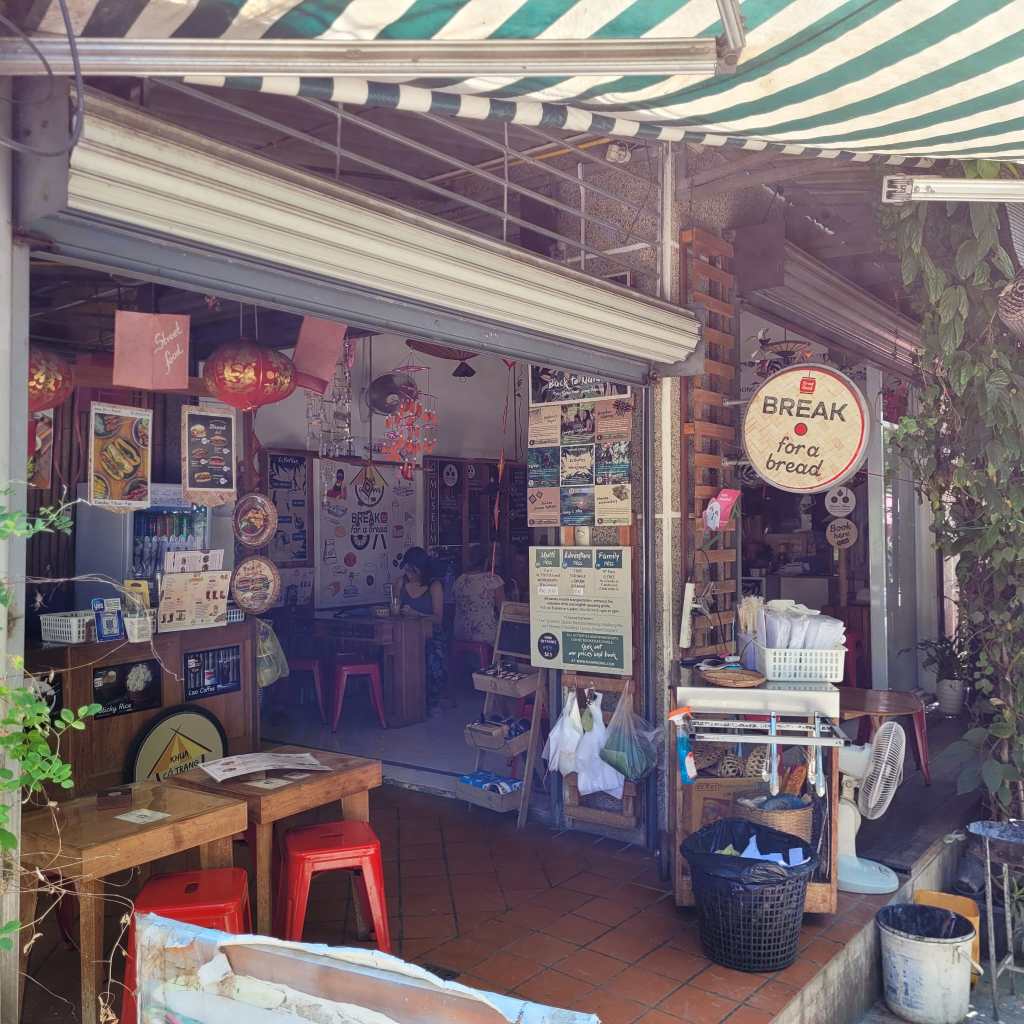
We arrived to find this cute little gem of a place on the corner of a street opposite a school, surrounded by lush green plants climbing over the canopy. There were a few tables dotted around the cafe, with welcome ceiling fans on full blast.

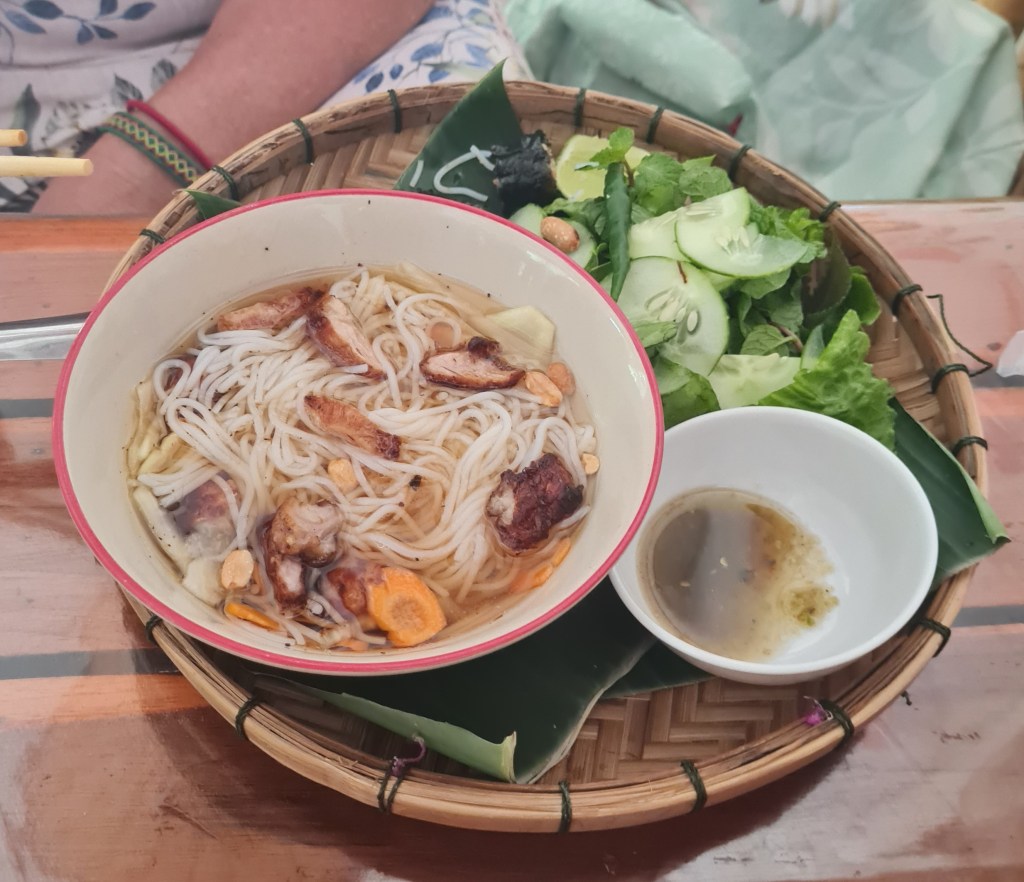

The food here was exceptional! The bun cha was full of fresh herbs, the baguettes were fresh and crisp, and the meat was all cooked to tender perfection. It was our first taste of betel leaf wrapped pork. Despite eating here three times, we failed to get photos that do the food justice because we started eating as soon as it was put in front of us!
A UNESCO World Heritage Site
On our wandering back towards our guesthouse, we decided to go the long way round and enjoy the character buildings and charm of the city centre.


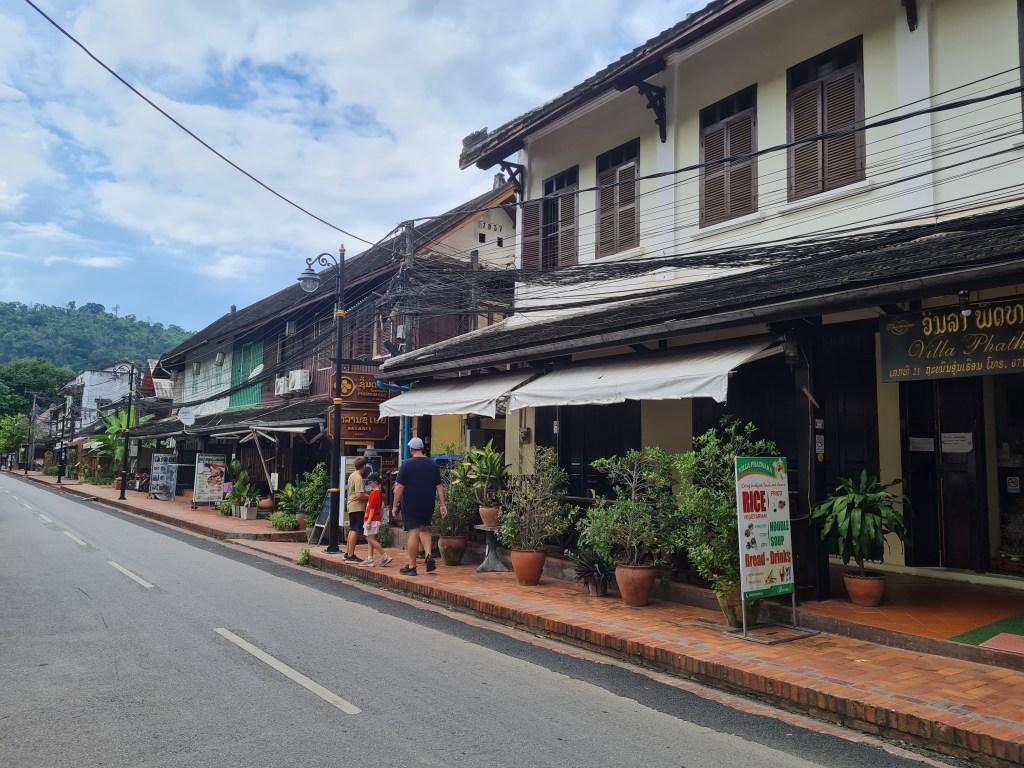
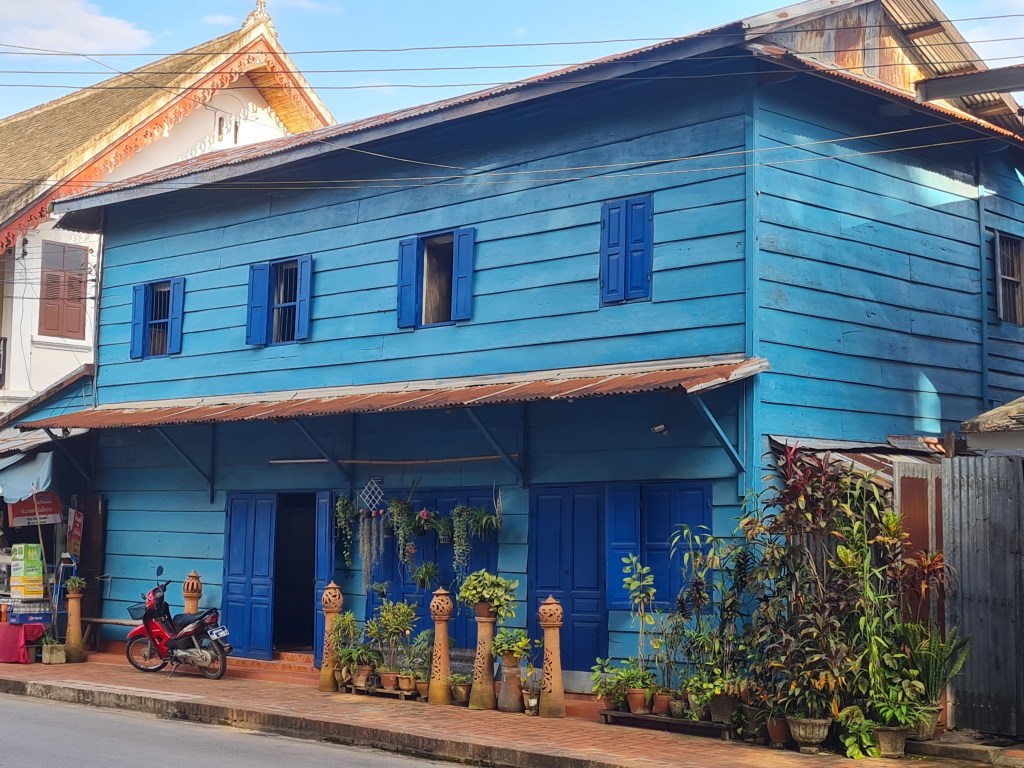
Being a UNESCO World Heritage Site, Luang Prabang is treasured for its unique fusion of French and Laotian architecture, Buddhist temples, as well as its historical and cultural significance, having been the capital of the Lan Xang Kingdom between the 14th-16th centuries, the seat of power for the French Protectorate of Laos from the late 19th to mid 20th Century and home to the King of Laos until the monarchy was abolished in 1975 when Laos became a communist state.

Time for a Haircut
We stumbled across a barber’s shack on the riverbank during our walk, where we stopped since Leo and Shaun both needed haircuts.
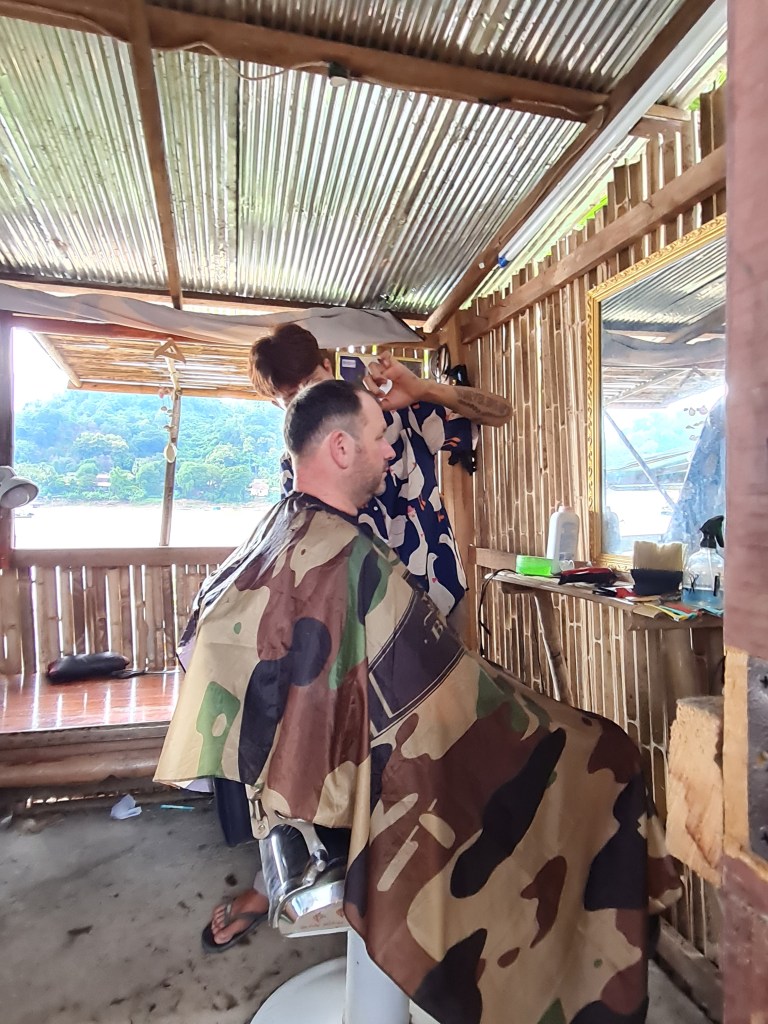
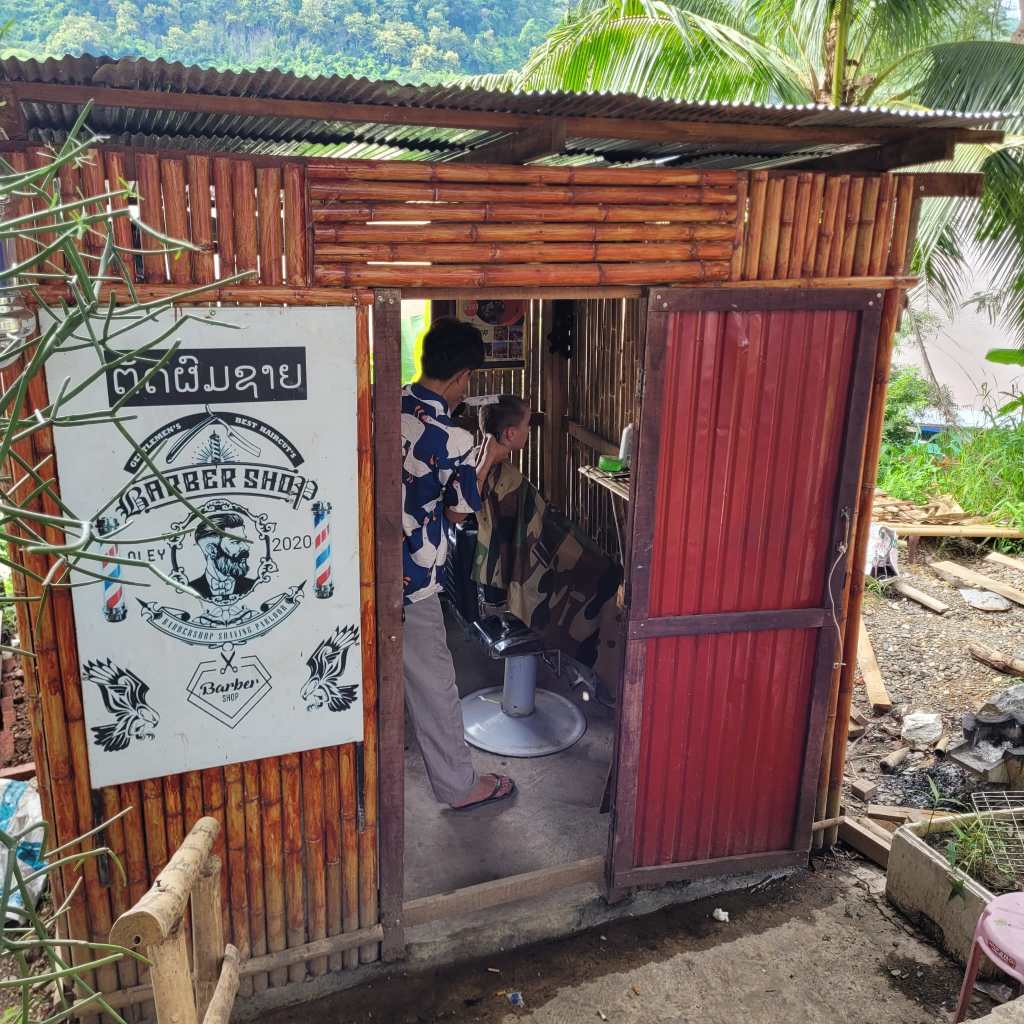

The barber did a great job, and while Anna and I were waiting, we sat at the bar next door and enjoyed a cold drink.
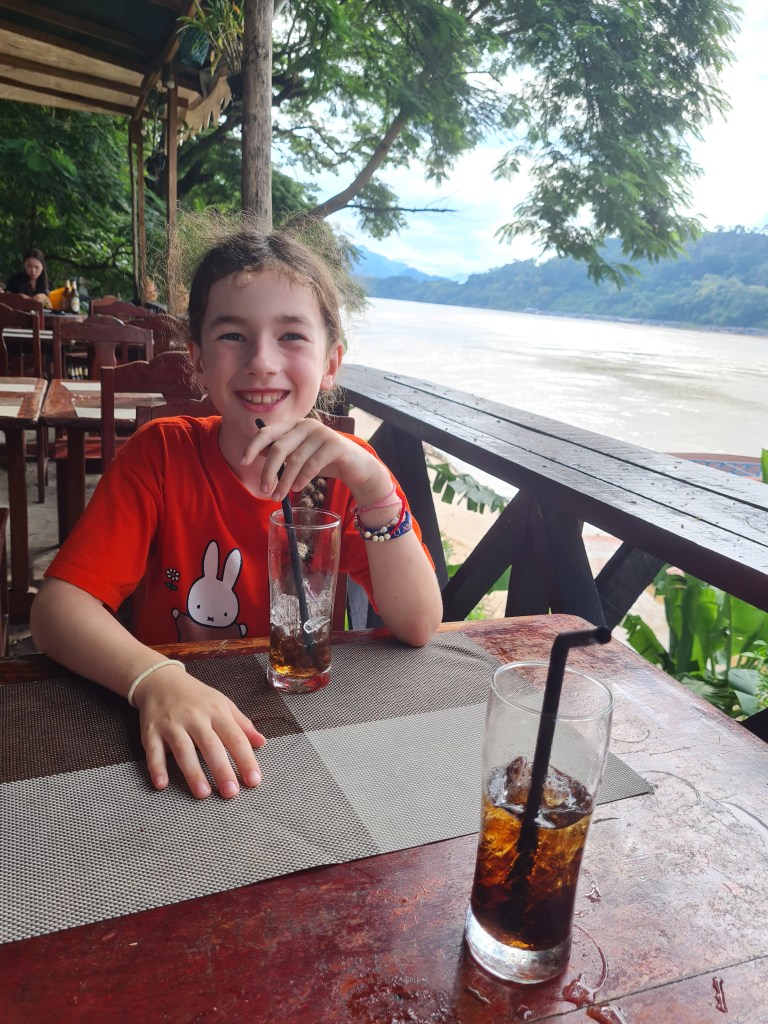
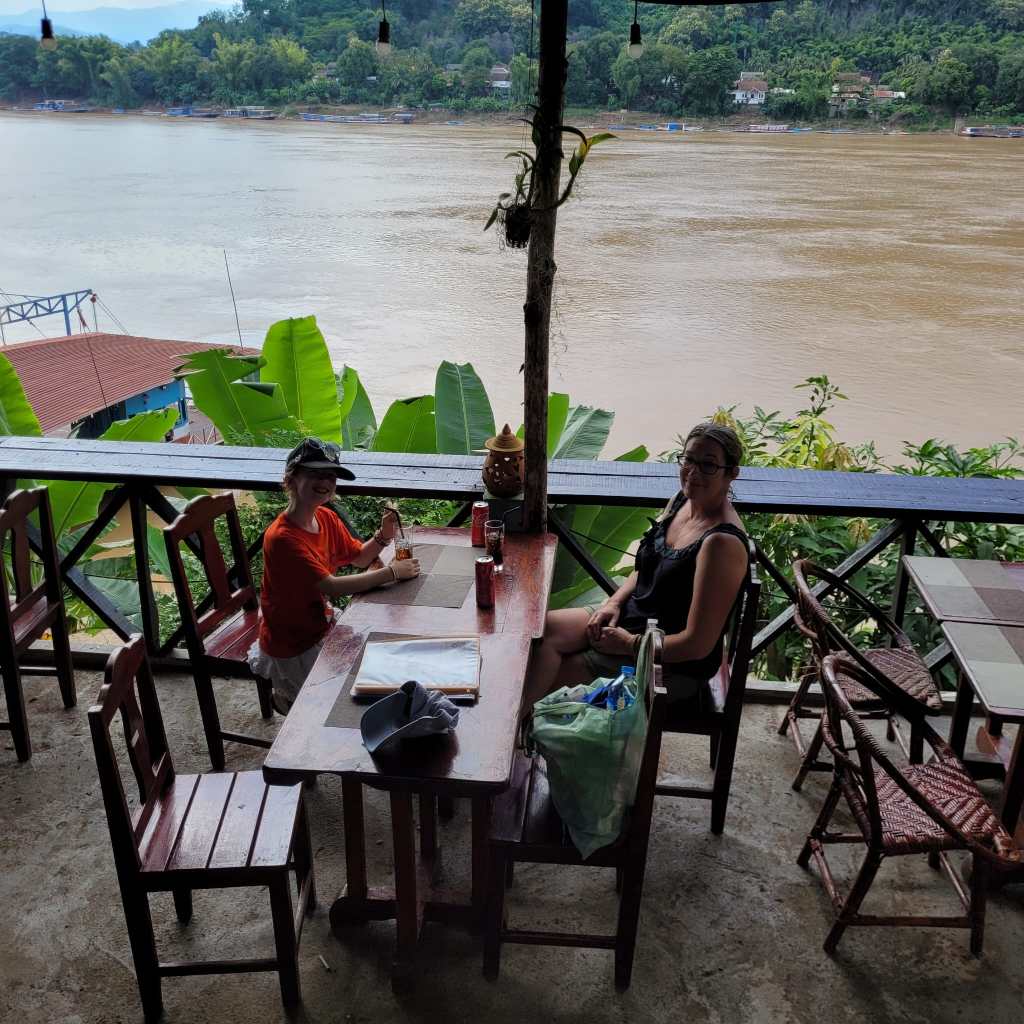
It was interesting watching the comings and goings, because the restaurant people were friends with the barber and his family, and everyone was sat around a big table enjoying a chat with a few glasses of Beer Laos, while other friends came and went. It was very social. We’ve noticed that people bring their young children and babies to work here, and spouses or grandparents are also there to help out. The pace of life here seems very laid back and relaxed…we’re not sure if that’s a low season thing or whether that’s just the Laotian way.

After a late afternoon rest in our air-conditioned room to escape the 34-degree heat, we revisited the market for a light dinner of noodle soup, as we had eaten our lunch quite late in the day.
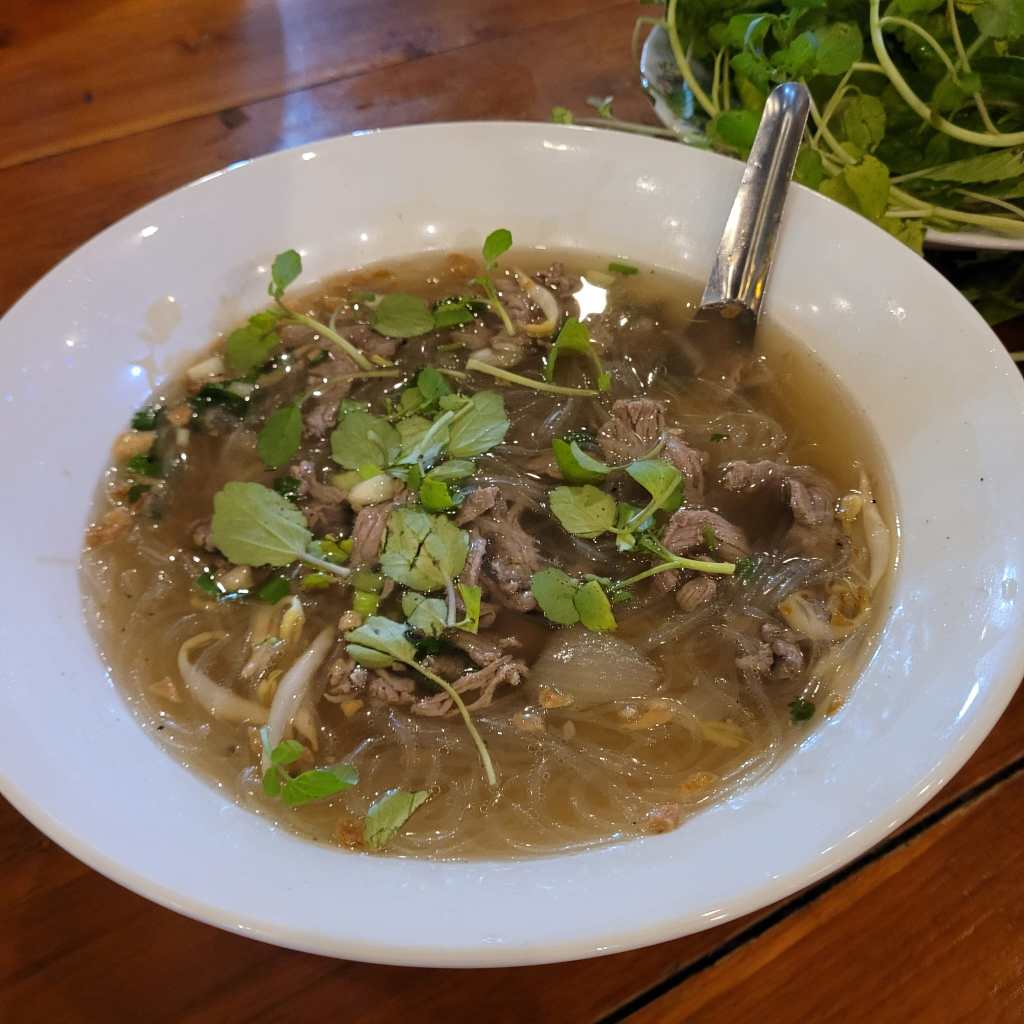
We find that maintaining an eating routine is a constant challenge during our travels. Most of our accommodation provides breakfast and we often don’t eat until 9am, since later nights for the kids mean they sleep longer in the mornings. The knock-on effect is that we’re not hungry for lunch until 2 or 3pm, which then means we don’t feel like much for dinner either. I think the heat adds to this, because we’re always drinking so much water that we’re not as hungry. Our way around this is for Shaun and I to only have a very light snack in the afternoon, when we feed the kids, who never overeat in the same way we do. This means that we can then eat dinner around 7.30pm. It’s been quite interesting not having a routine to anchor our diet, and instead relying on actually feeling hungry, something Shaun and I both hope to continue when we return home.
Exploring the Local Area
The next day, we had booked a driver with a minivan to take us out to Kuang Si Falls and the Laos Buffalo Dairy. The waterfall is about 40 minutes drive southwest of the city, travelling on roads which are full of potholes. The scenery along the way is stunning, as we passed little baans (villages), bright green rice fields, and lush, dense jungle-clad hills.

Upon arrival, we paid our 30,000kip entry fee (once again, the baby was free!) and hopped into an awaiting electric golf buggy to take us up the hill to the start of the waterfall trail.

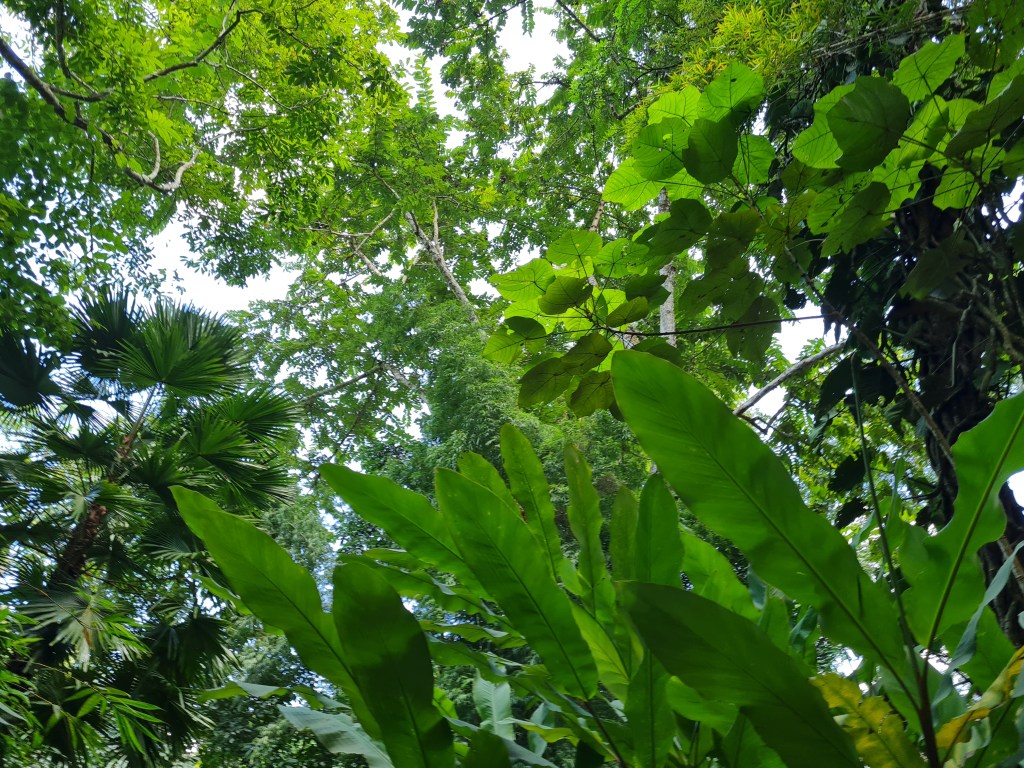
On our way, we passed the adjacent Butterfly Park, but alas, it was closed on Thursdays. After a few minutes’ drive, we’d reached the top, where we passed lots of local food stalls and showed our tickets for entry to the waterfall trail. It was a welcome relief to enter the cool rainforest, which provided respite from the heat of the sun. Walking around in this part of Laos for any length of time almost always resulted in a sweatbath, no matter how light the layers of clothing…it was so HOT!
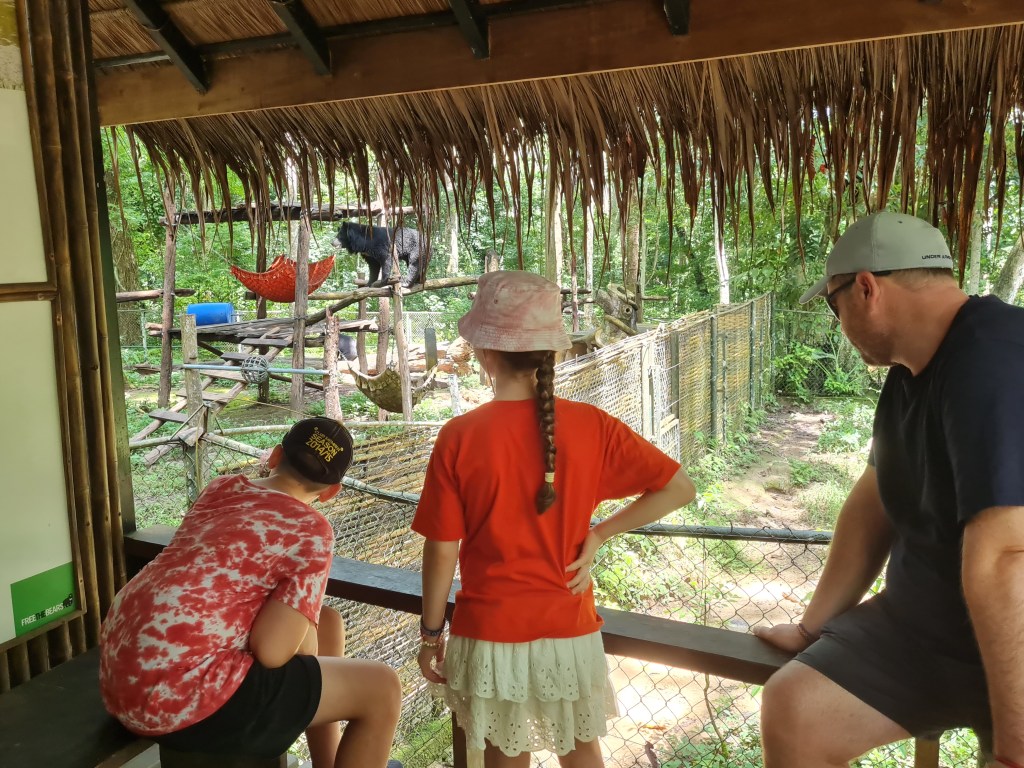
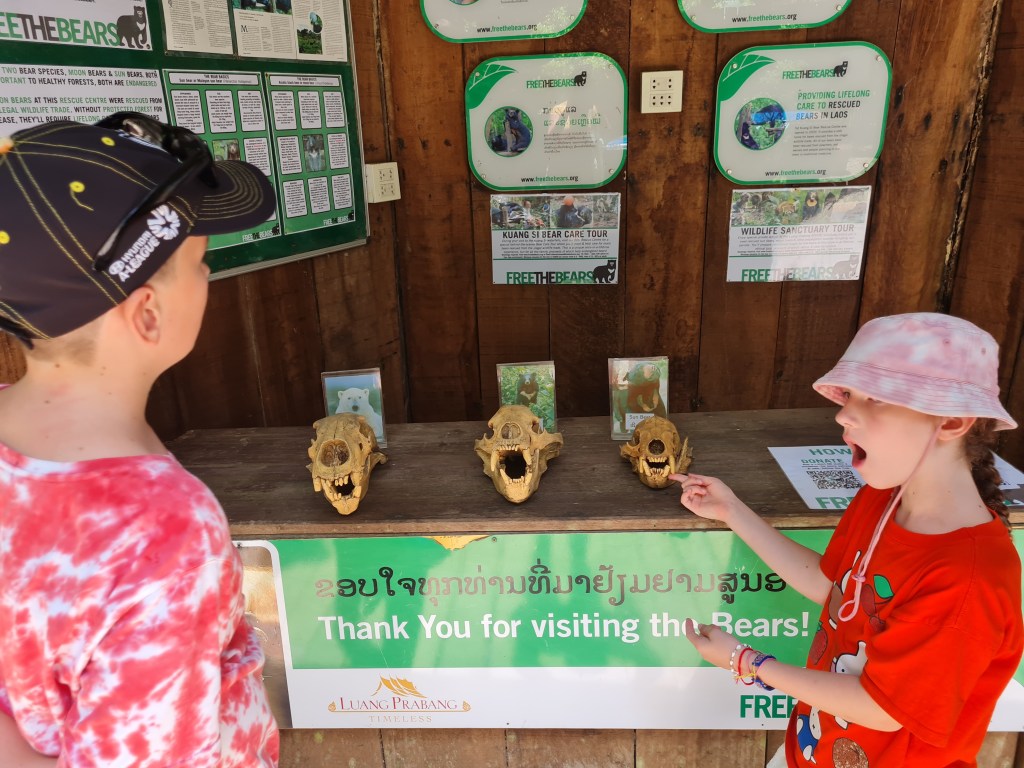
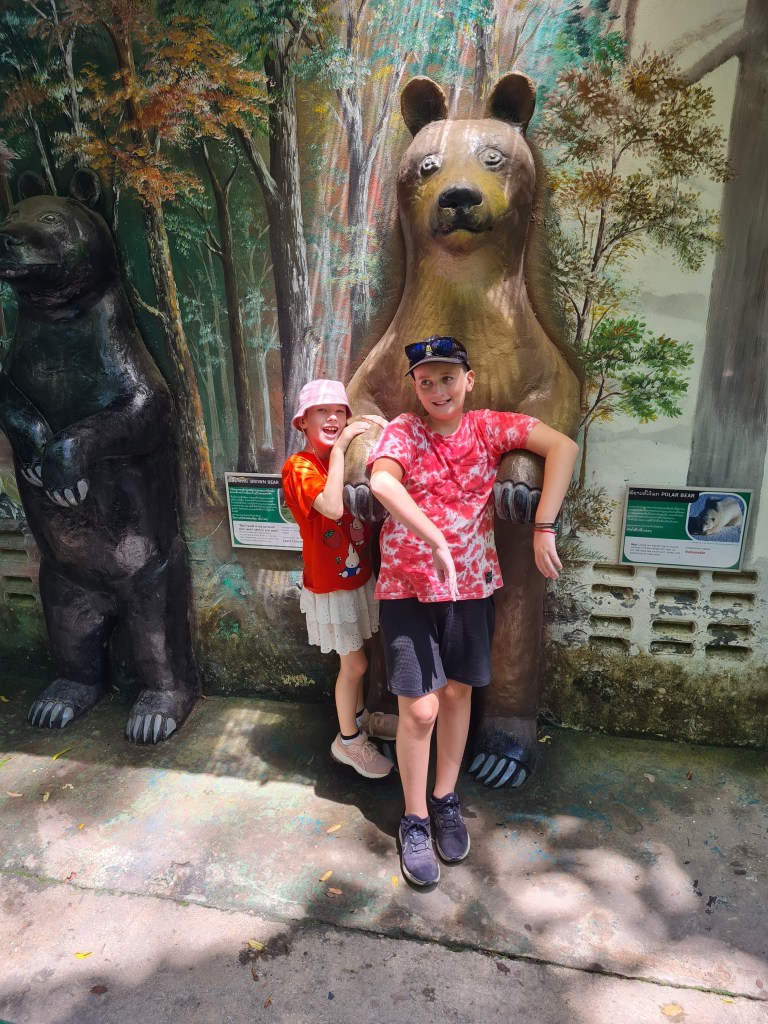
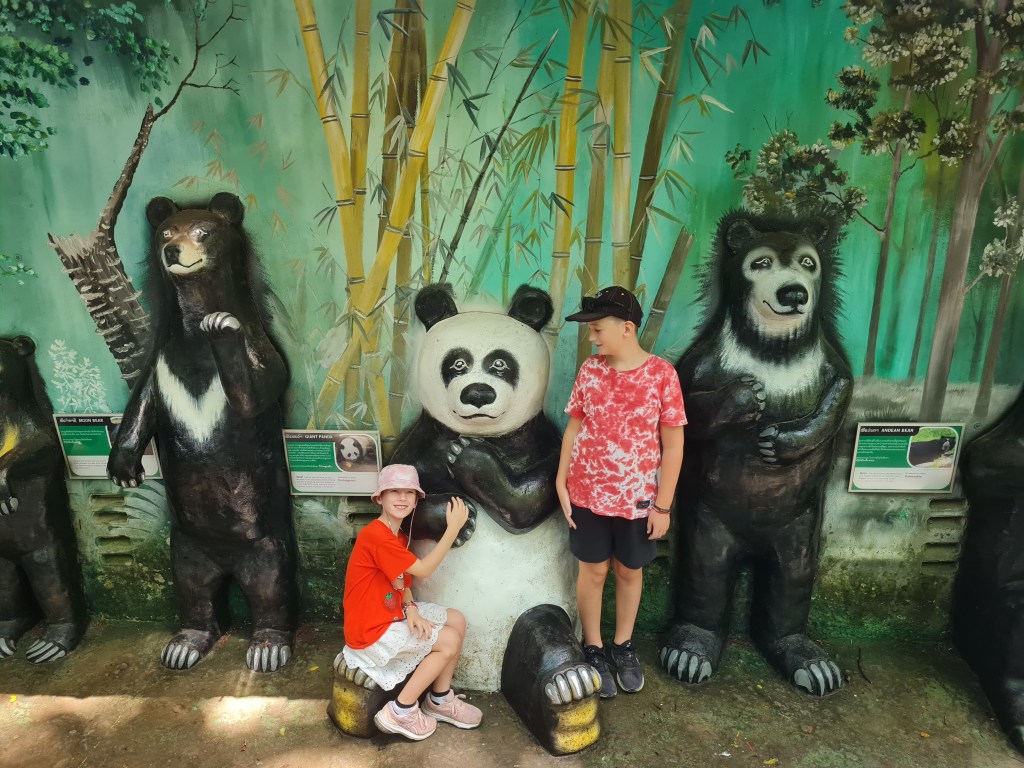
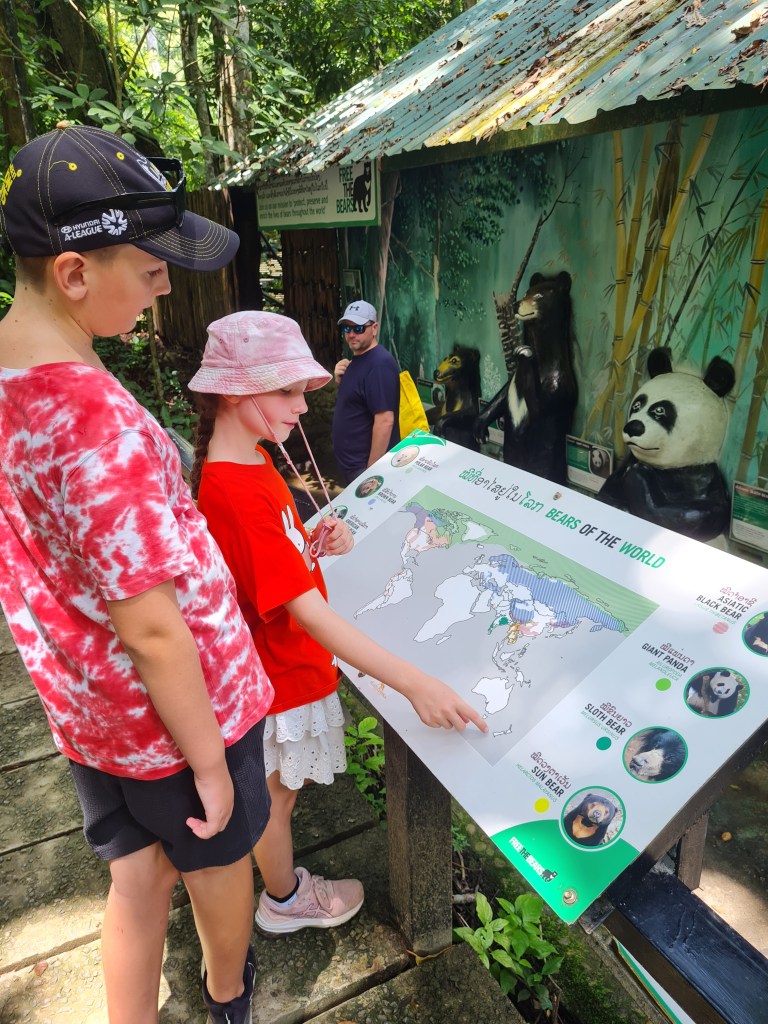
After a few minutes of walking we came to the original Free the Bears rescue centre, an enclosure where three bears live who have been rescued from life in tiny cages producing bear bile for use in traditional medicine. You can read more about their work here: https://freethebears.org/pages/laos-sanctuaries

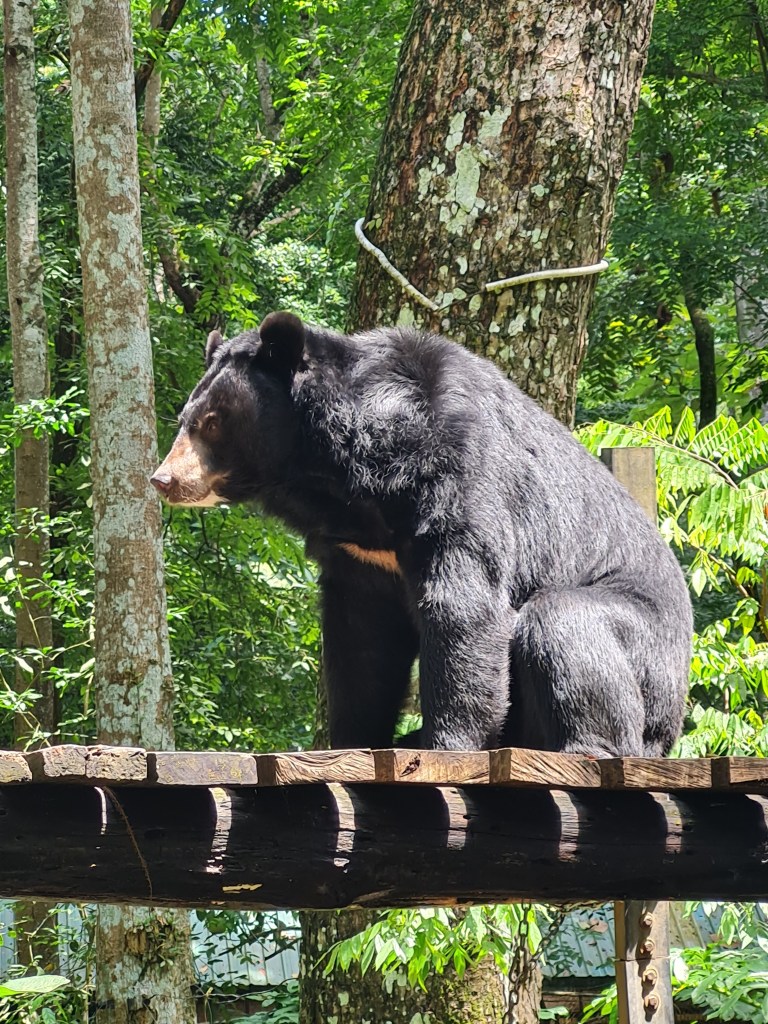
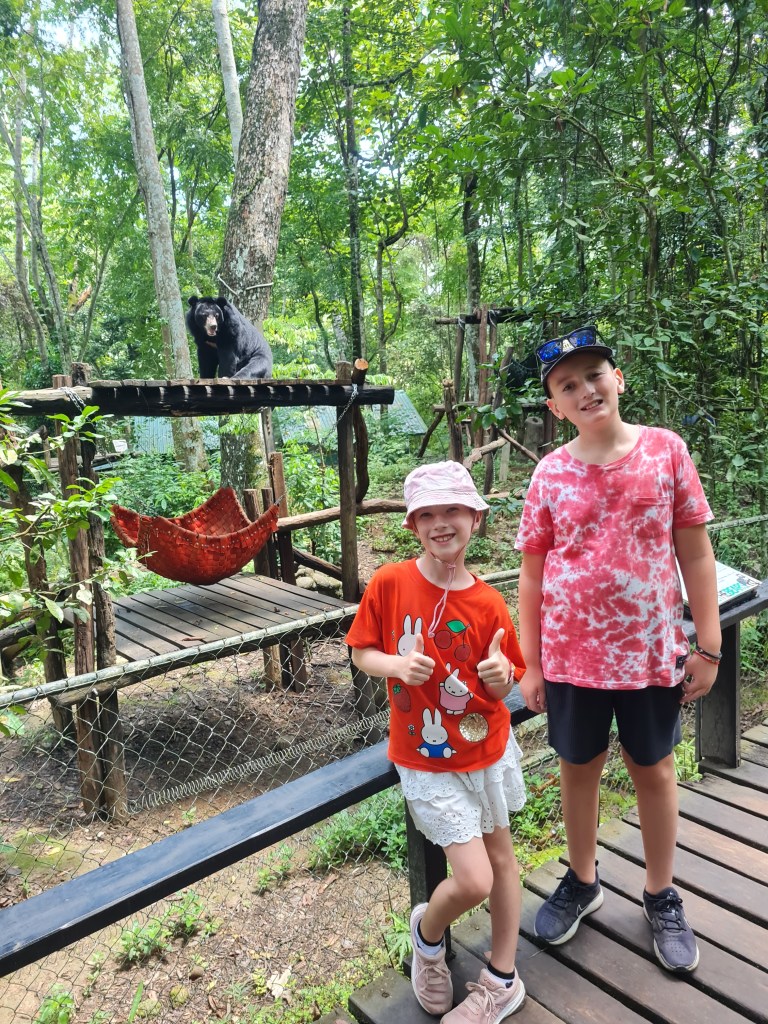

The kids were quite taken with these gorgeous moon bears, who seemed very content in these surroundings. Even if they weren’t completely ‘free’, they looked happy, healthy, and well cared for. One of the biggest challenges facing rescued creatures is that they can’t just be released back into the wild because they lack the defences and experience needed for survival after years in captivity. Additionally, the forests are not safe for them because, unfortunately, the illegal wildlife trade is still thriving in Laos.
Kuang Si Waterfall
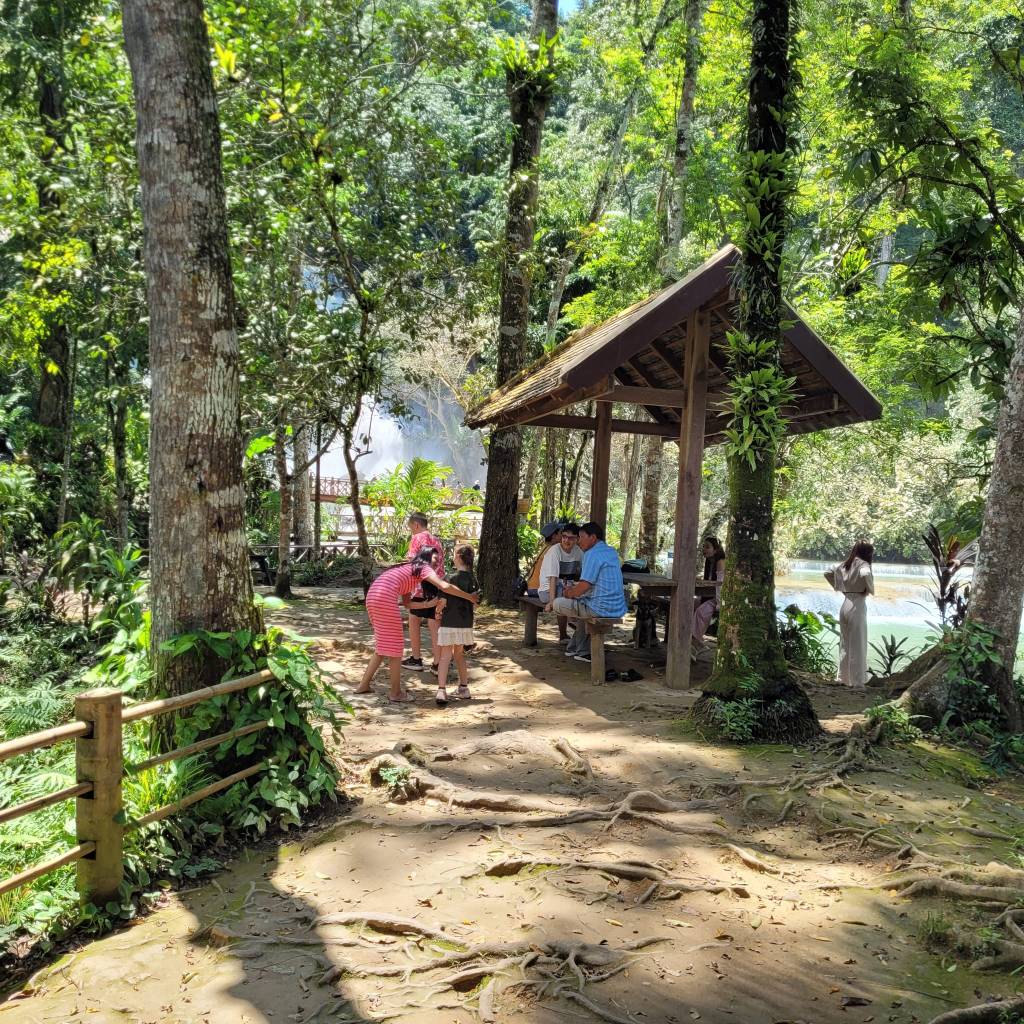
A little bit further on, we came to the bottom pool of the famous Kuang Si Waterfall. The water was a beautiful, milky turquoise colour thanks to the limestone rock it travels over. It really was quite spectacular.
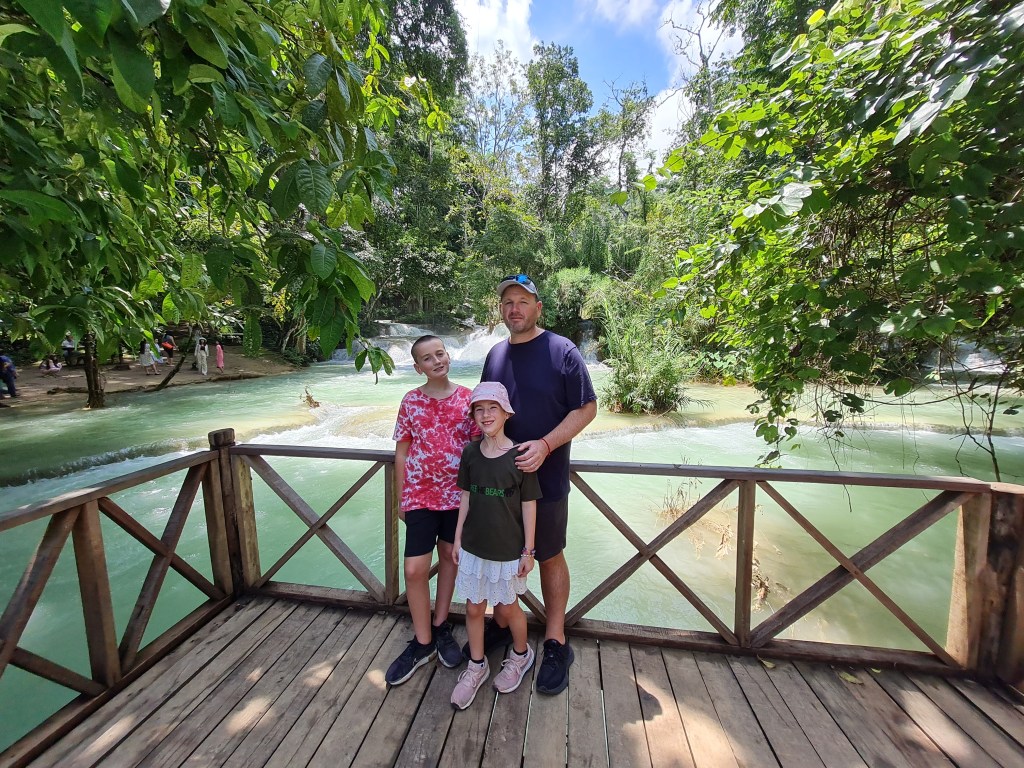
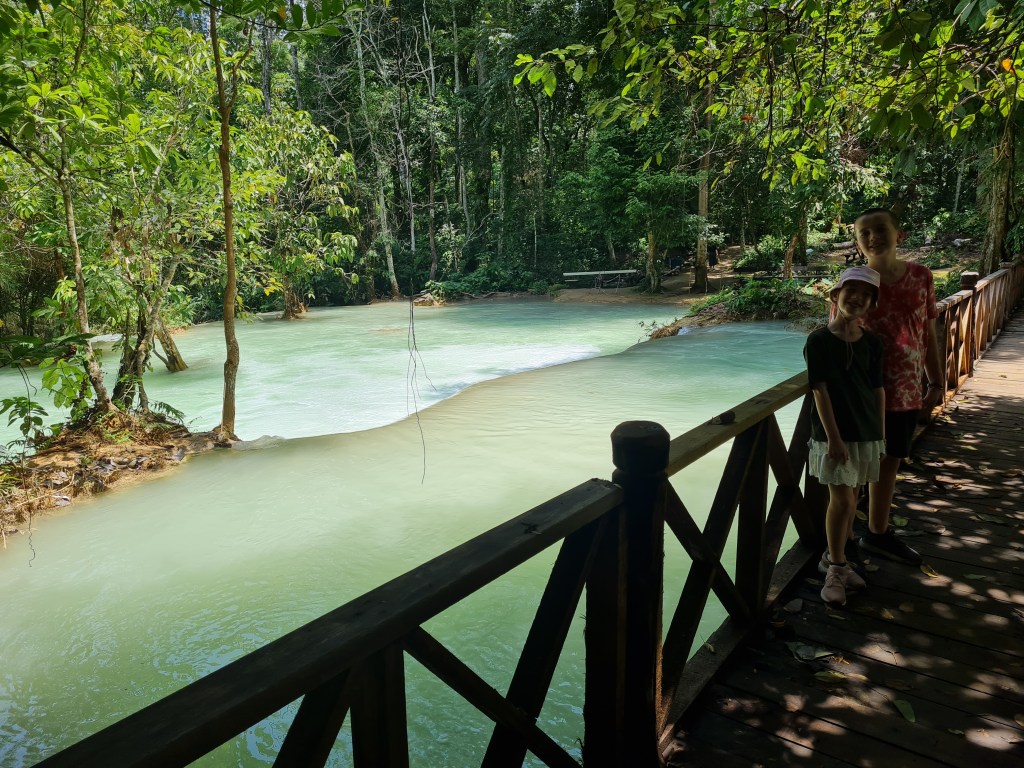
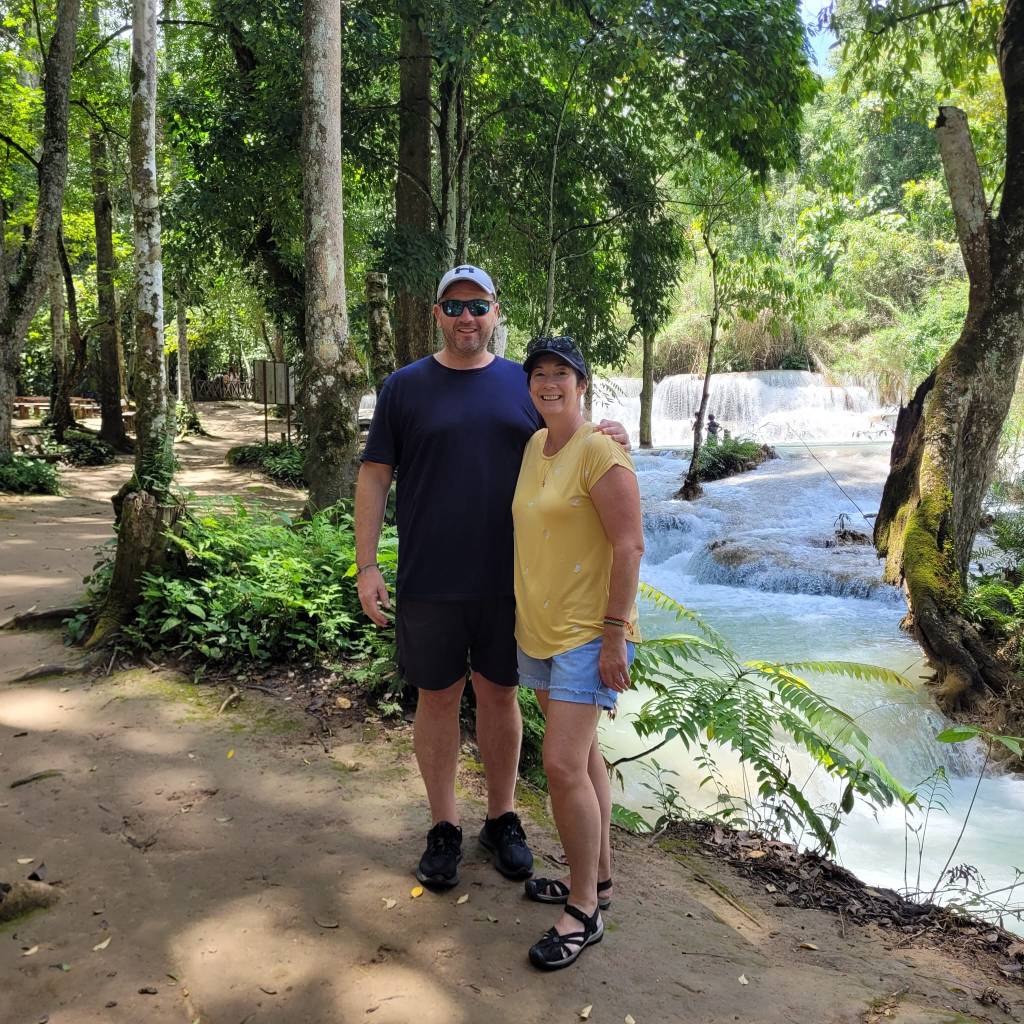


After passing the lowest two pools, we came to an area where we could jump in for a swim. Anna and I quickly got into our togs, and I hopped in first. It was cold! Anna wasn’t so sure, but I coaxed her in by having her jump into my arms.
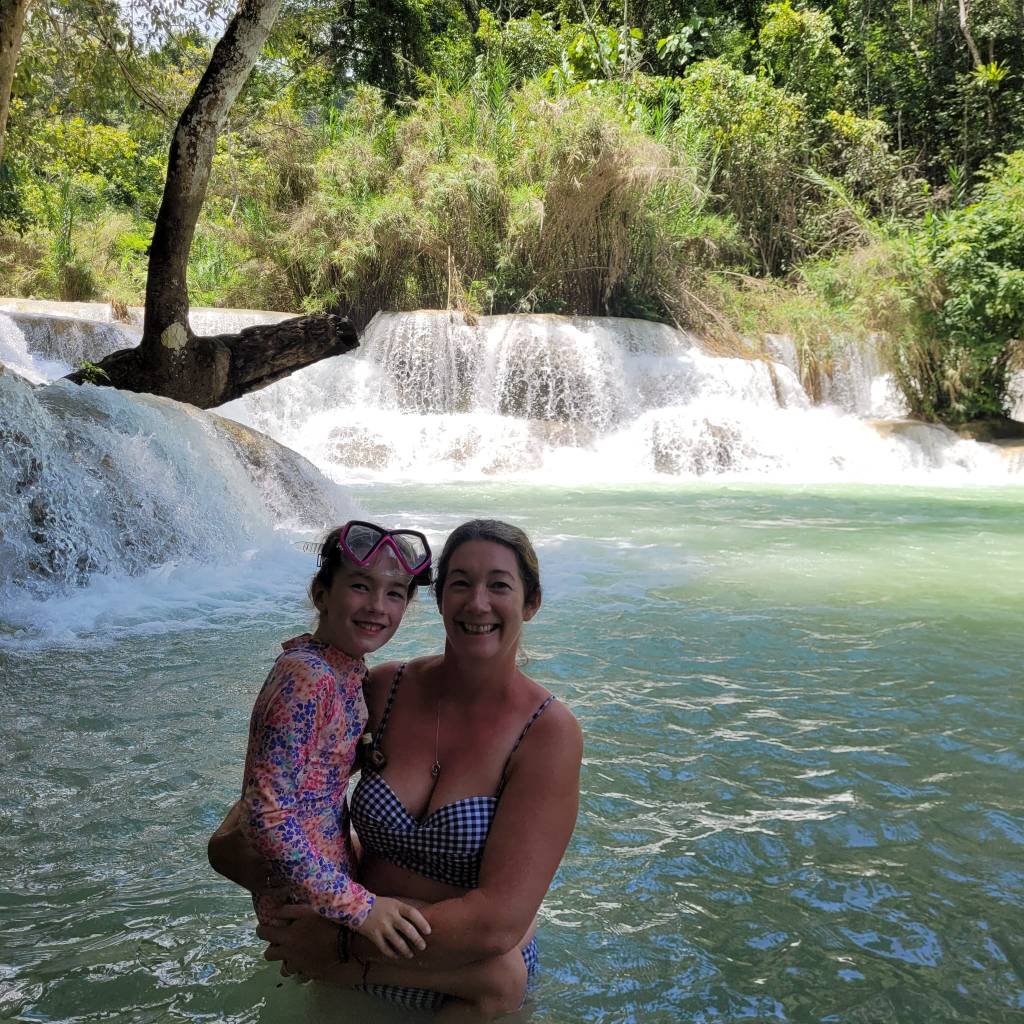
After a few minutes, I ducked down, so we were both immersed up to our chest, but Anna was not happy! She wanted to stay in my arms, but as I was being nipped at by tiny carnivorous fish (you know the spa fish?) that seem to be everywhere in Southeast Asia, I was keen to get off my feet and get moving. I persuaded her to swim back to the steps while I swam over to the waterfall, getting a sense of its thunderous energy and lovely cooling spray on my face. This pleasant feeling would last a couple of hours – it was wonderful!

We continued walking up the trail, and each set of falls and the pools below them inspired successive wow moments, until we reached the grand finale of the actual waterfall. It was truly spectacular!
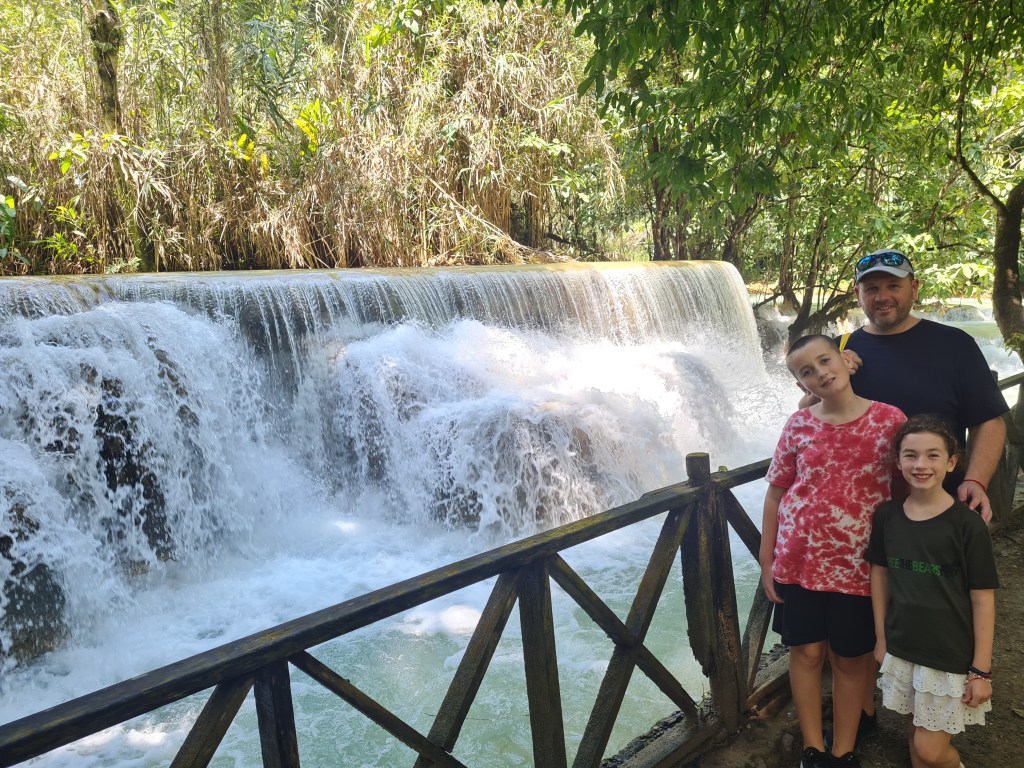
Throughout our travels, Leo and Anna have often remarked that the waterfalls we have visited don’t really complete with the scale and intensity of waterfalls back home in NZ. This time, they were speechless.
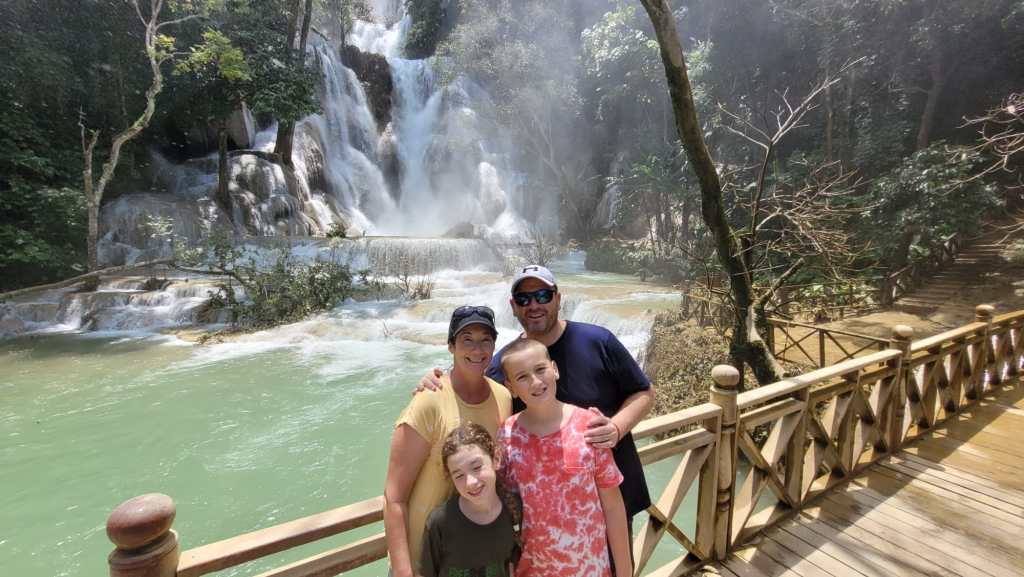

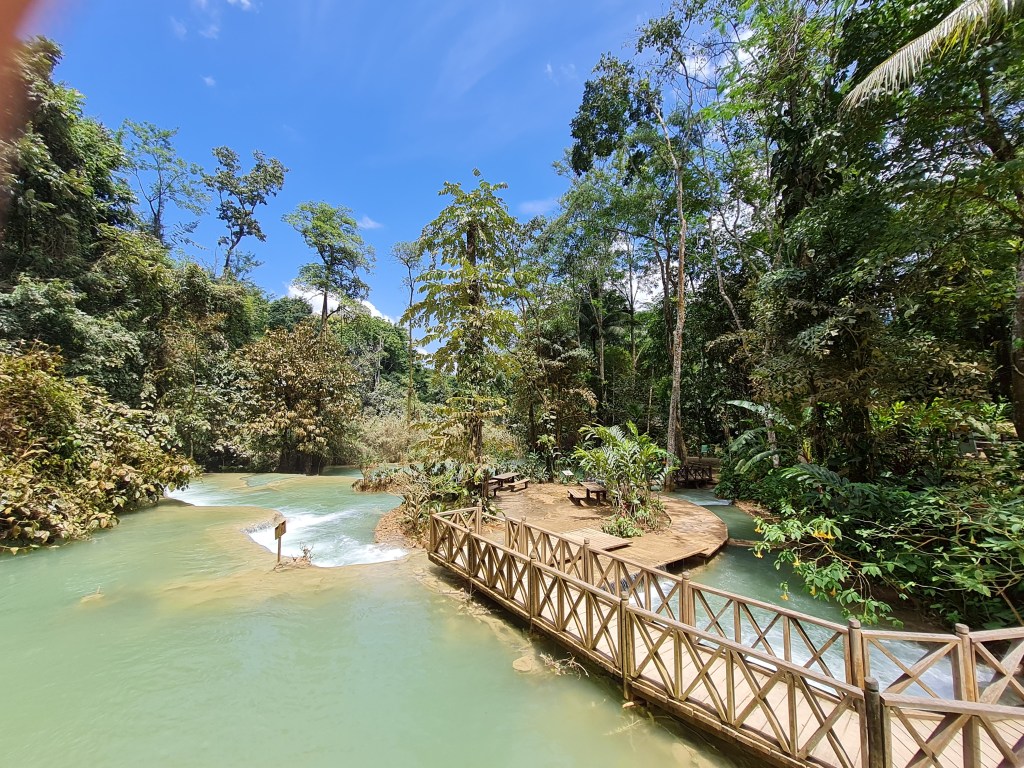
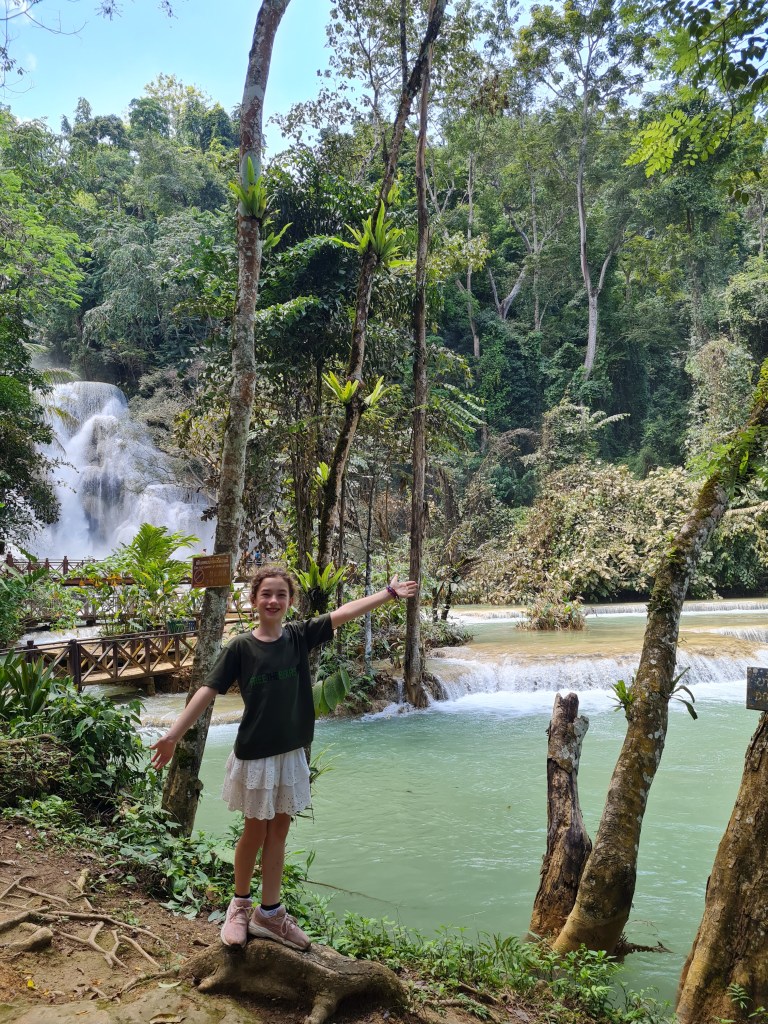
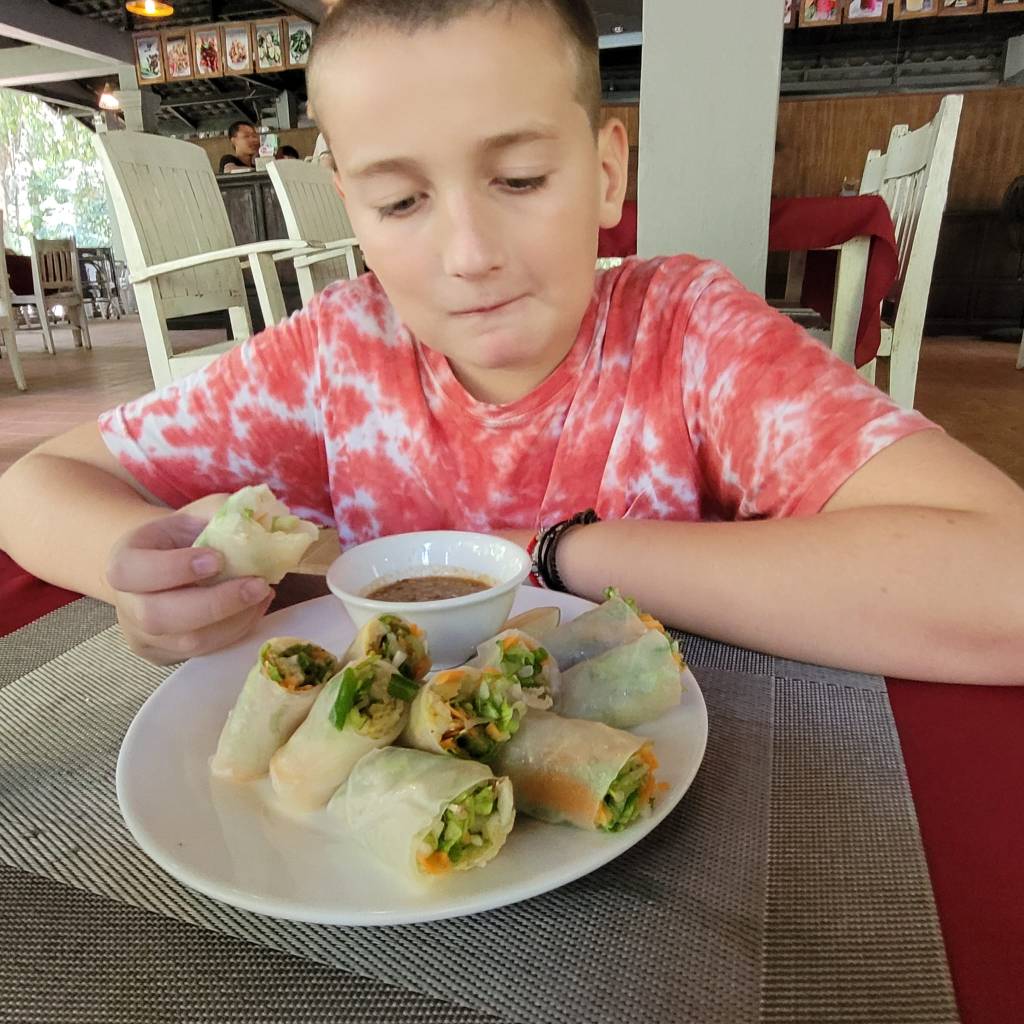
After taking in the beautiful waterfall, we stopped for a quick, healthy lunch at the reasonably priced cafe there. The food was freshly prepared and delicious, with all of us thoroughly enjoying the tasty spring rolls.
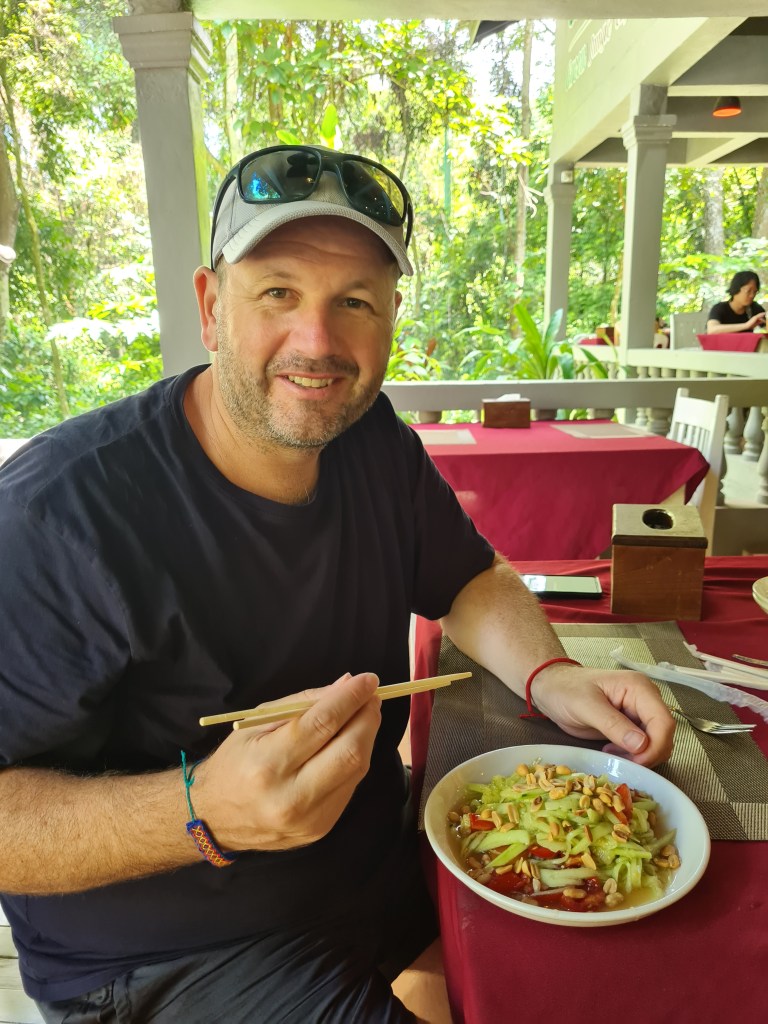
After lunch, we made our way back to the carpark to meet our driver, who took us to the Laos Buffalo Dairy. On our way there, we bumped into an Aussie couple who we’d met briefly the day before at our cute little lunch place and had a nice chat with them. Anna was also asked by some Chinese tourists if she could pose for a photo with them. I think they’re fascinated by her porcelain complexion!
The Laos Buffalo Dairy by Leo
The water buffalo dairy was very fun and educational. It is a social enterprise that benefits local farmers. When we walked in and saw some pigs, we fed them with napier grass, a cutting grass which is the animals main food because their digestive systems can break down the grass, making it edible and harmless.


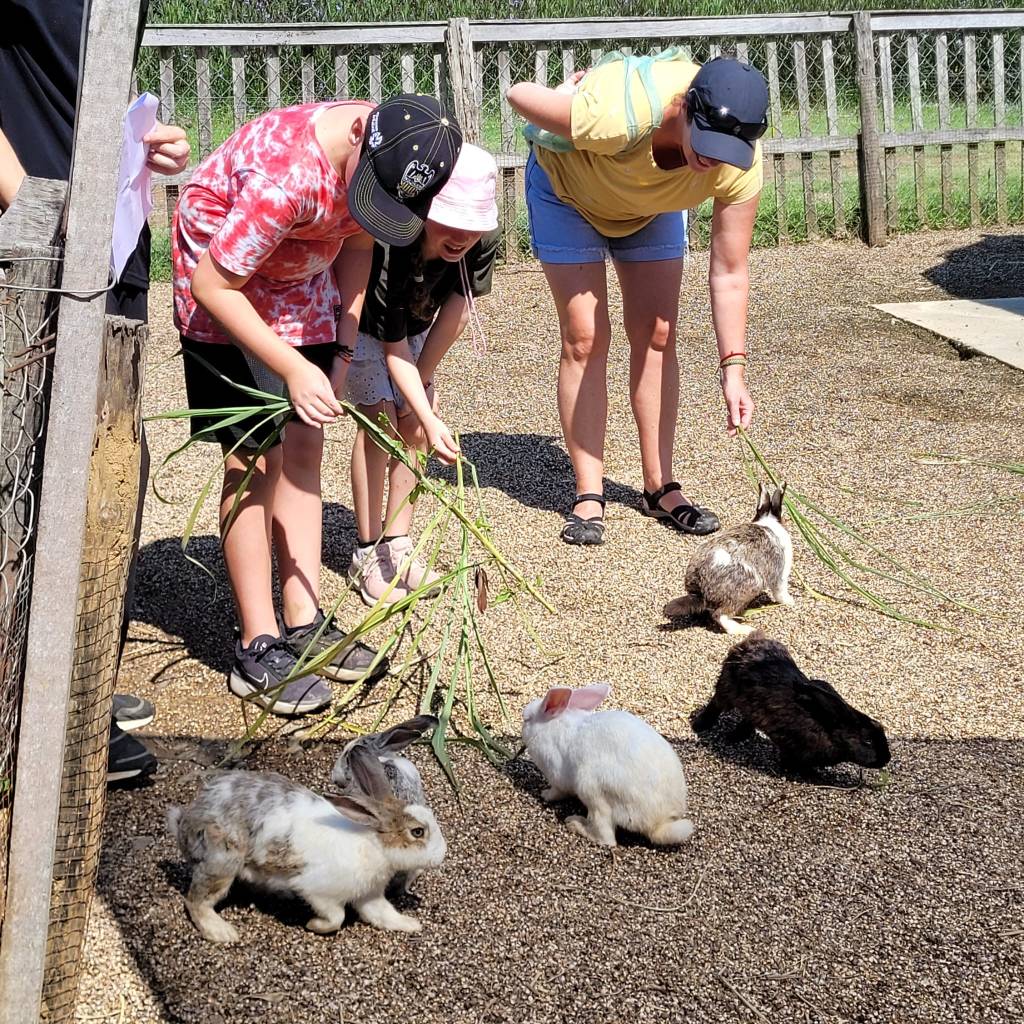
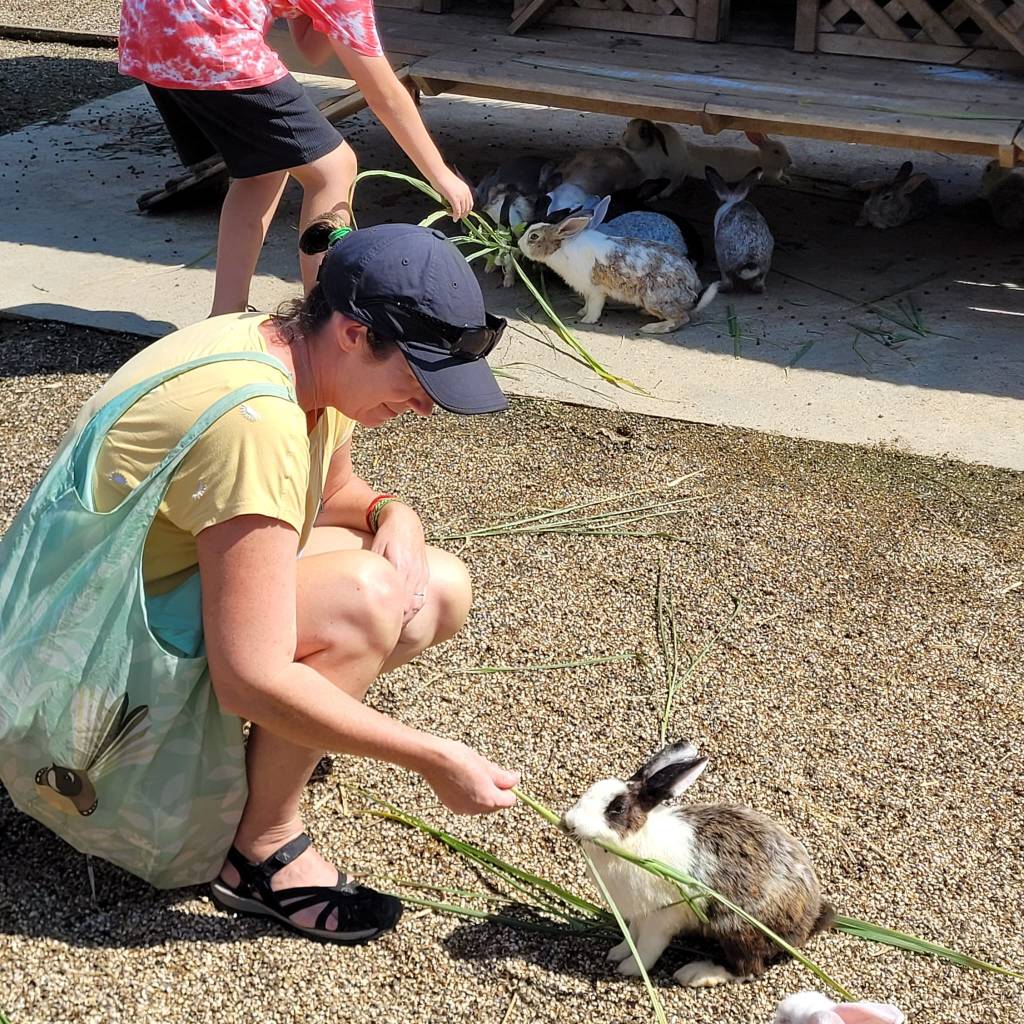
After that, we went to see bunnies; we fed them with the grass again, and they all gathered together and came towards us. The rabbits are kept there so they can be adopted as pets because nobody eats them anymore because they’re too cute.
After that, we went to the buffalo farm, and we got to milk the buffalo. A buffalo produces less milk than a cow that is 7-9% fat. It is more premium and worth a lot more because cow milk is only 2-4% fat.
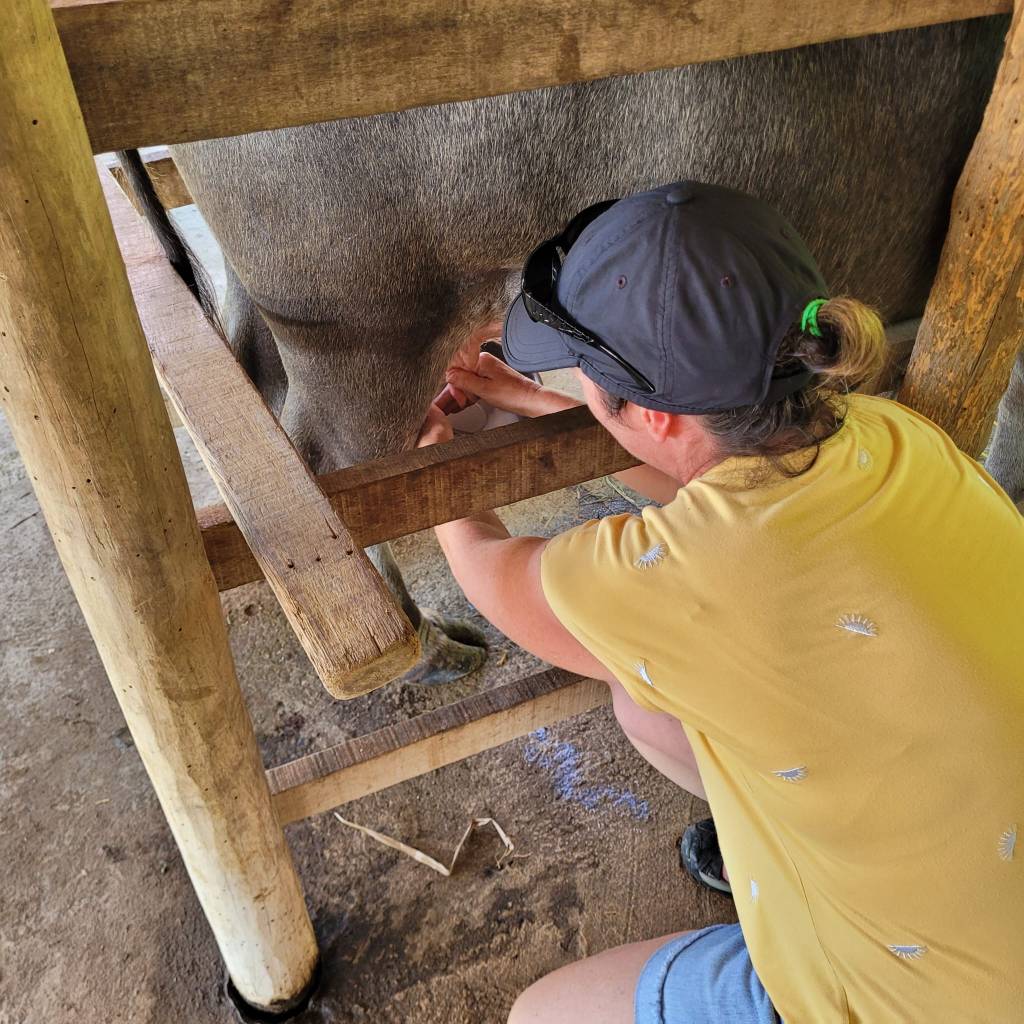
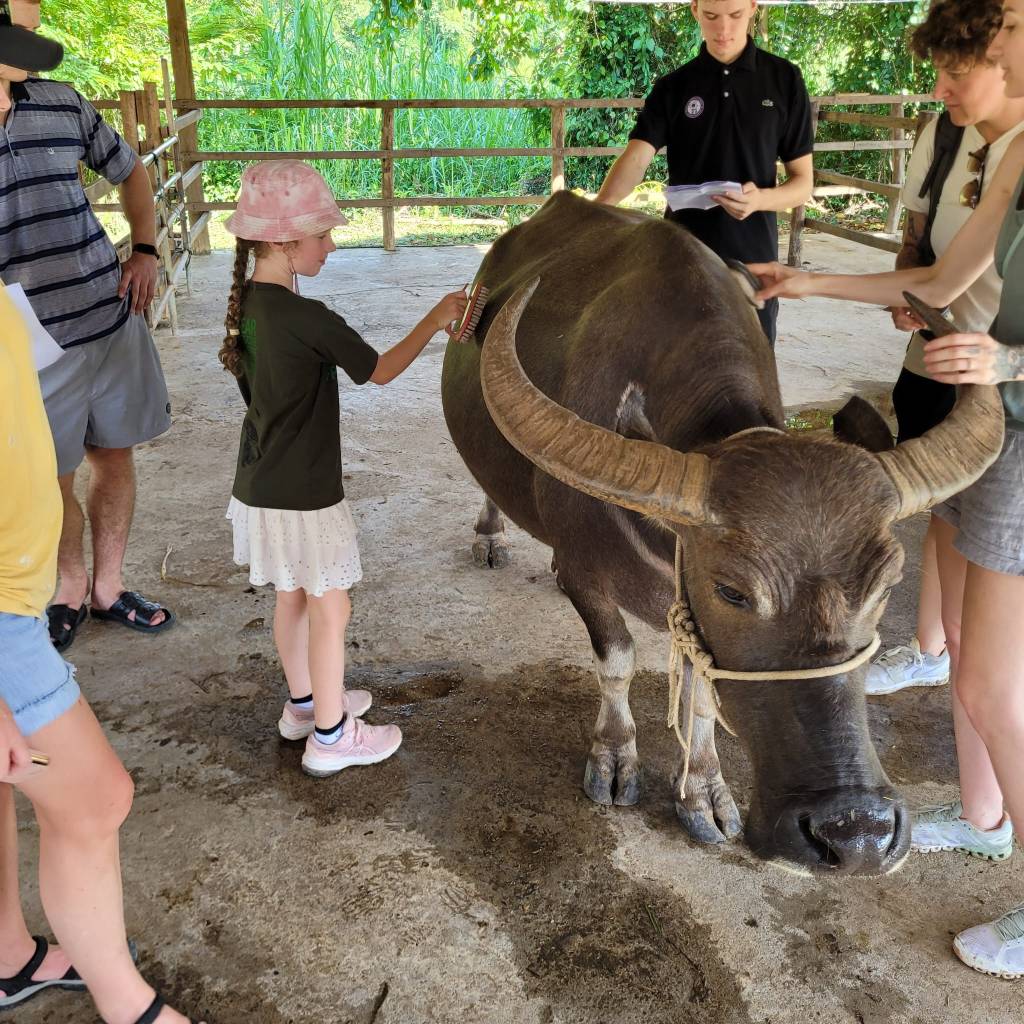
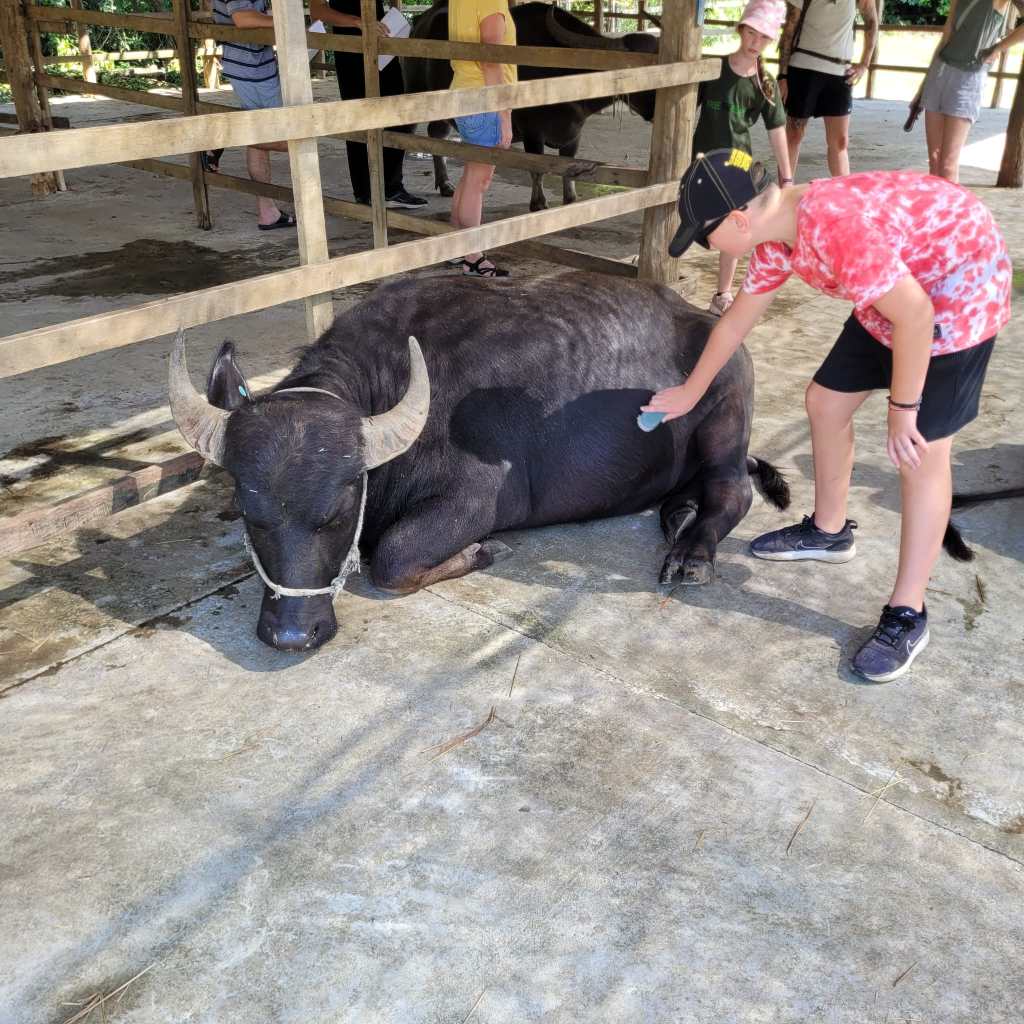
Mum milked the buffalo because she has milked a cow before, but I decided not to because its teat reminded me of a penis! We then bathed and brushed the buffaloes called Louis and Lana. One buffalo was just sitting in a mud bath that would be like a spa pool because of the sun. After that, we fed them and the calves with the same grass as before.
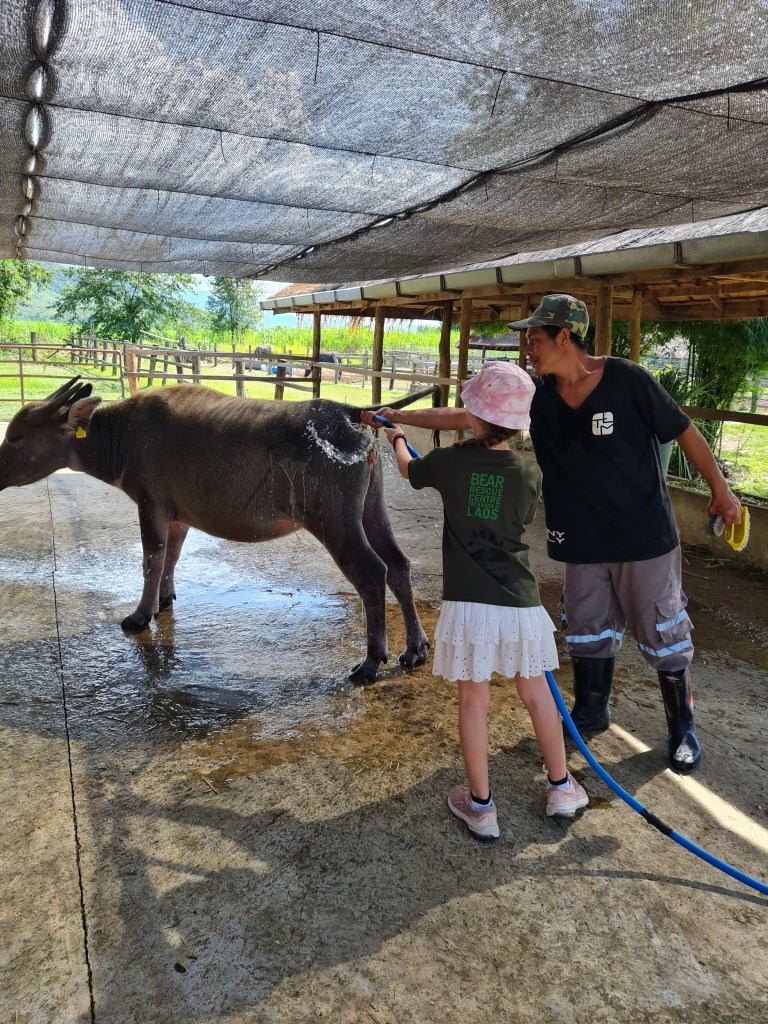
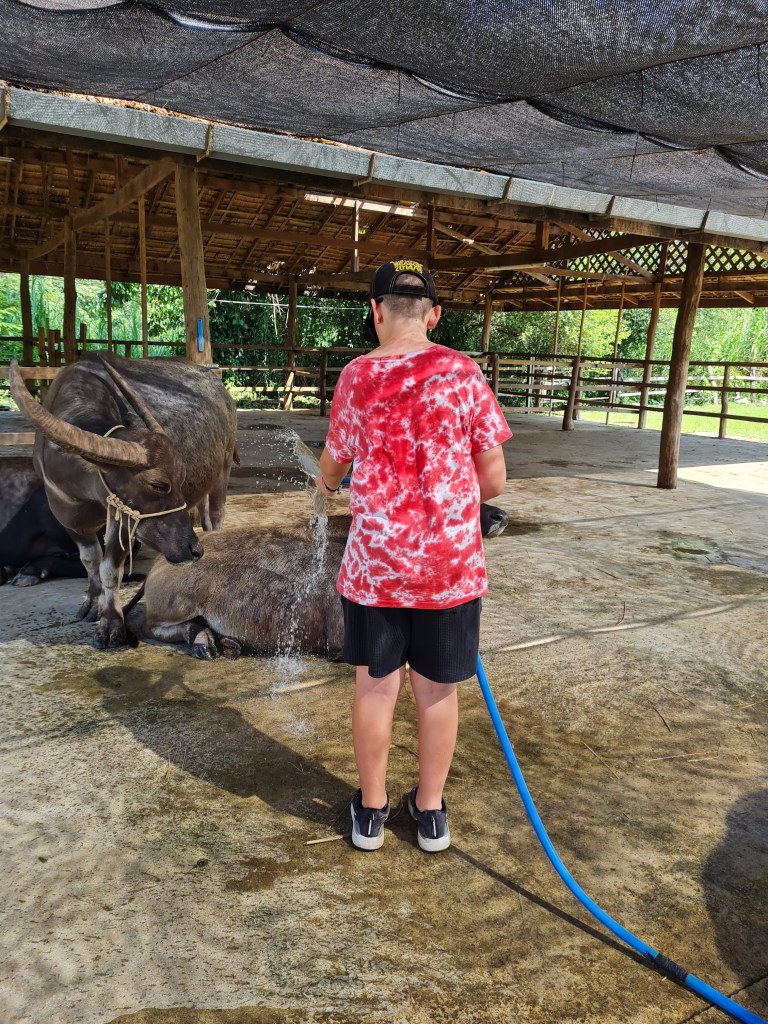
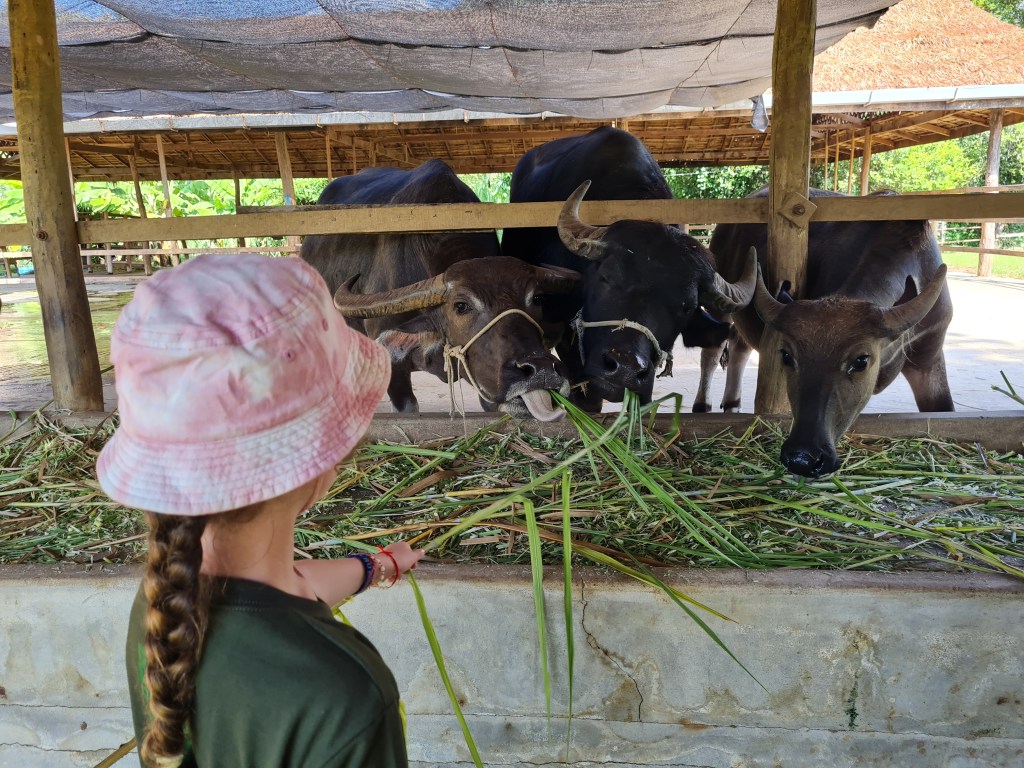

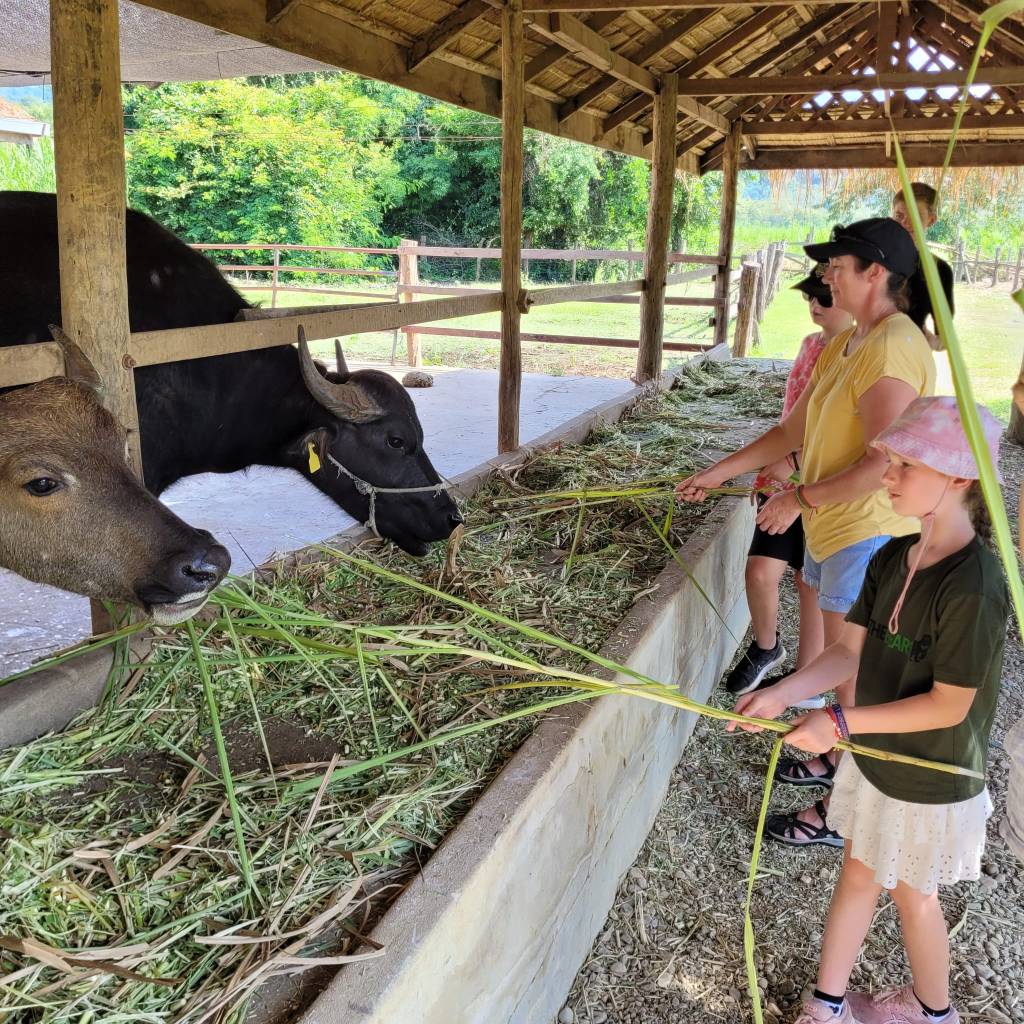
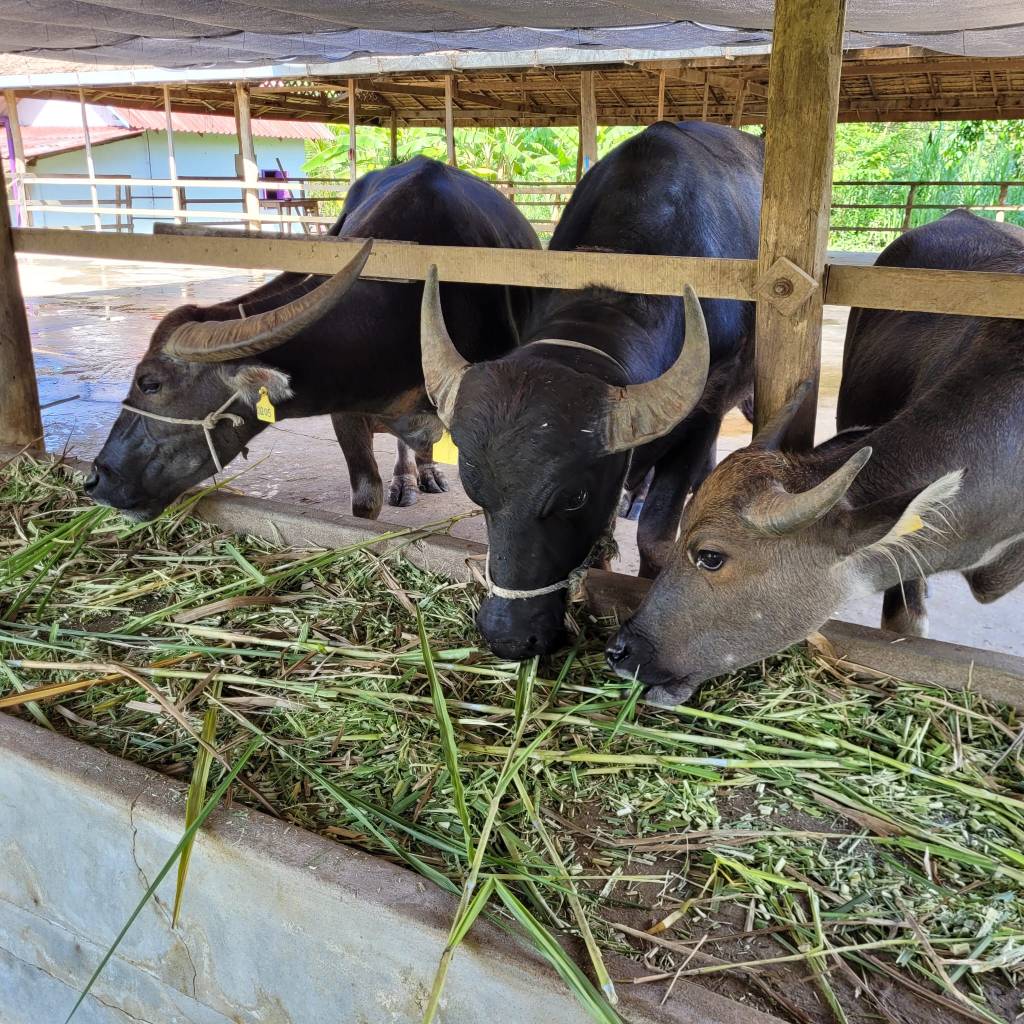
We saw the place where they keep goats, and where the buffaloes get milked and showered etc. But it was not open, so we went to the café instead. At the café we ordered buffalo ice cream and a buffalo cheese platter. The noticeable difference was that all the products were twice as rich because of twice the fat. The ice cream was nice, and the cheese platter was amazing. We have not seen much cheese while travelling.
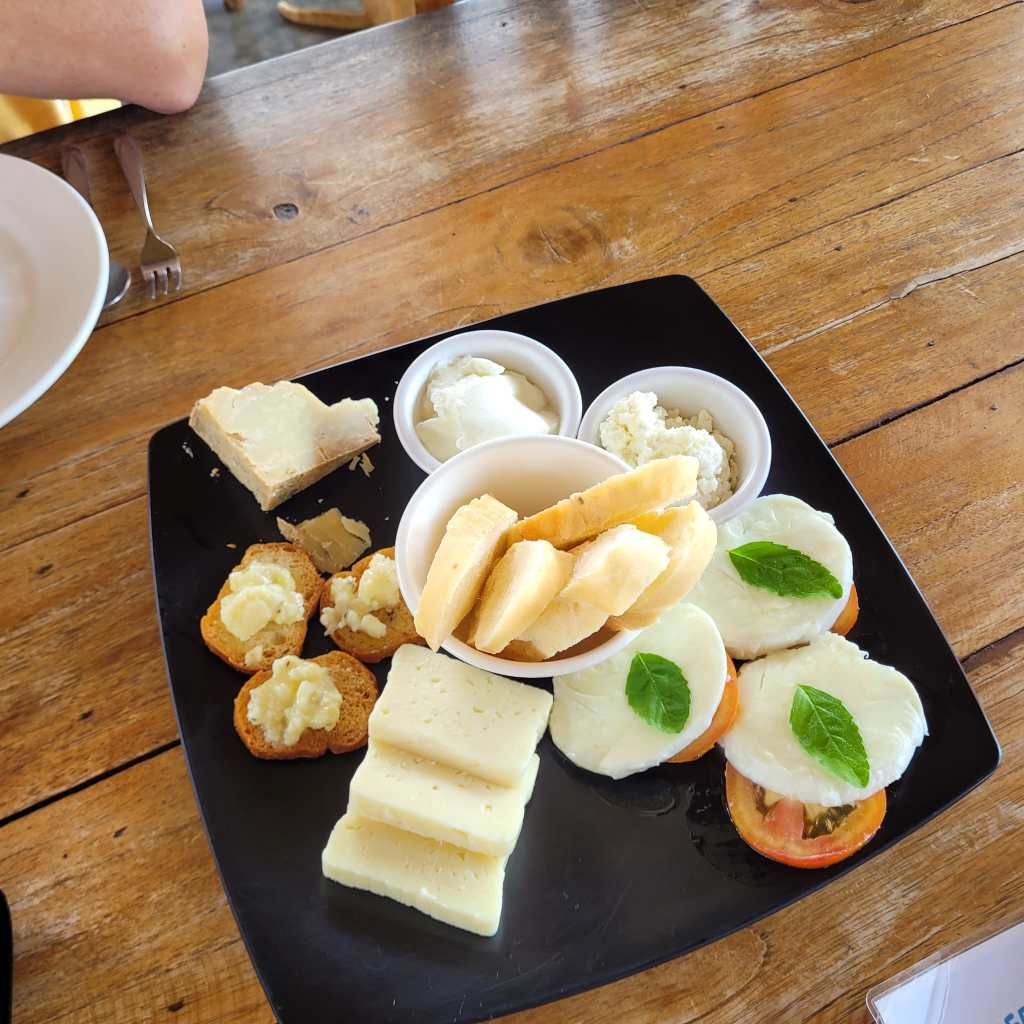
The cheeses it had were mozzarella, ricotta, yoghurt, feta, marinated feta and blue cheese. I didn’t eat the mozzarella because it had tomato on it and raw tomato by itself tastes like poo. I also didn’t eat the yoghurt because I don’t like yoghurt. Here is a quick numbered ranking of the cheeses I ate.
#4 Feta
#3 Marinated feta
#2 Ricotta
#1 Blue
Overall, the experience was great, and I learned a lot about buffalos in Laos. 8.5/10
An Anna and Mummy Morning
After our busy day out the previous day, both Leo and Shaun wanted a quieter ‘home’ day the next day, but Anna and I were keen to explore the old town, so we set off on foot along the bank of the Mekong towards its junction with the Nam Kahn River.


When we reached this point, there was a beautiful little cafe overlooking the confluence of both rivers, so we enjoyed a cold drink in the shade after our hot walk.

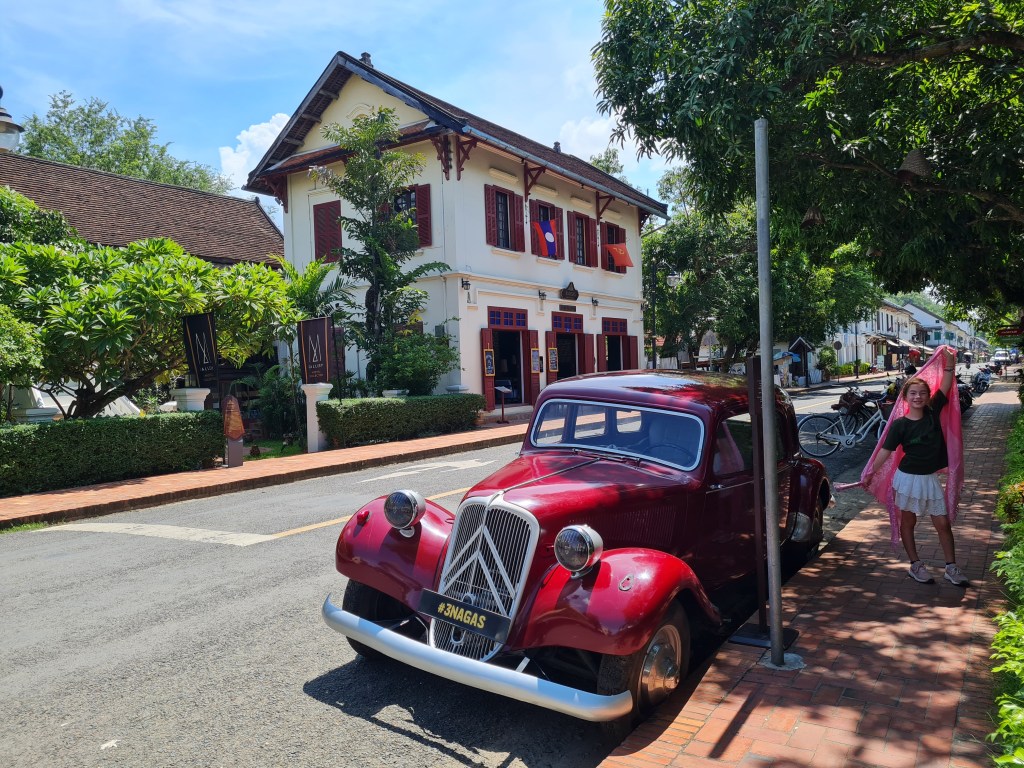
Feeling refreshed, we carried on walking along the Nam Khan River, past the famous temples where the ancient daily tradition of alms giving takes place at 5.30am each day. The local people sit outside their houses with sticky rice, offering it to the monks who walk past each morning, as the monks depend on the community for sustenance. As much as I would’ve loved to have seen this, it has become a huge tourist attraction in LPB to the point where it is becoming intrusive, with tourists being pushy and getting in monks’ faces to take photos, rather than standing and observing from a respectful distance. I grappled with this decision of “to watch or not” for the duration of our stay but ultimately decided that I didn’t need to watch it just because I was there. It was enough to know it takes place there each day to get a sense of the city’s spirituality.
After our walk, Anna and I met the boys for lunch, and then we had a couple of hours rest until it was time for us to go out to listen to a local storyteller.
Garavek Storytelling

Garavek storytelling had been recommended in a few of the online travel groups I’d joined, and I thought it would make a fun family experience, while also being educational. The storyteller tells traditional Lao stories that explain some of the famous landmarks in Luang Prabang.
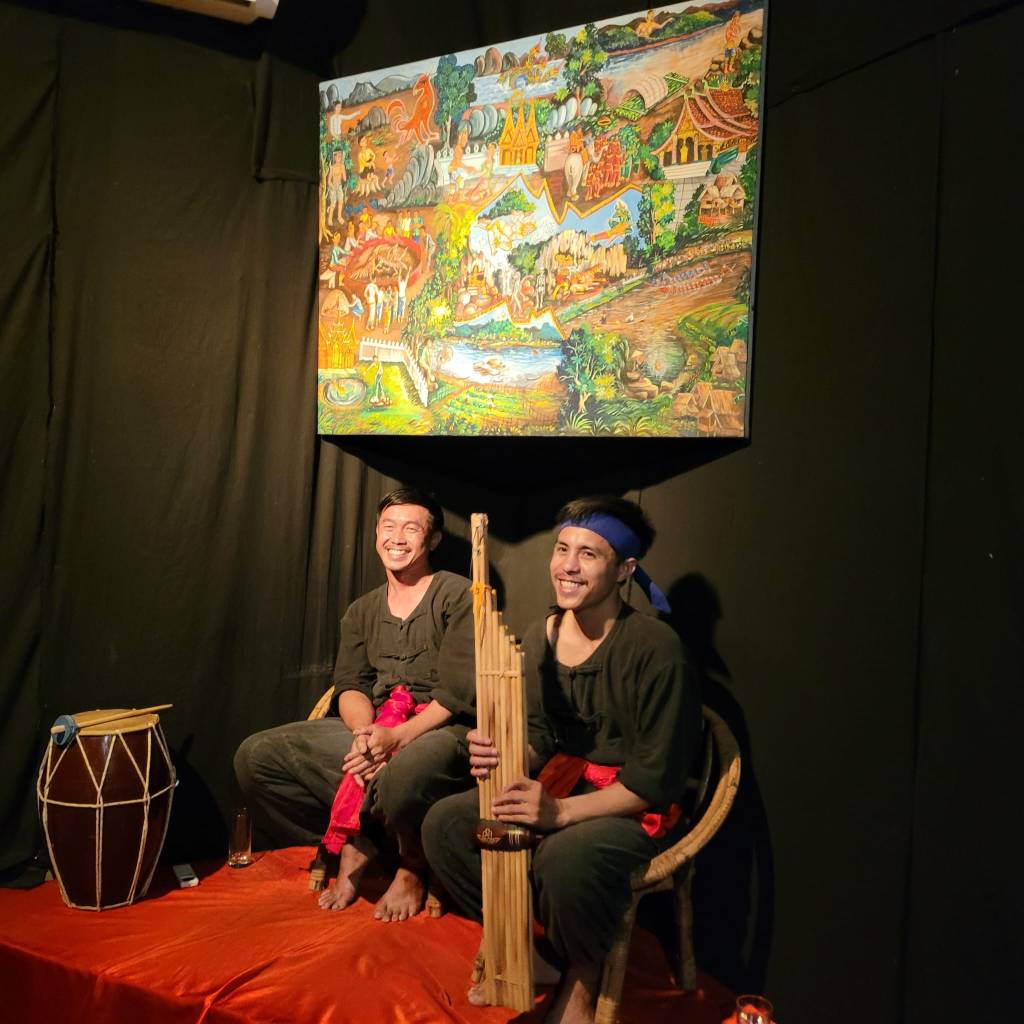
He is accompanied by a musician playing a khaen, which is a traditional Lao bamboo flute, and it sounds beautiful. Between each story, and at certain parts within the stories, we were treated to this music.
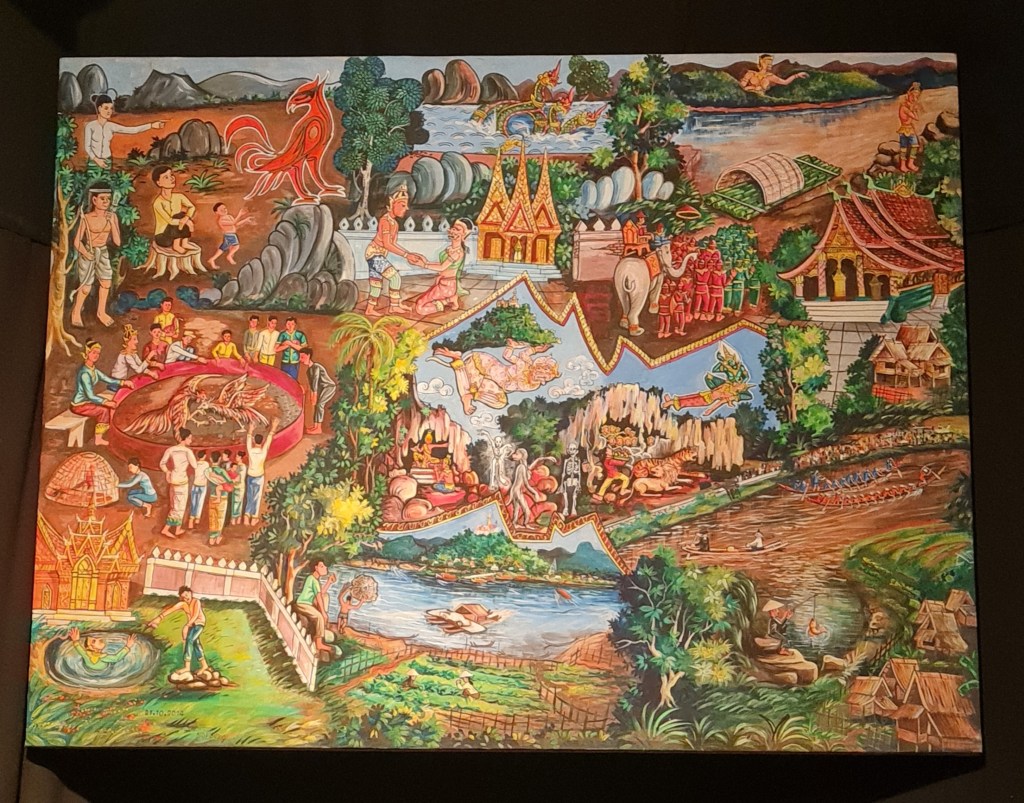
The image above was painted by a local artist and illustrates key parts of the different stories. We learnt about some of the antics of the trickster Xieng Mieng; the legends of how the Mekong and Nam Khan rivers came to be homes for two of the three Nagas, or water serpents, who were quarreling; how Mt Phousi came to be in the middle of Luang Prabang – it was cut off the top of a mountain in Sri Lanka by the Monkey King so the Queen could have her choice of mushrooms growing there; and how surrounding hills or other landscape features were created. This was proper storytelling theater, and both kids (and us!) were entranced by his use of voice, dramatic pauses, gestures, and music that wove the tales together. If you’re ever in Luang Prabang, it’s worth a visit.
Indigo Rooftop Restaurant
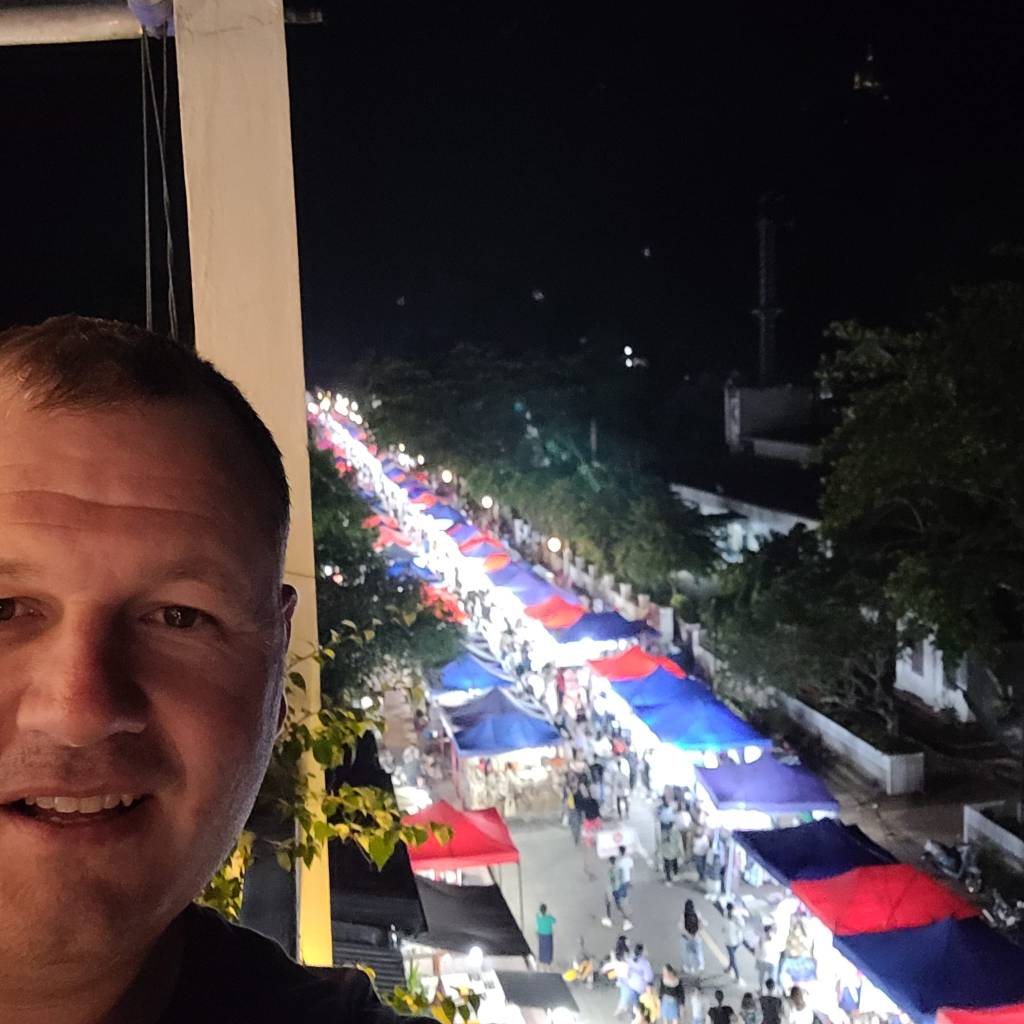
After the storytelling, we had promised Leo a burger night, so we went to Indigo Rooftop Restaurant. Indigo is a bakery and cafe at street level, and there is accommodation, too. We climbed the 7 or 8 flights of steps to the rooftop to be greeted by a lovely restaurant with a great view over the night market.
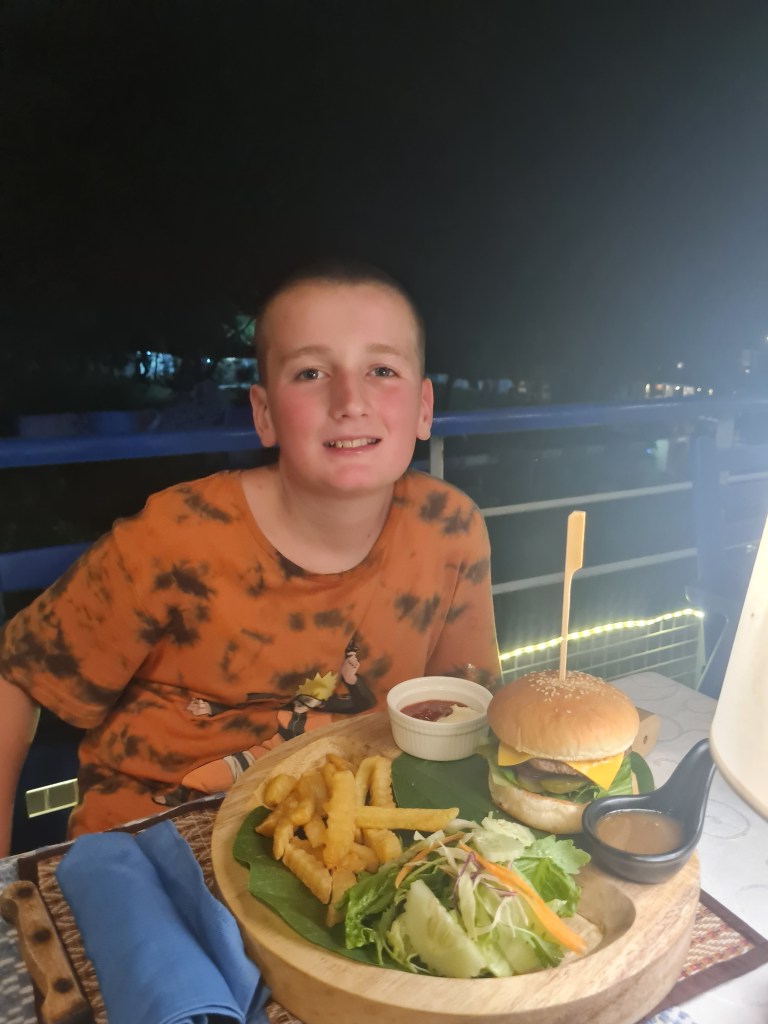
Leo misses NZ food more than any of us, so burger treats are an important part of the trip to keep him happy. I must admit, I also enjoy the occasional burger, and I’m so glad I ordered one here because they were delicious!
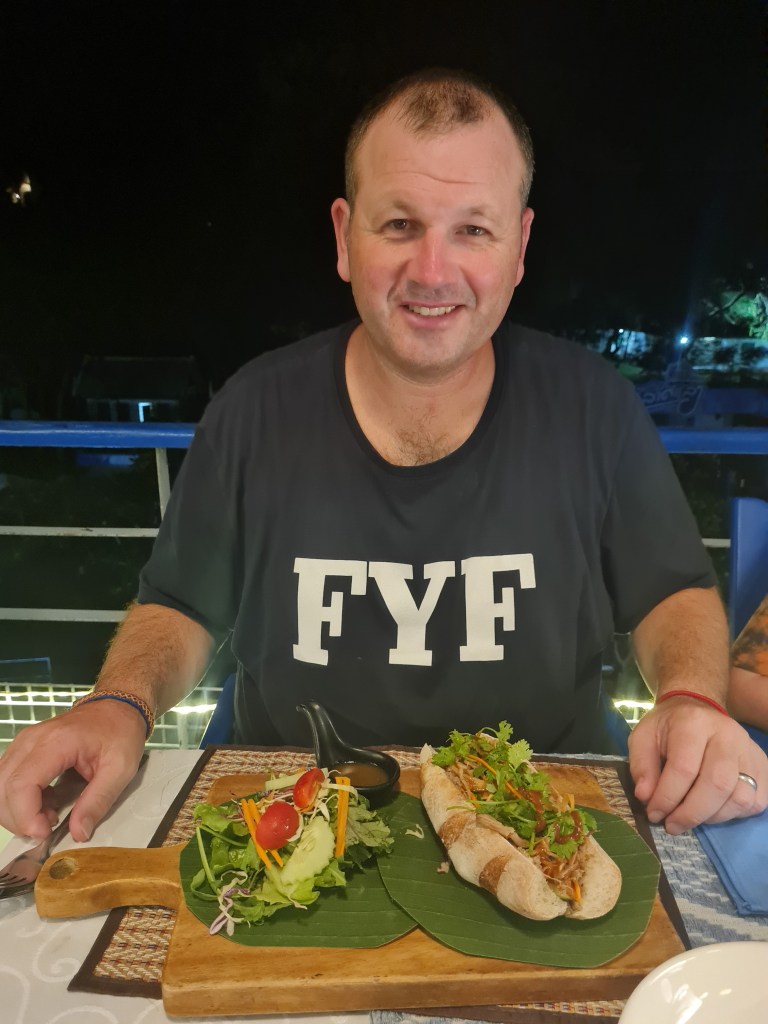
Shaun ordered a beautiful looking baguette filled with pork, salad and herbs, and Anna got her favourite, spaghetti bolognaise. The thing she misses the most is lasagne, so I’ll be making one in the first week after we get home!
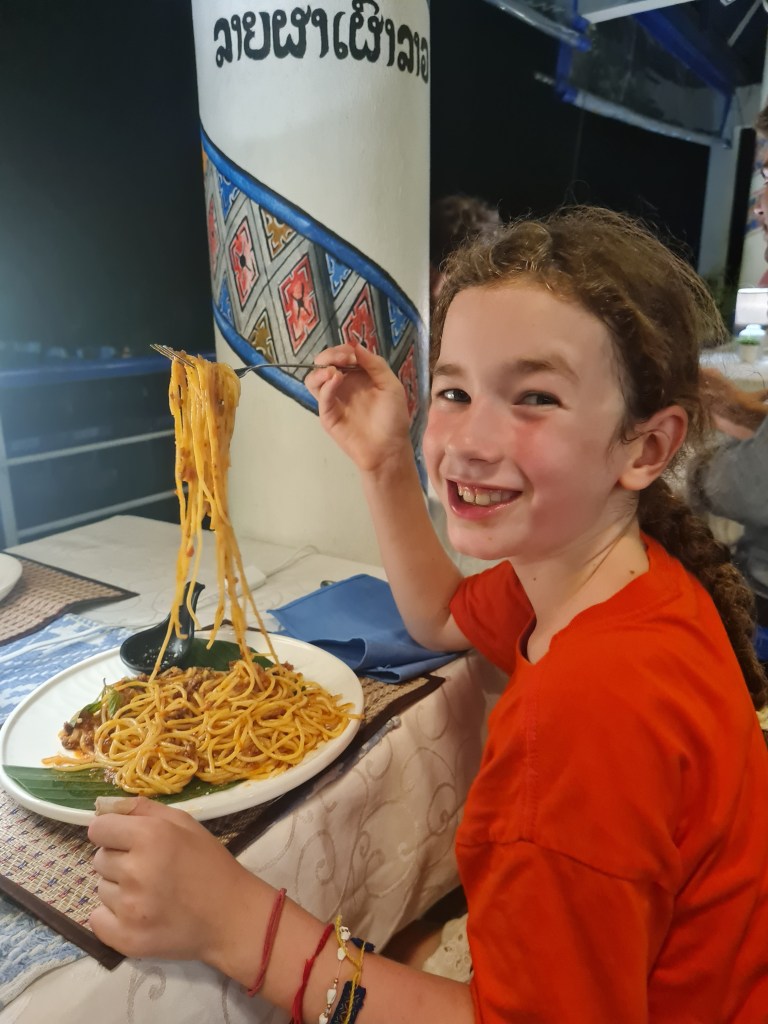
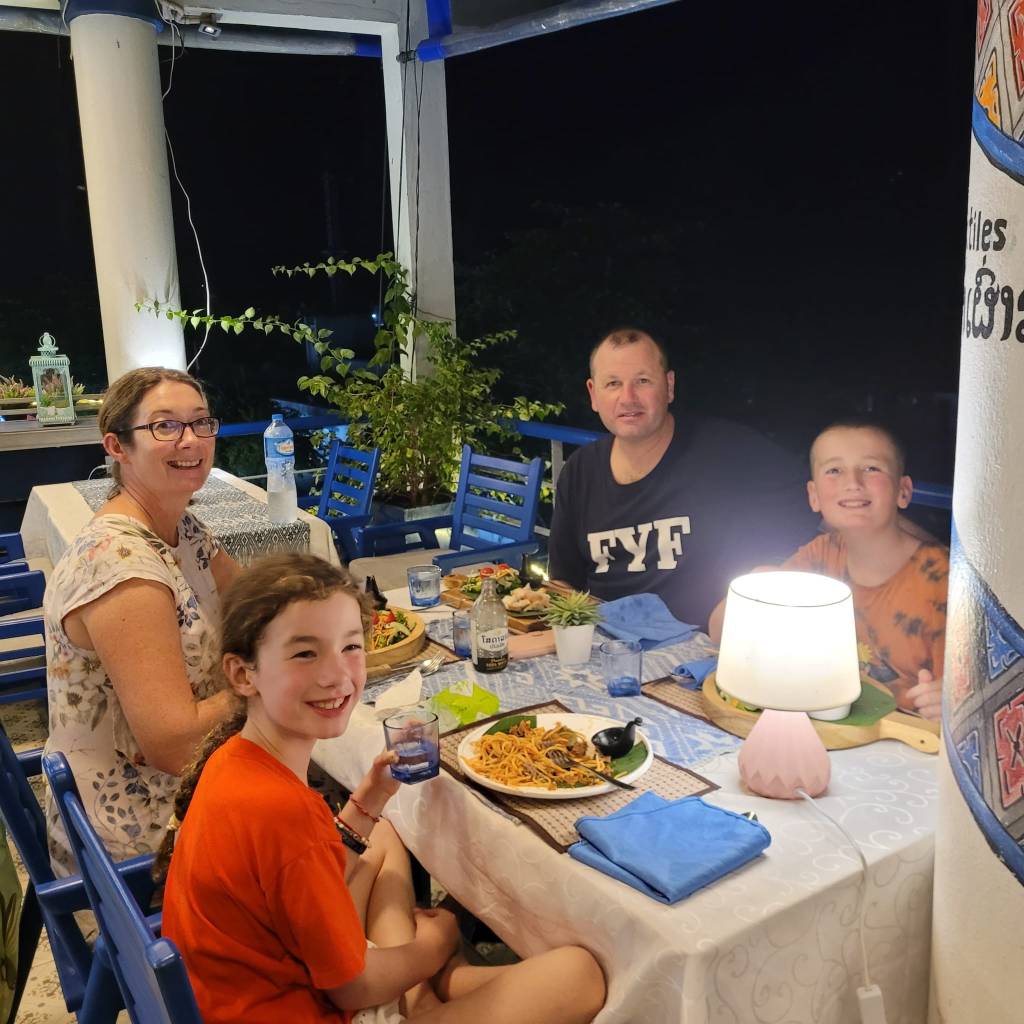

Everyone’s meals were delicious, and we headed home to bed with full tummies, ready for our early start the next day.
The Living Land Farm
We were keen to do some more educational activities and had heard good things about the Living Land Farm, which is a community enterprise growing organic rice, salad greens, herbs, and vegetables to benefit local people. They also teach English to local children, running evening English classes, and all the profits from visitors are used to support the local community, sending children from poorer families to school and supporting their education right through to university. You can do homestays and volunteer there, or you can just visit for a morning or afternoon like we did. Our guide for our morning of learning how to farm rice, Kham, was put through school and university by the collective. As a child, he was a monk for several years (many young boys in Laos are monks for some of their childhood, especially those from poorer families, as the children will always be well fed and cared for in a monastery, and it is the familys way of ‘making merit’ in the Buddhist tradition). Kham has now returned to work at the farm as an educator and tour guide.
We were collected at 8am from our guesthouse by the LLF tuktuk driver, who is one of the retired rice farmers in their community. He now works as a driver, and does bamboo weaving.
The Rice Experience by Leo

The Living Land Farm Rice Experience was very educational and fun. There were 13 steps of making rice, and I’ll go through them all.
#1 Getting The Seeds Ready
We started off by grabbing the seeds and putting them in water.
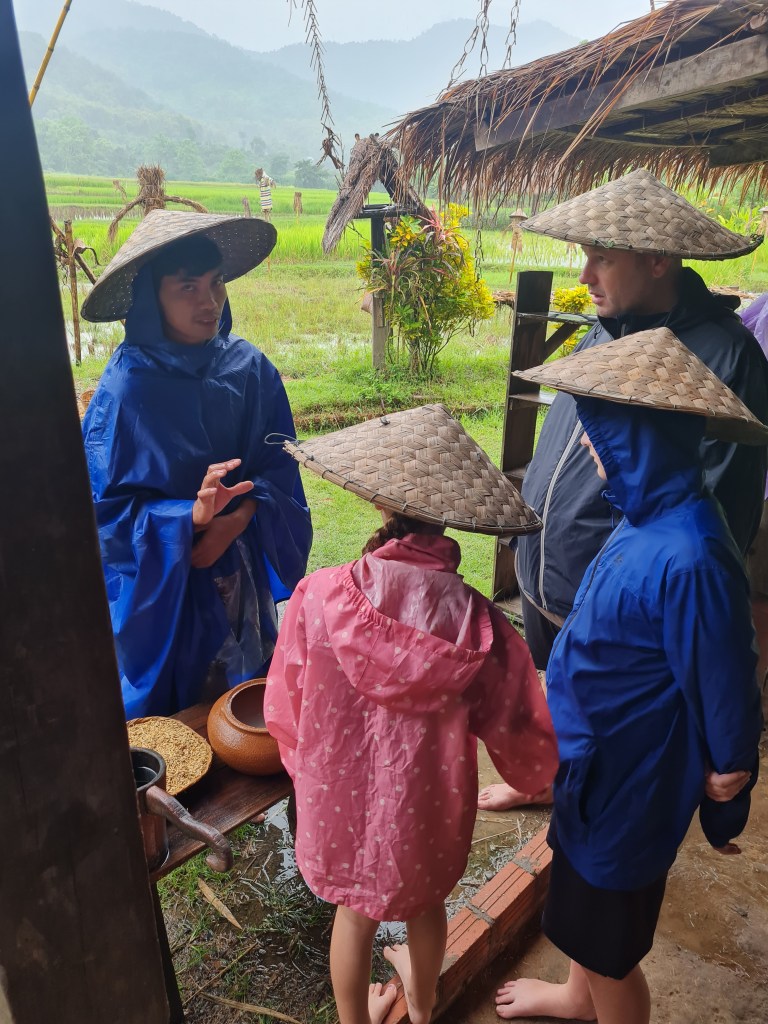
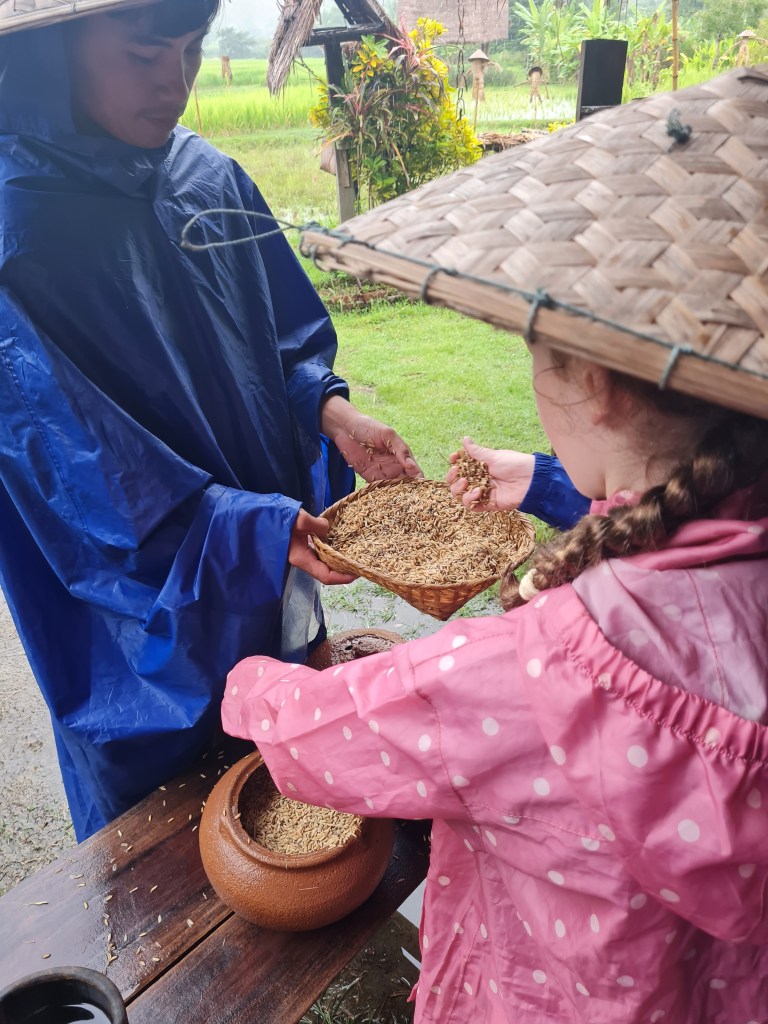
The ones that float can’t be planted but the ones that sink can be, so we grabbed the seeds and went to the next step.

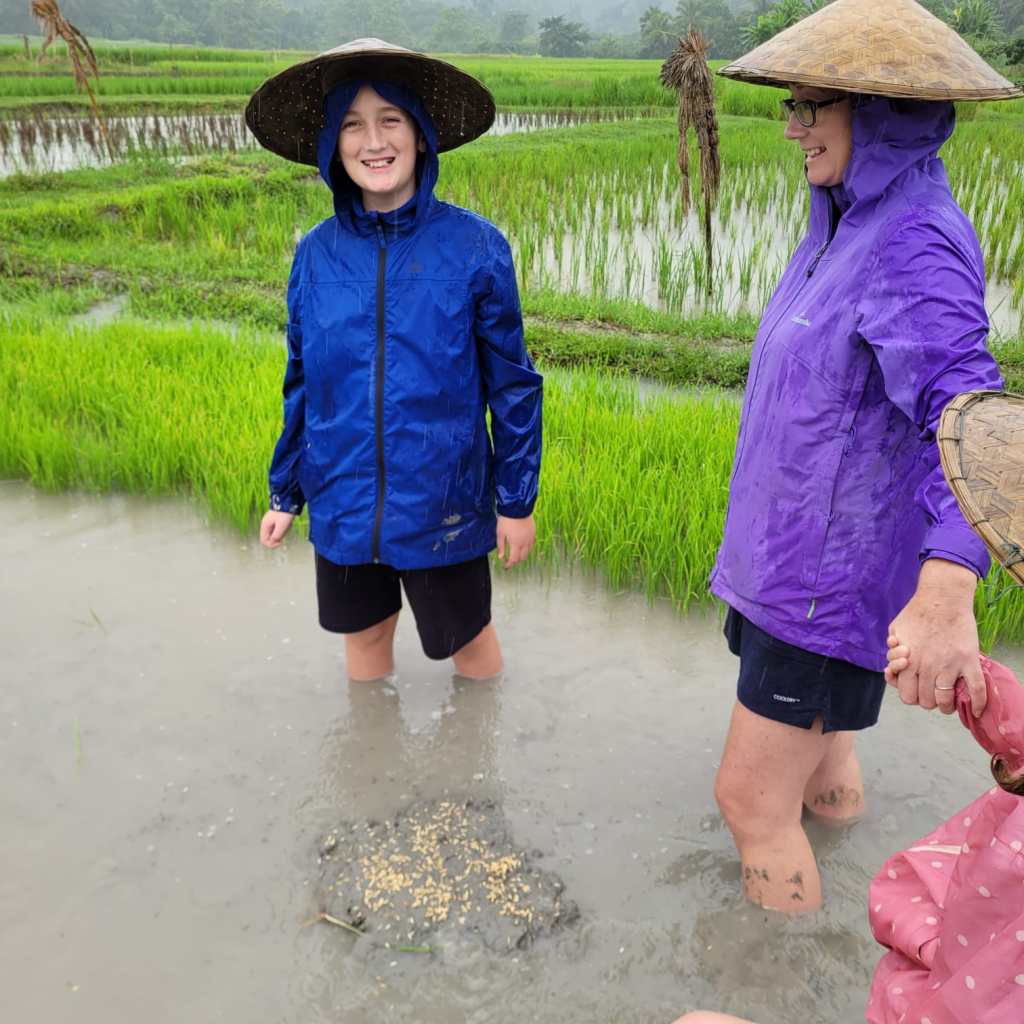
#2 Planting The Seeds
We went over to the Farm and planted the seeds by sprinkling them over mud piles. They then grow into seedlings, which is the next step.
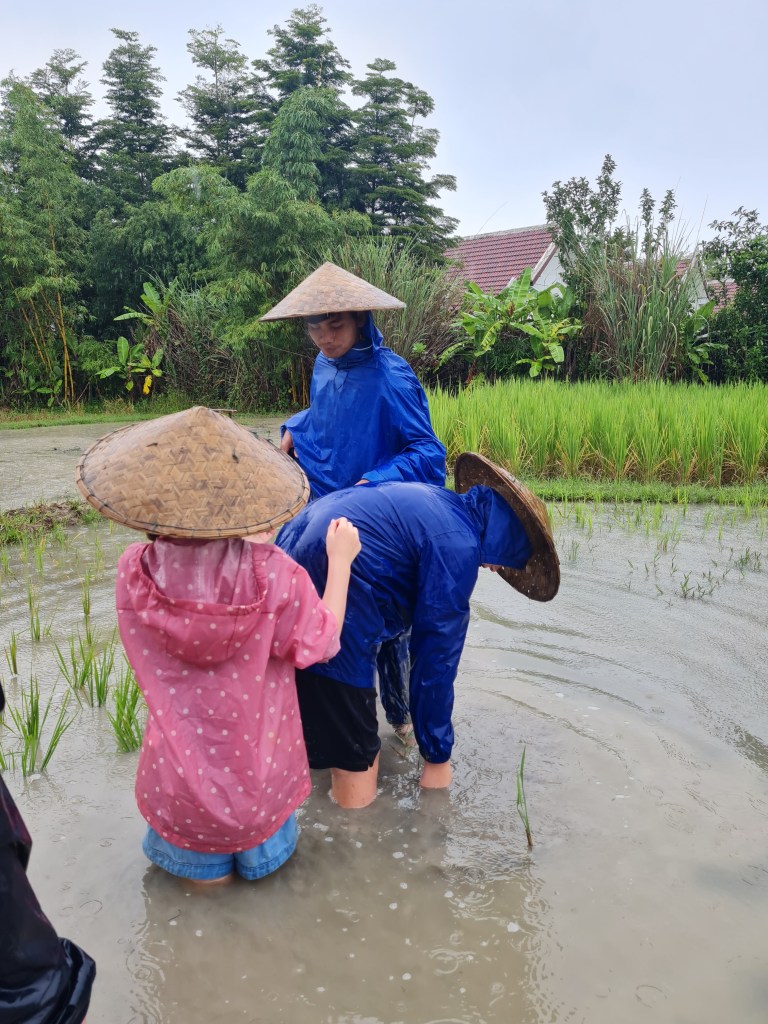
#3 Plucking The Seedlings
When they grow into seedlings the Farmers pluck them out of the ground and prepare a new patch to replant them.
#4 Ploughing The Fields
Before you replant the seedlings, you must plough the field using one of their three buffalos. I don’t know which one we got, but it was definitely not Susan because she was eating behind us. We followed the buffalo along, holding the plough, and it pulled us, and we ploughed the weeds. It was hard work keeping it straight!

#5 Replanting The Seedlings
We of course used a pre-prepared patch because the one we ploughed had mud all around that would take time to clean up. So, we put the seedlings in, mounding mud around them, and went on to the next step.
#6 Weeding The Seedlings
After replanting the seedlings, you need to keep all the weeds off them, so they can grow.
#7 Letting The Rice Grow
After that, you need to wait 7 months for them to grow. Obviously, we didn’t do that cause that’s the length of our whole trip. If you think about it, one would’ve been planted when we arrived in Singapore, and it will be harvested around the same time we leave.
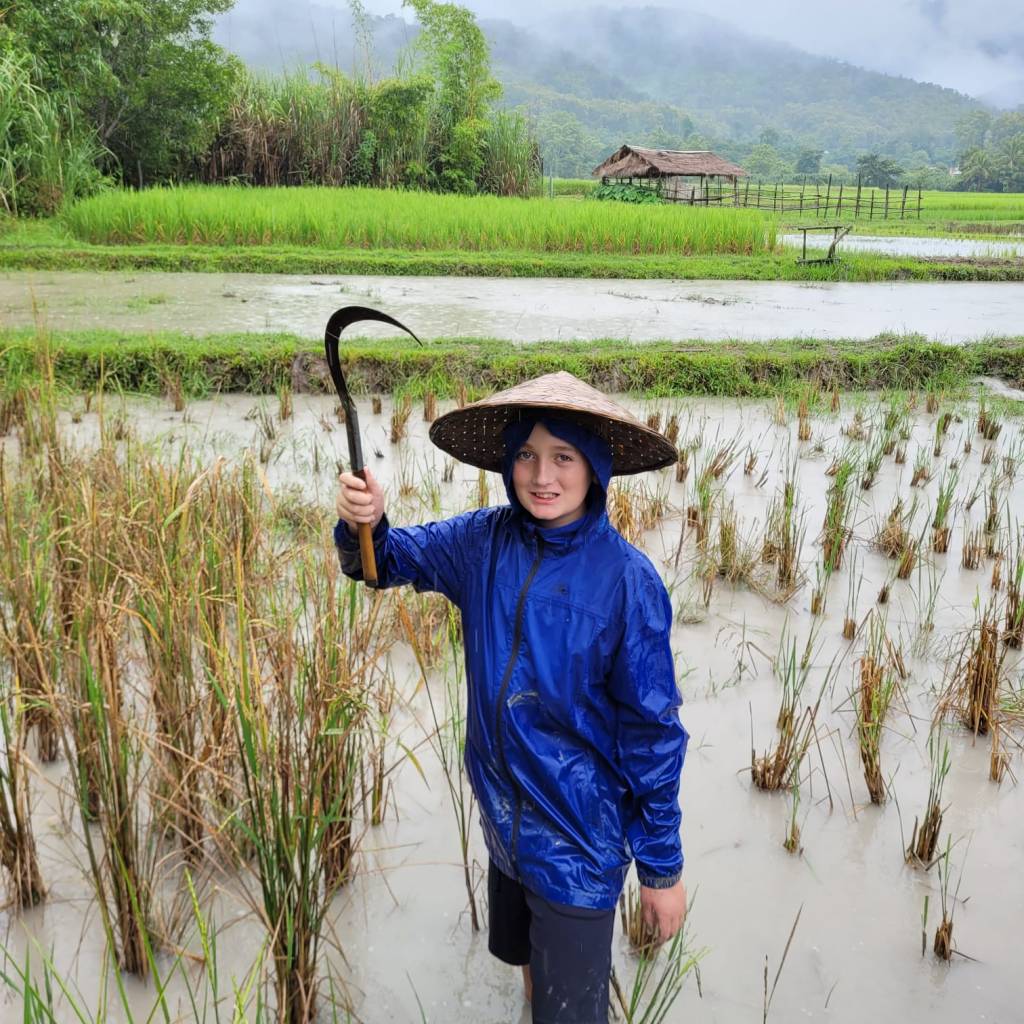
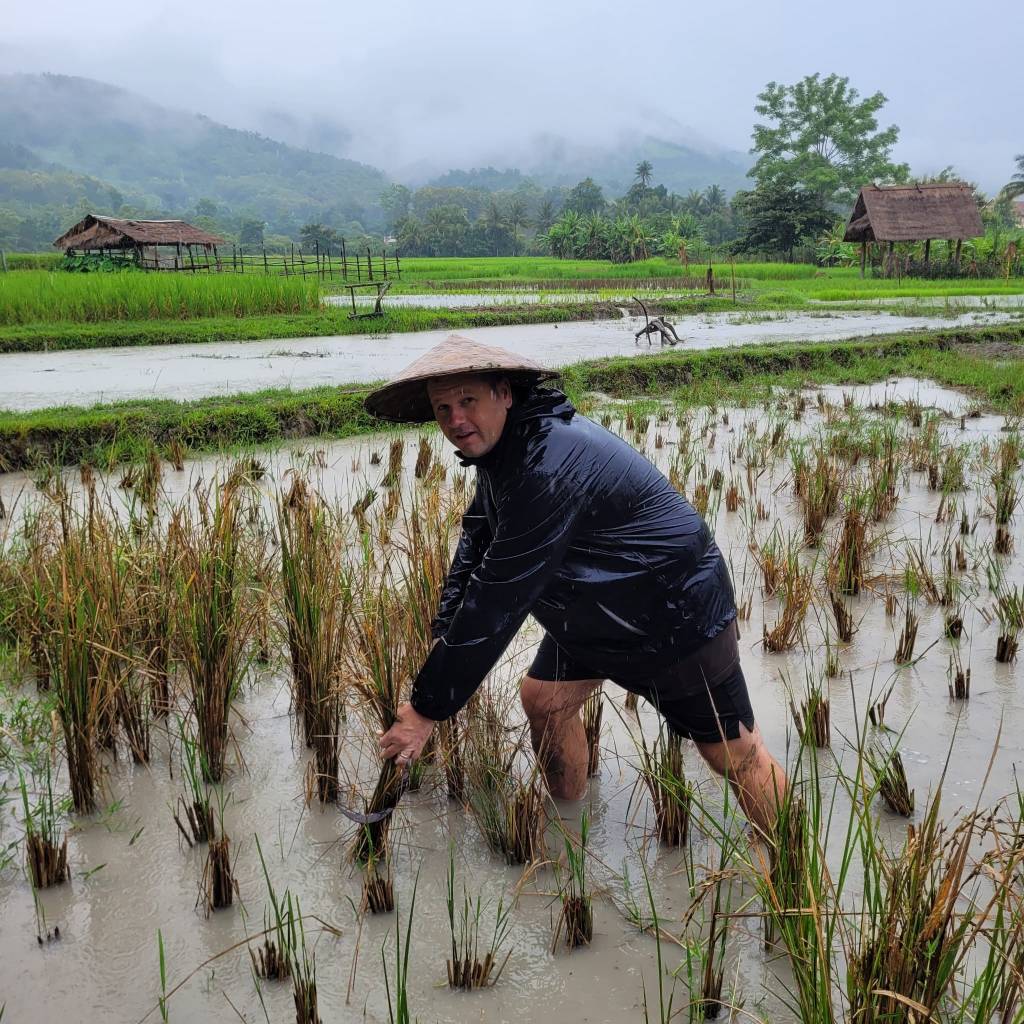
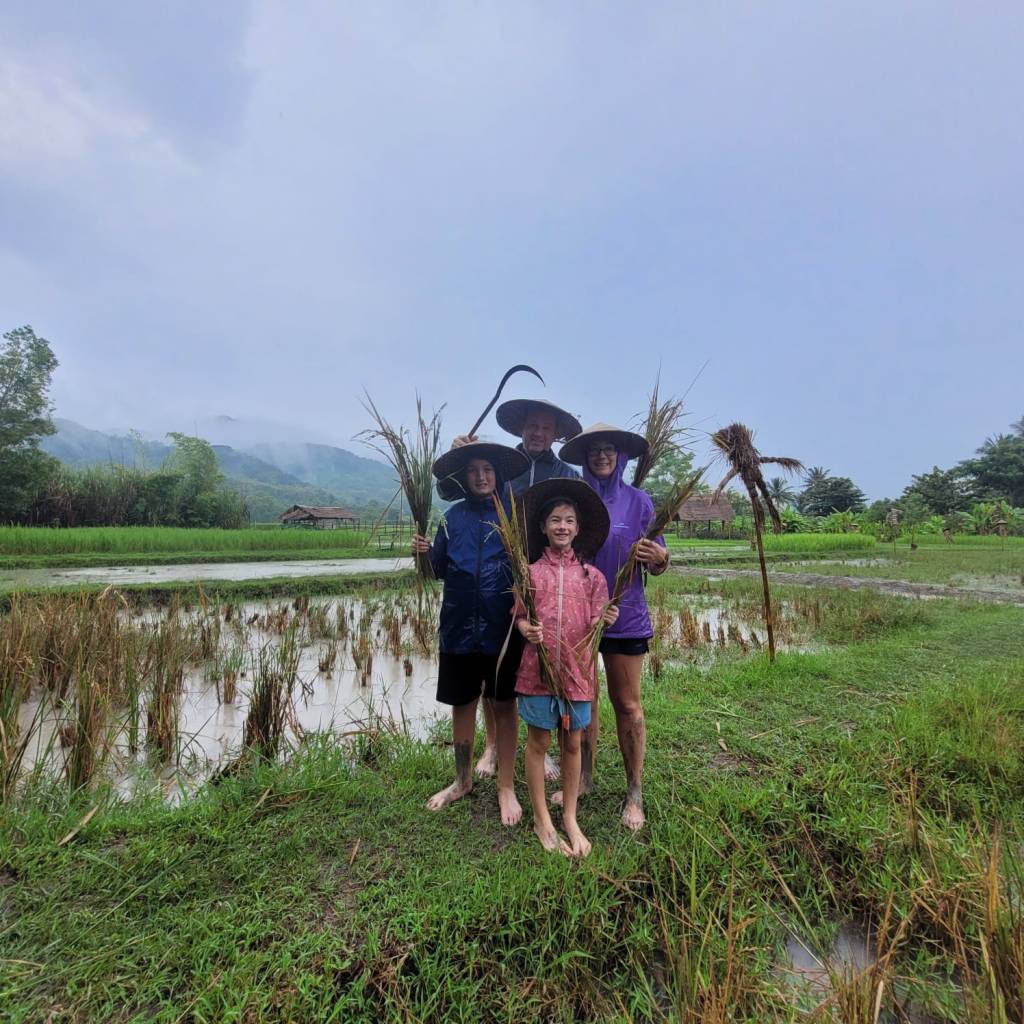
#8 Cutting The Rice
After it has grown, you need to cut the rice with a sickle. This was one of the coolest parts, the way you do it is you grab the sickle and line it up facing away from you then you pull the sickle away from you and the rice towards you and it cuts.


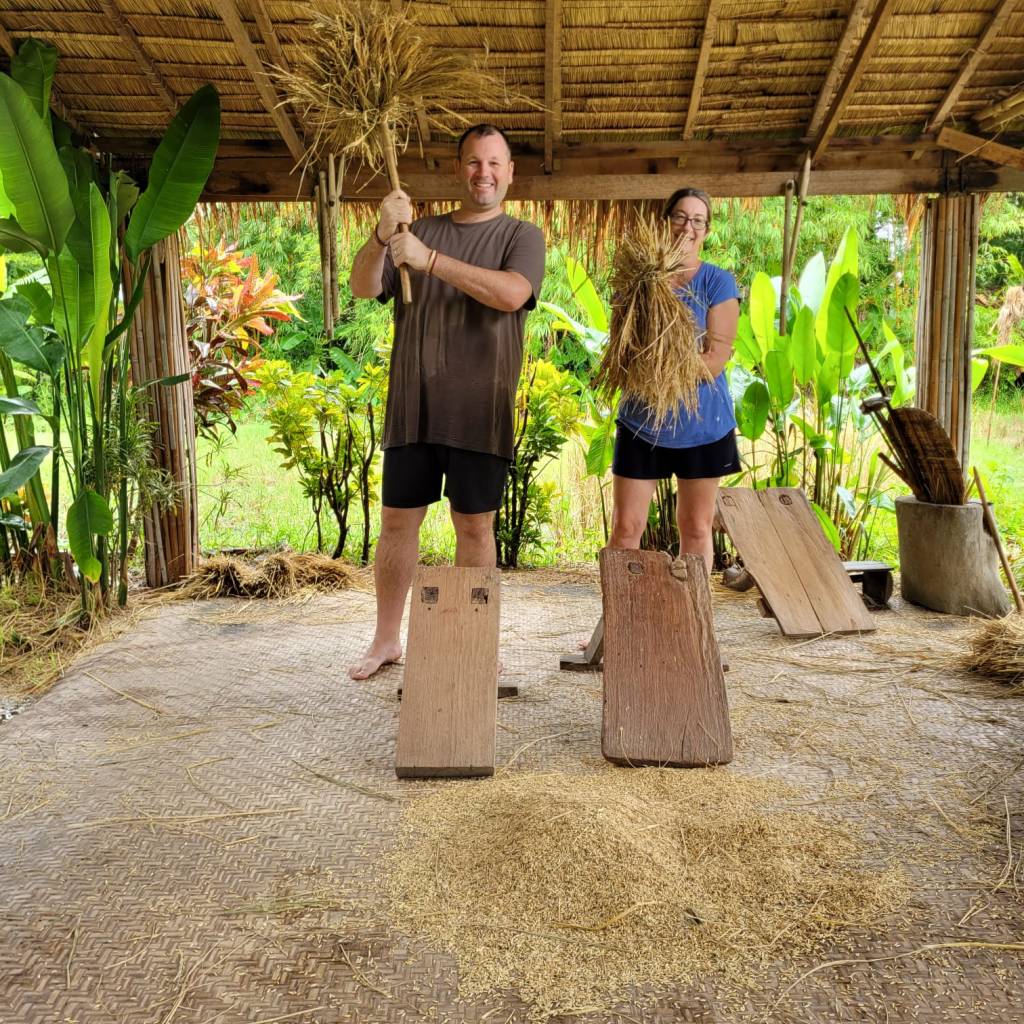
#9 Threshing The Rice
Threshing the rice is when the Farmer grabs the rice and smashes it against wood to get all the grains out, you then throw it off to the side. After this you can either make rice or use it for the seeds, of course, we made rice.
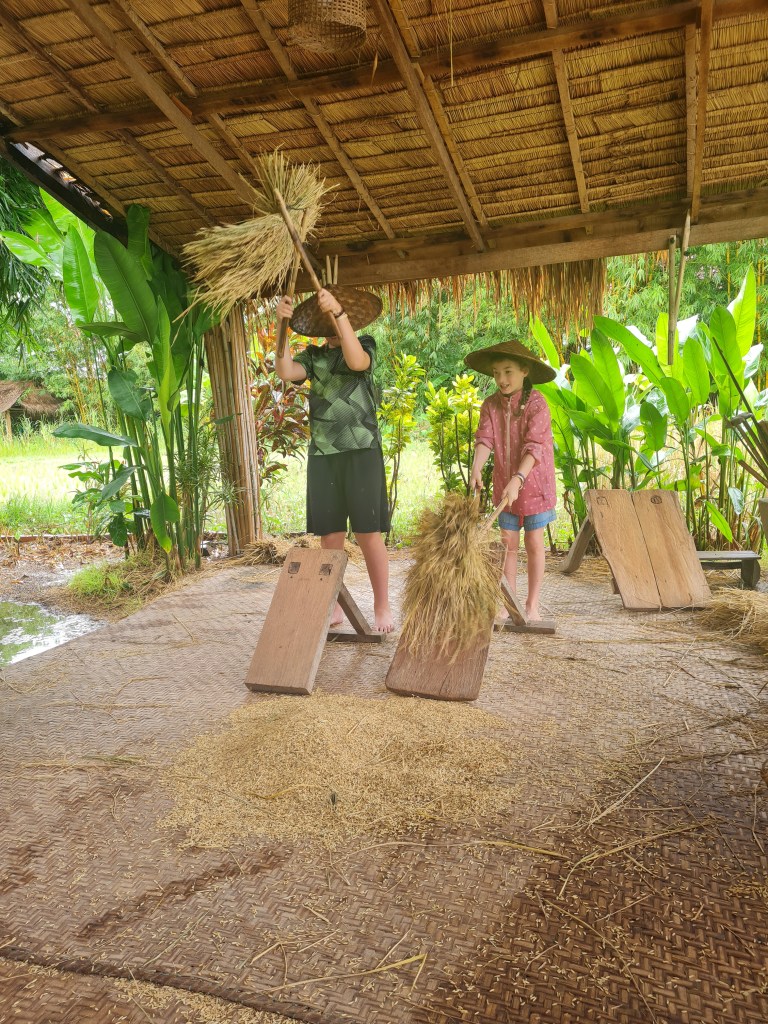


#10 Crushing The Husks
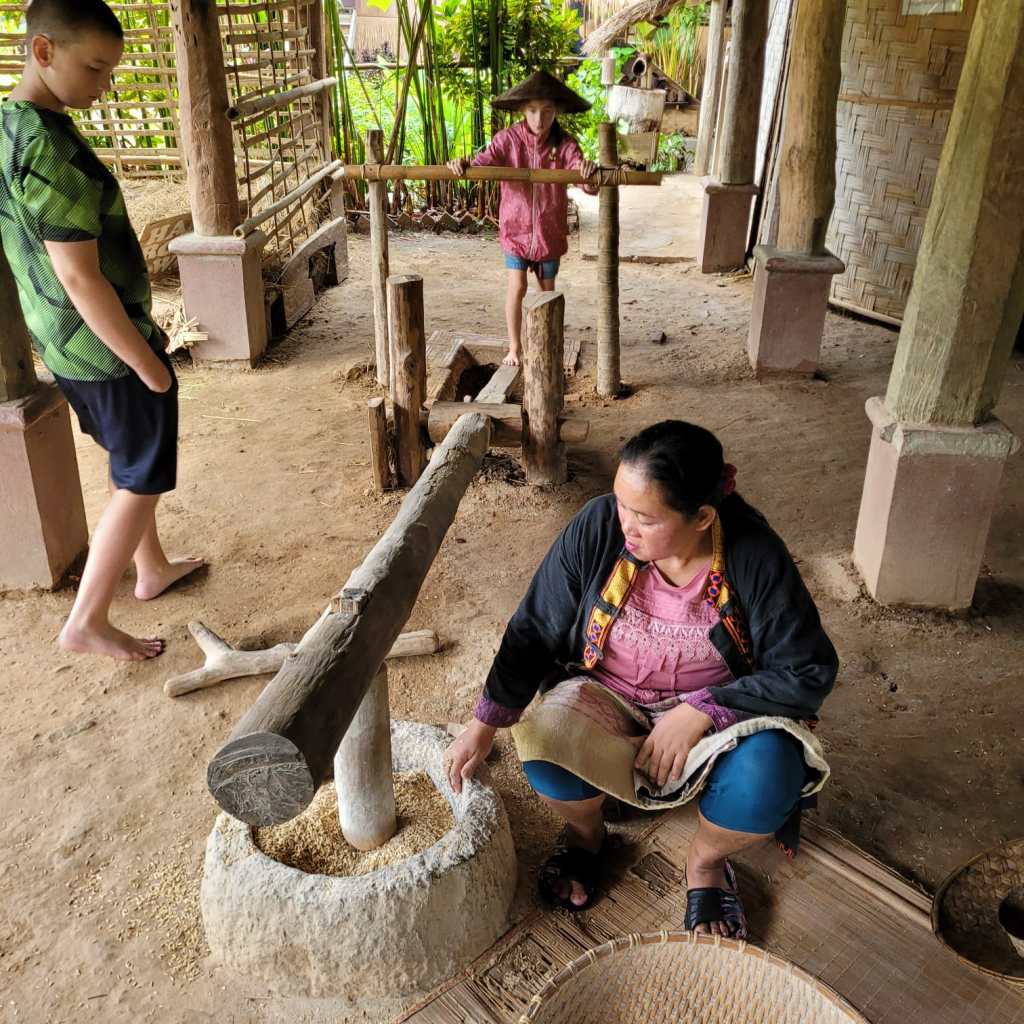
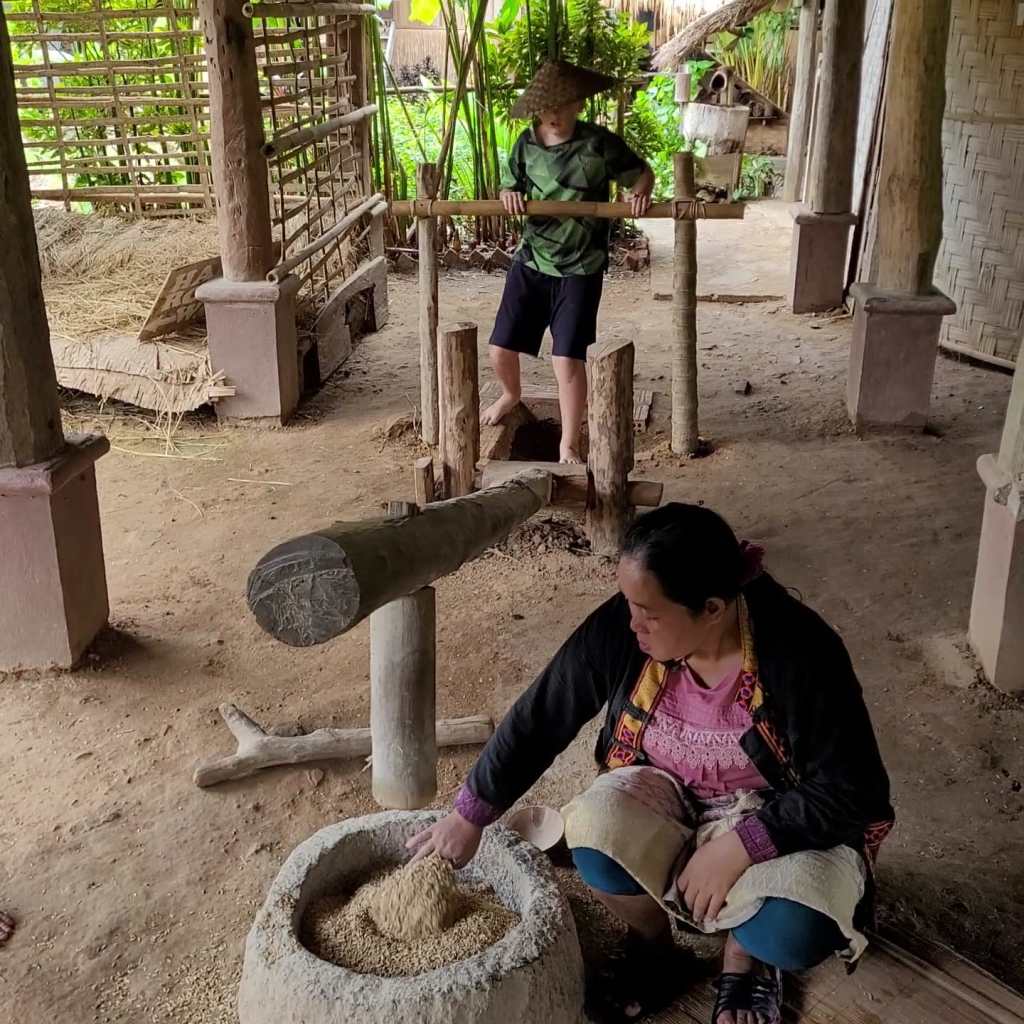
To get the grains, you need to use a pedal mechanism where you stand on and off it to crush the grains while a woman moves the rice around.
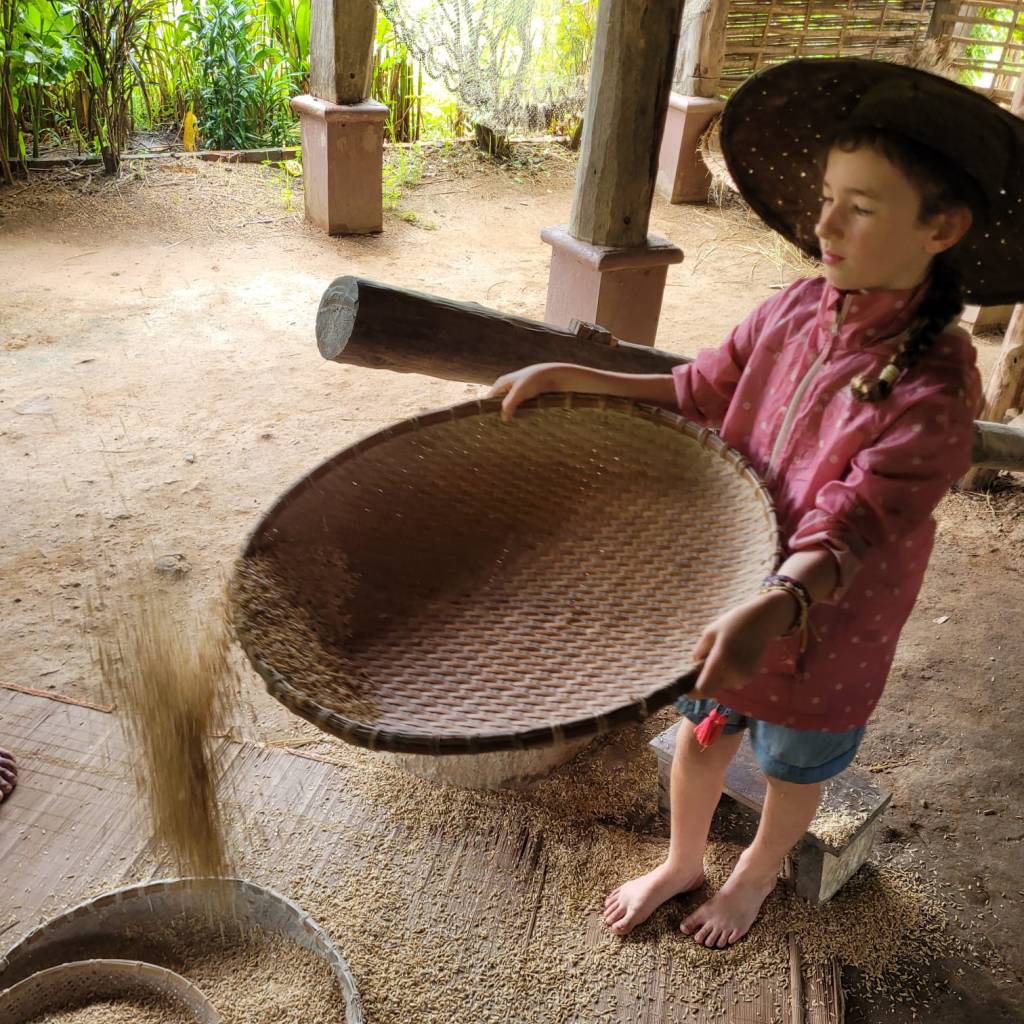
#11 Extracting The Rice
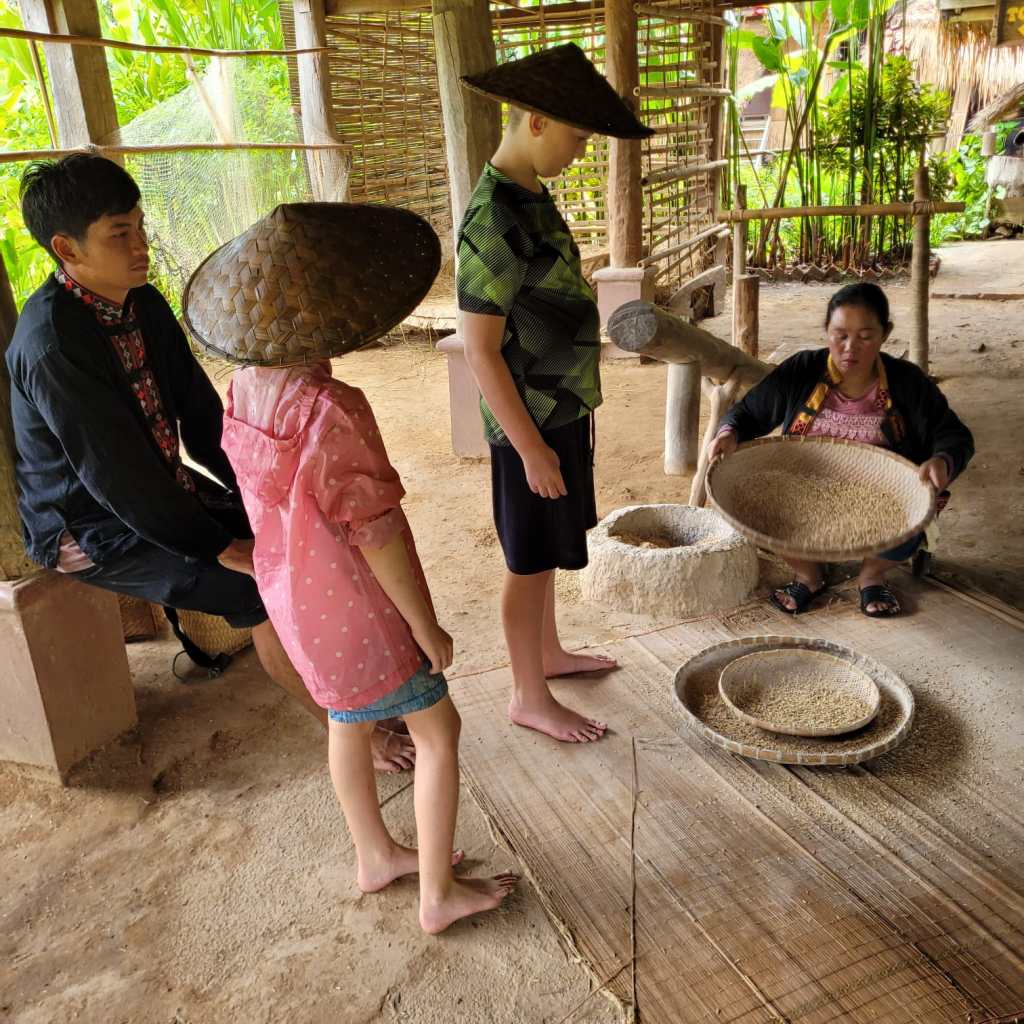
The reason I said a woman specifically is because in Laos with its traditional gender roles, they need to know this job if they want to get married. What they do is they put the crushed grains on a plate and sieve the shells out only having the rice left.
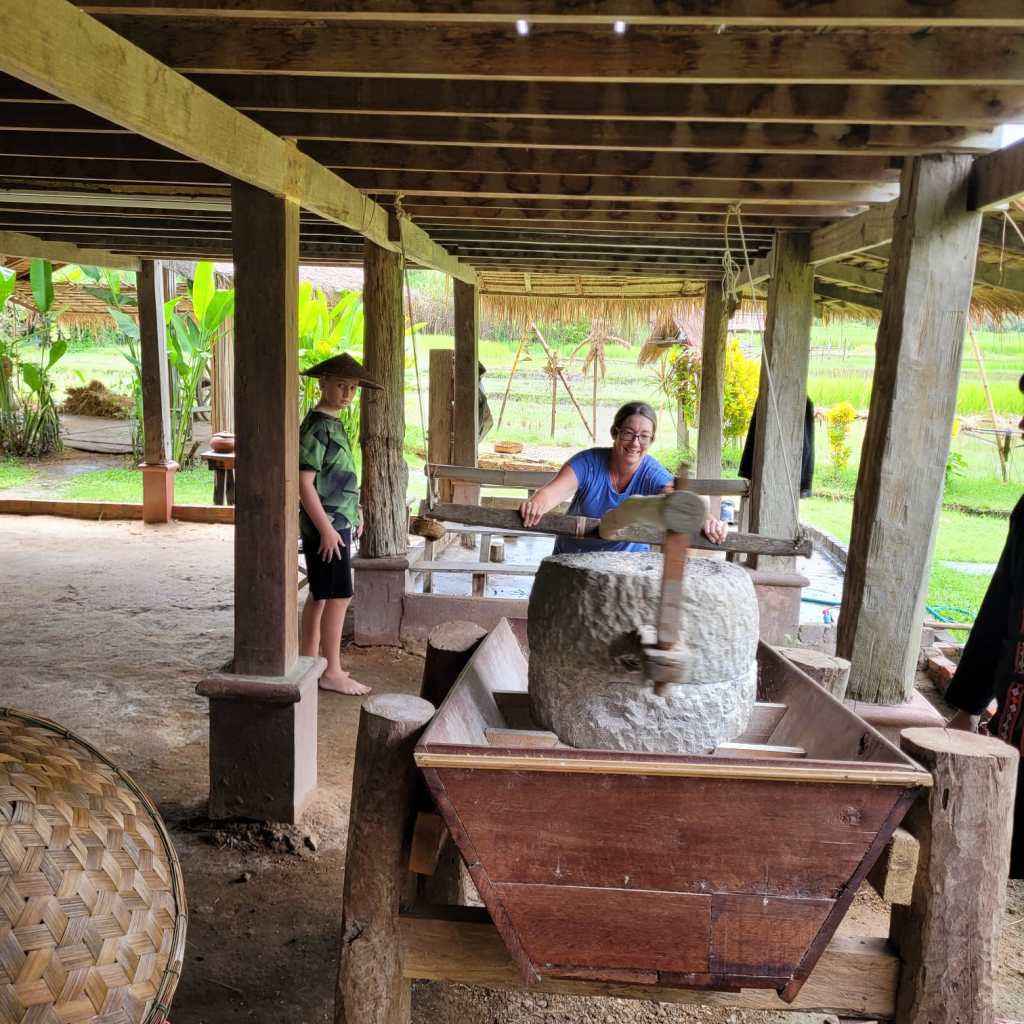
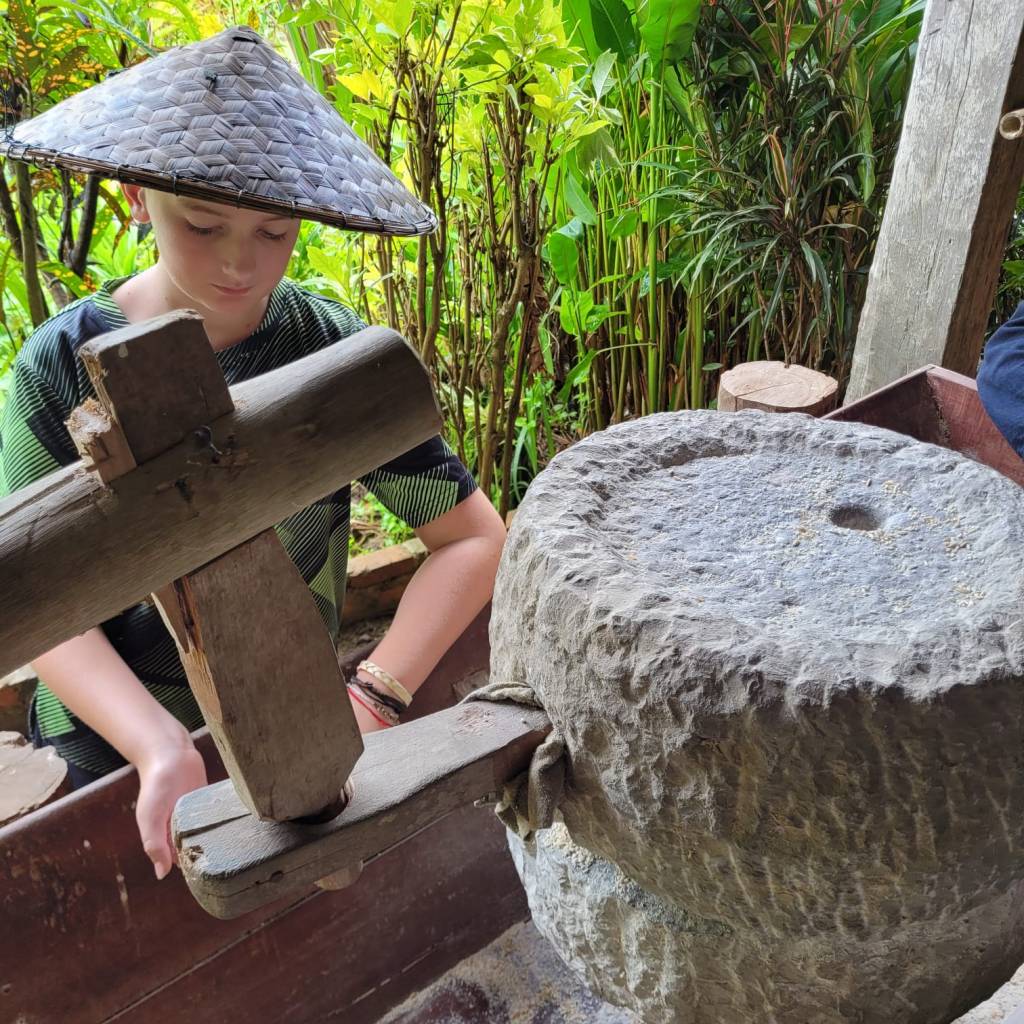
#12 Crushing The Rice Into Flour
The reason I wrote 14 steps is because this one isn’t for making rice, but it is to make rice flour. What you do is crush the grains with millstones and it comes out as rice flour.
#13 Cooking The Rice
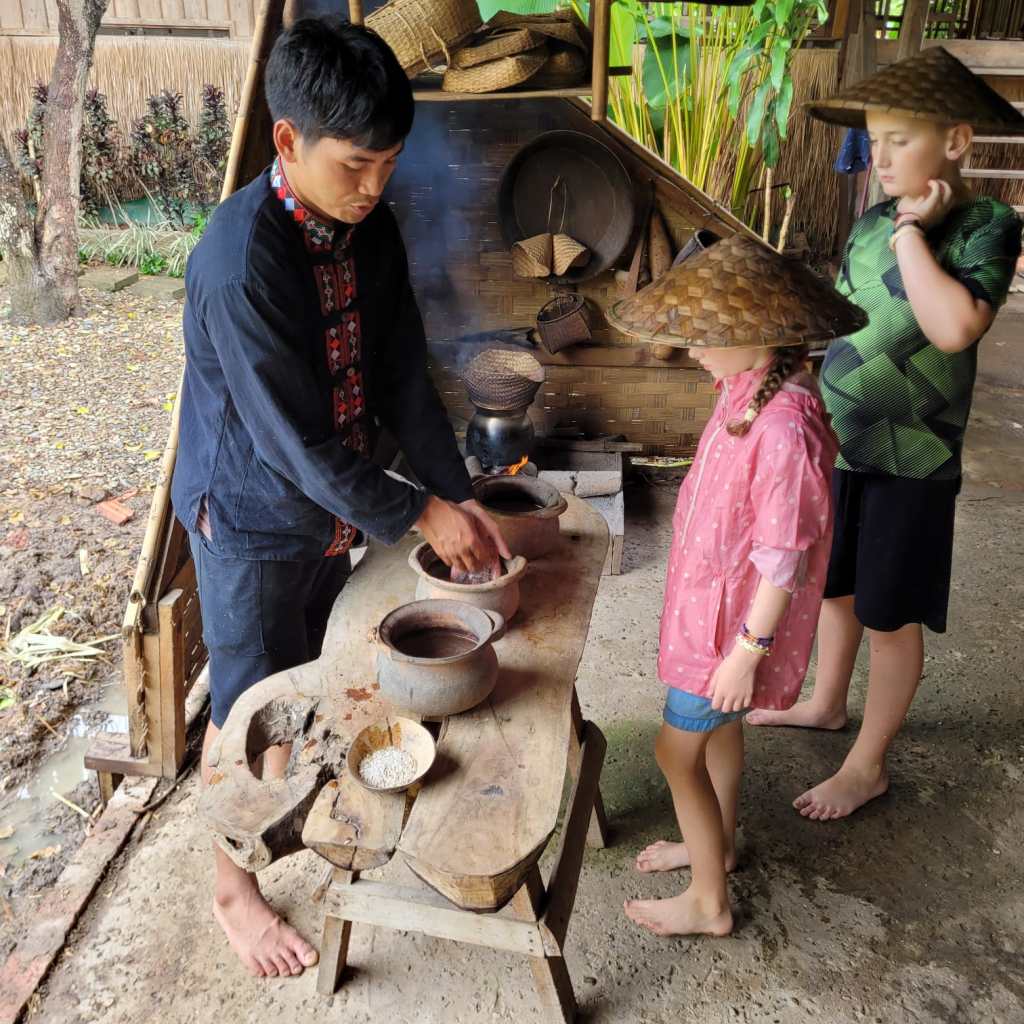
After you’ve got the grains, you wash them and boil them in a pot. We did not do this one because it is just like any cooking and most of it is waiting.
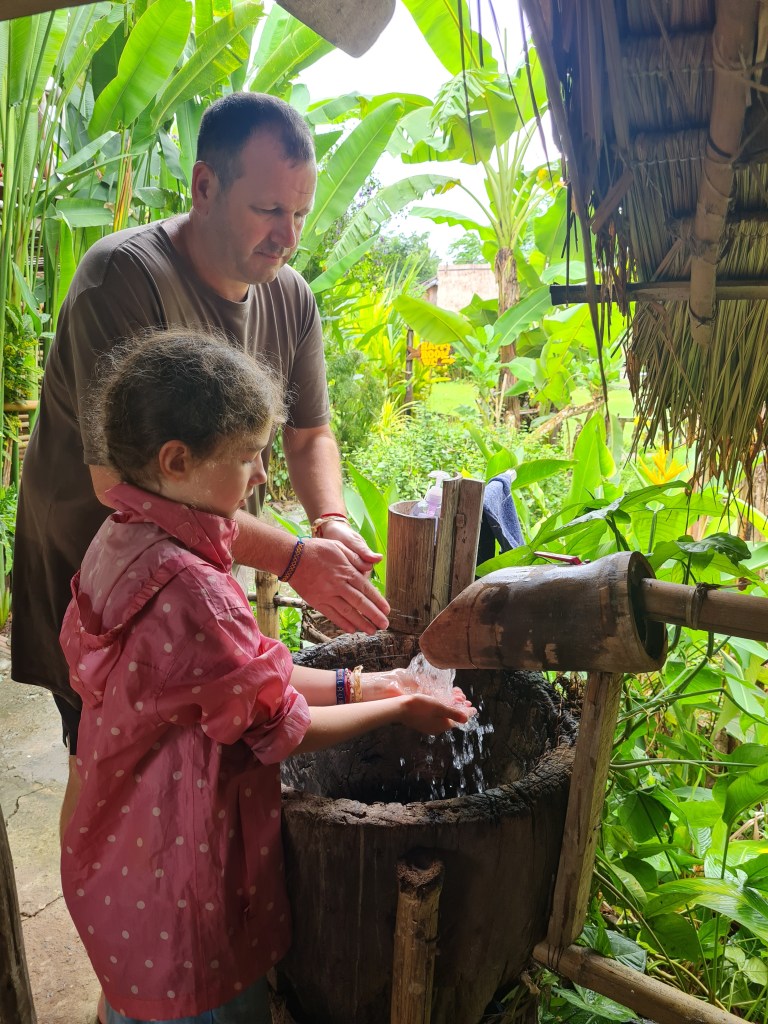
#14 Eating The Rice
After cooking you can eat the sticky rice which tastes way better fresh and not bland either.


We were given a huge vegetarian lunch of traditional Lao dishes, as well as some rice desserts. Mum and Dad tried some rice wine as well and said it was very strong.
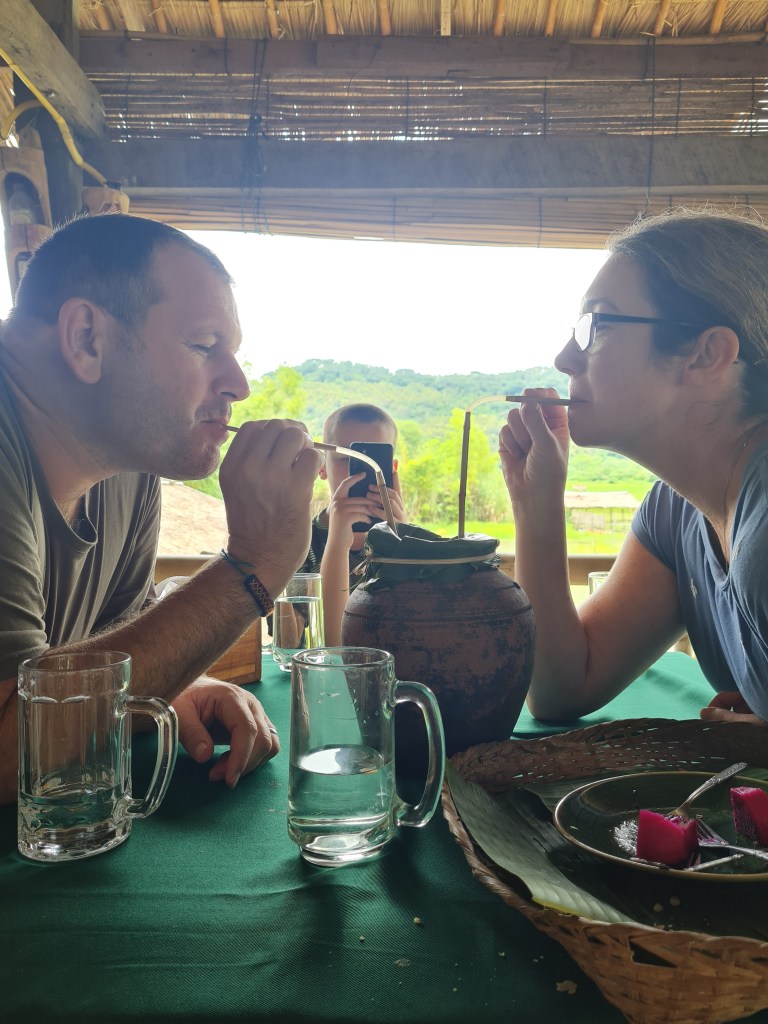
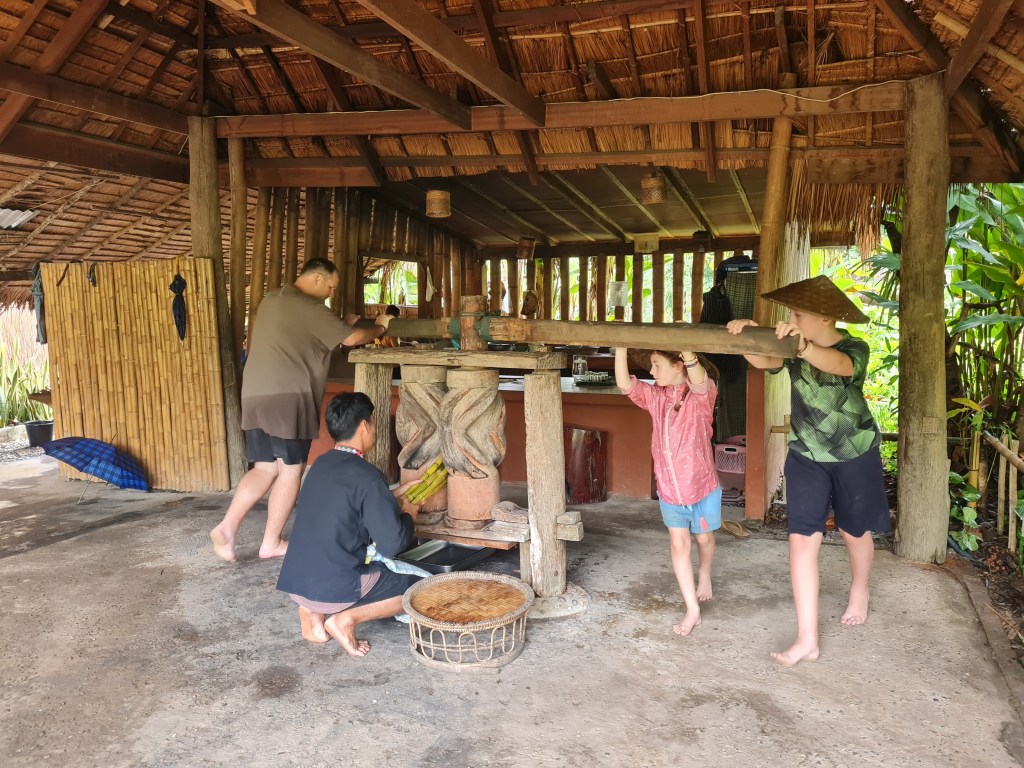
Just before we ate the rice, we pushed a plank around in circles to crush the sugarcane and get the juice out. After this we drank the juice, and it was very nice. It didn’t taste like straight sugar it tasted more like a natural soft drink.
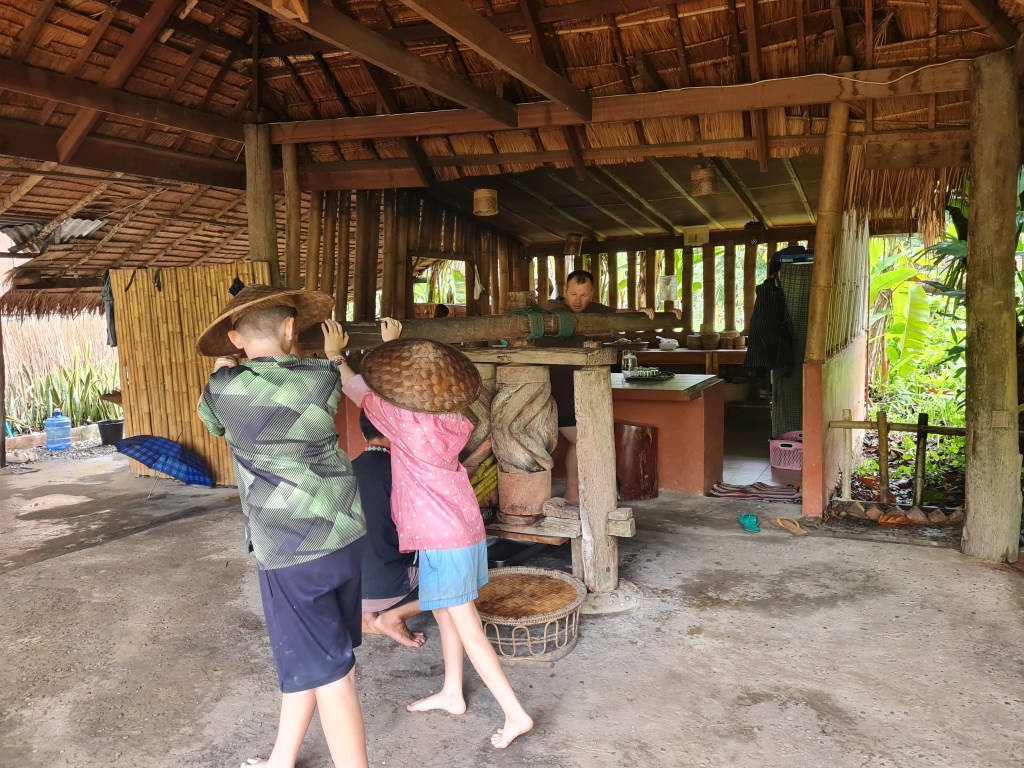
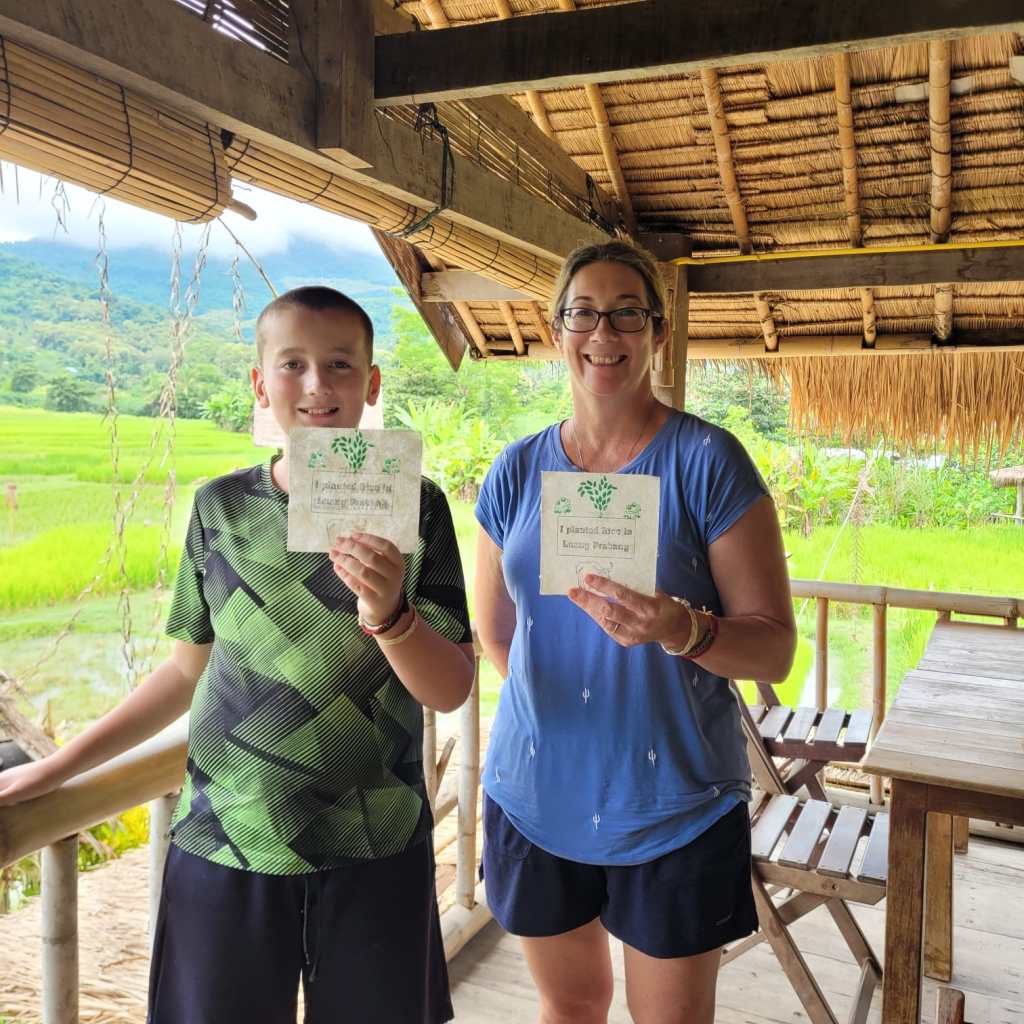
We also wove bamboo bracelets with the retired farmers, and they gave us a bamboo animal each.


At the end, we were taken back to where we were staying in the tuktuk.

Here is the website for the Living Land Farm: https://livinglandlao.org/rice-experience/
A Fun Fair Experience
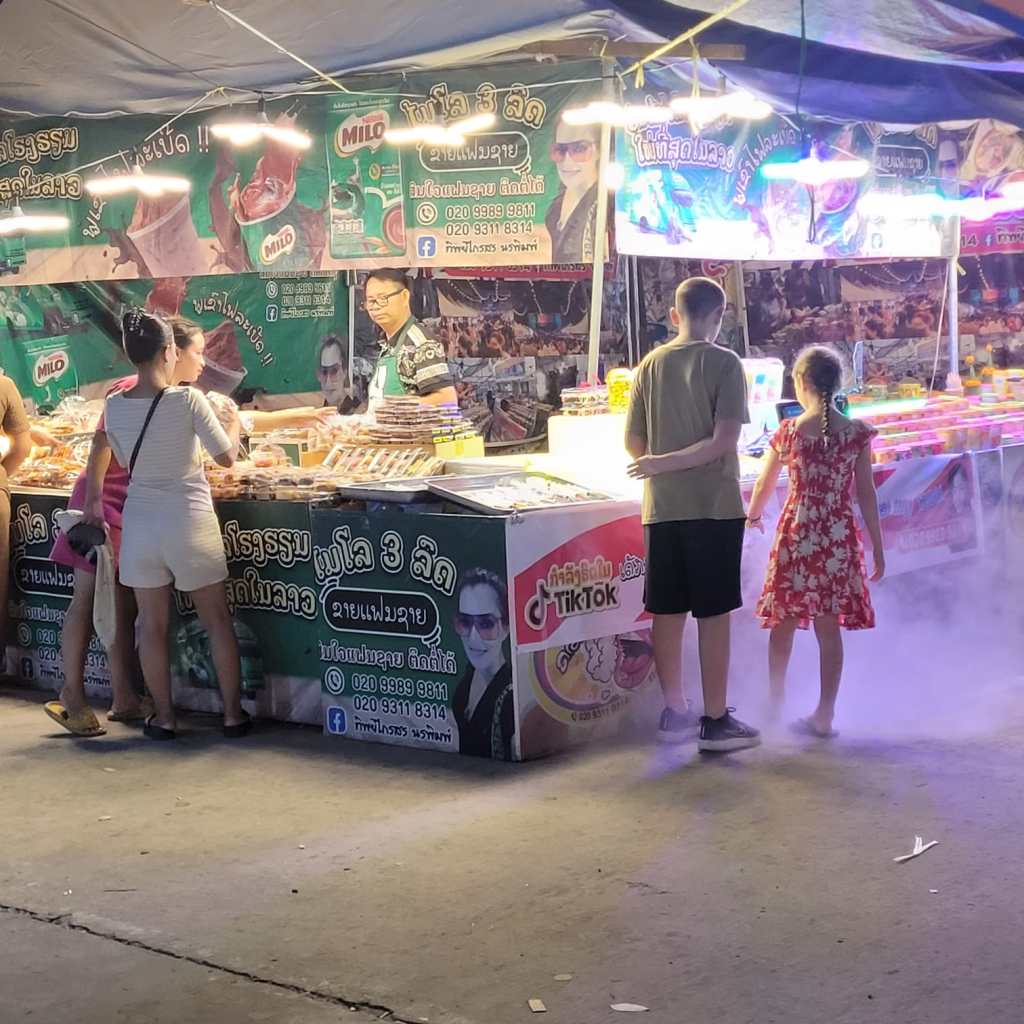
We had driven past a local carnival a few times during the week, and after Leo begged us to take them there for three days in a row, we agreed to go on Saturday night.
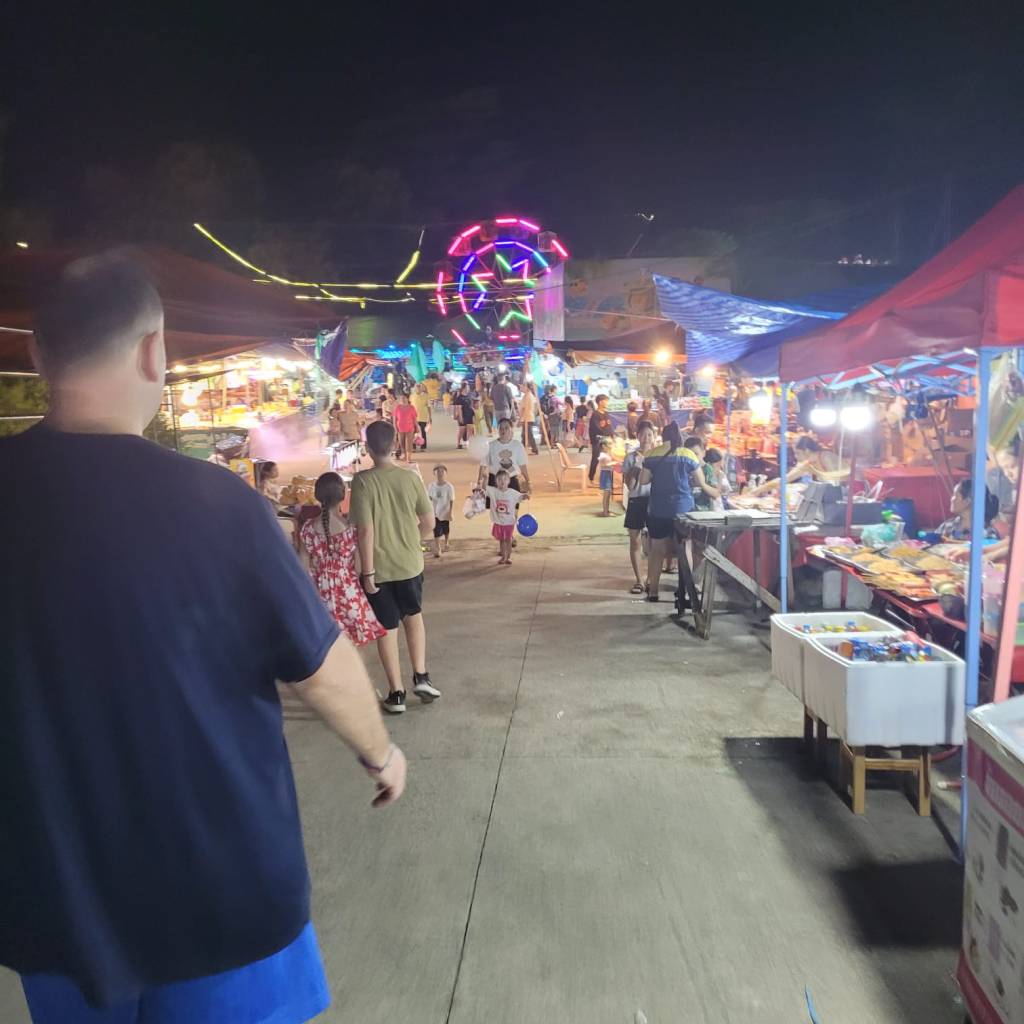
We arrived to find it lit up with bright lights, loud music blaring, and bustling with people…mostly locals. We only saw a handful of tourists during the hour or so that we were there.
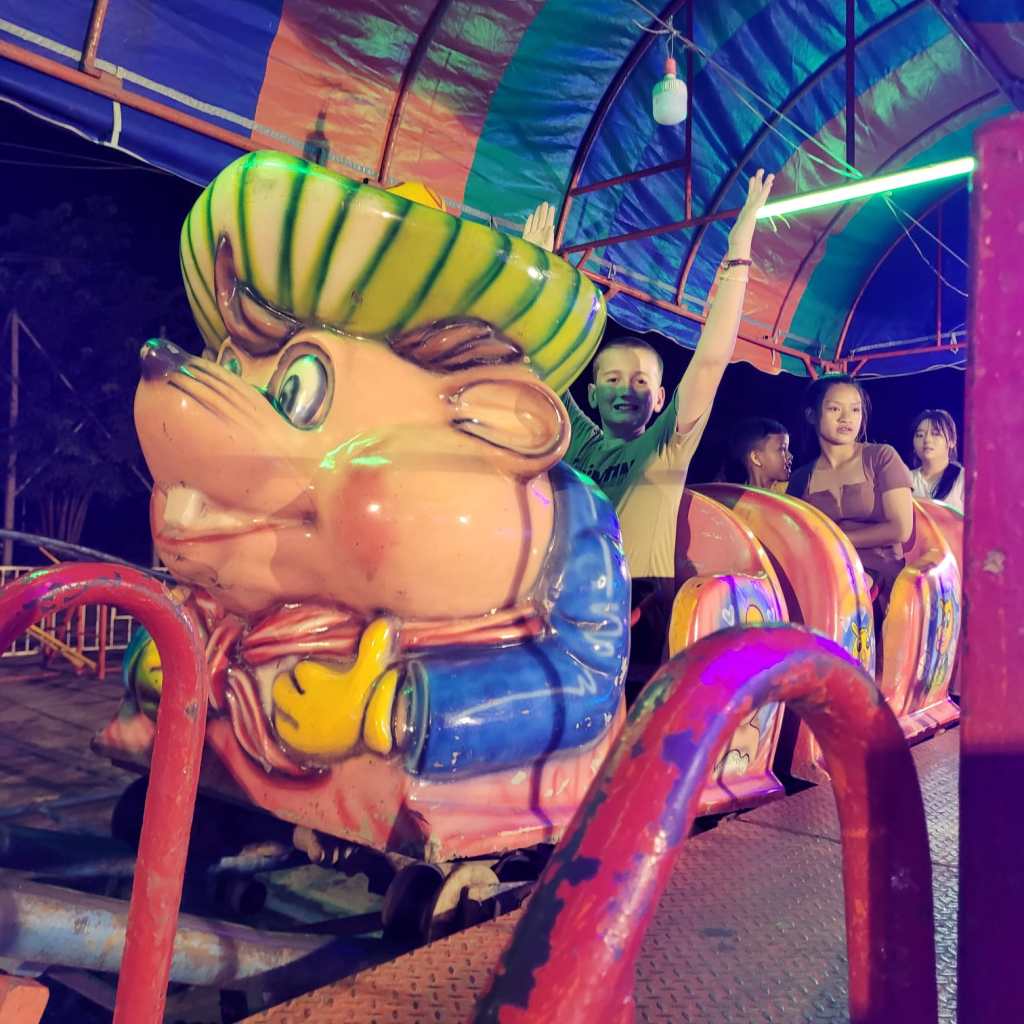
Leo chose to go on the ‘Funny Mousee’ ride, which was an ancient looking rollercoaster with fairly dicey headroom, but he had his heart set on it, so he paid his $1 entry fee and off he went. He was probably the maximum height for the ride and said he had to duck when going under the downwards track because it looked a little too close for comfort.

While Leo went on this ‘rollercoaster’, Anna enjoyed leaping around on an enormous bouncy castle slide and had fun making friends with some of the Laotian kids while she was there.
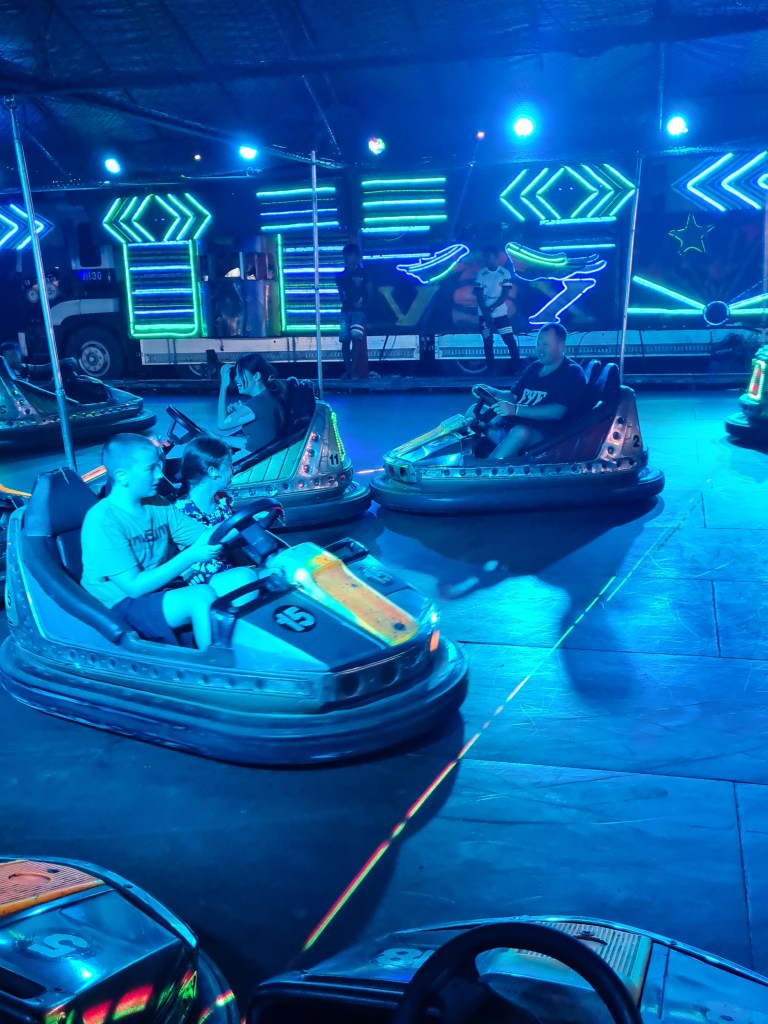
The kids’ next choice was the bumper cars, although the music blaring from the central speakers was so loud that I didn’t fancy going on them…well…that and the fact that they looked a bit too bumpy for my liking. Shaun was game, though, and the kids enjoyed ramming him from time to time.
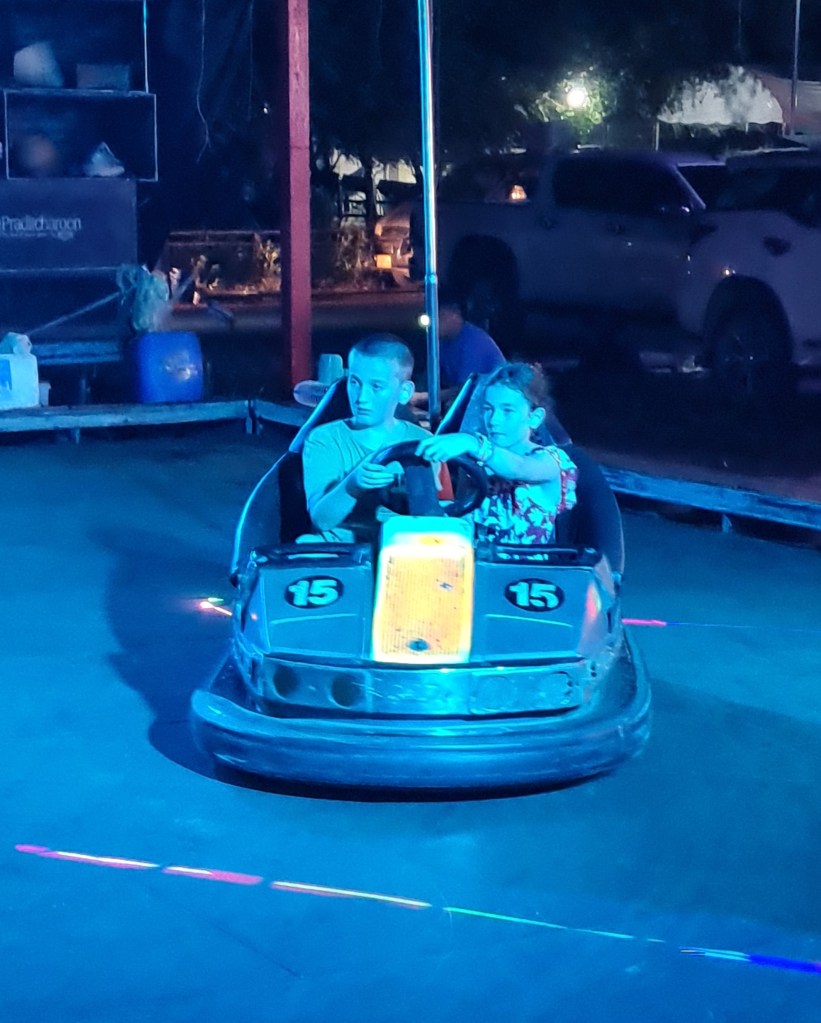
As expected, the dodgems didn’t work perfectly, and at one point, Leo and Anna’s one developed a mind of its own, remaining in reverse, tearing backwards and ramming them against the side barrier. They both had sore necks the next day, and I think it’s probably the most dangerous thing they’ve done on our entire trip.
Shaun and I regularly shake our heads at the lack of health and safety that we witness throughout SEA. We’ve seen some incredibly risky practices around the place, and the carnival was no exception. There were huge multi power point units exposed to the elements with cords strewn all over the pedestrian areas. The rides were rickety and didn’t look like they were serviced very regularly. None of the rides were fenced off either. At one stage, Shaun came within inches of being clocked by a moving ferris wheel cage! Saying that, the kids had a wonderful time, so it was a worthwhile visit.
Mount Phousi
On our last full day in Luang Prabang, we decided to look at a couple of temples before climbing Mount Phousi. We walked along the Mekong, then crossed the old city via Wat Sensoukharam, where we saw this cool VW beetle in their very ornate garage.


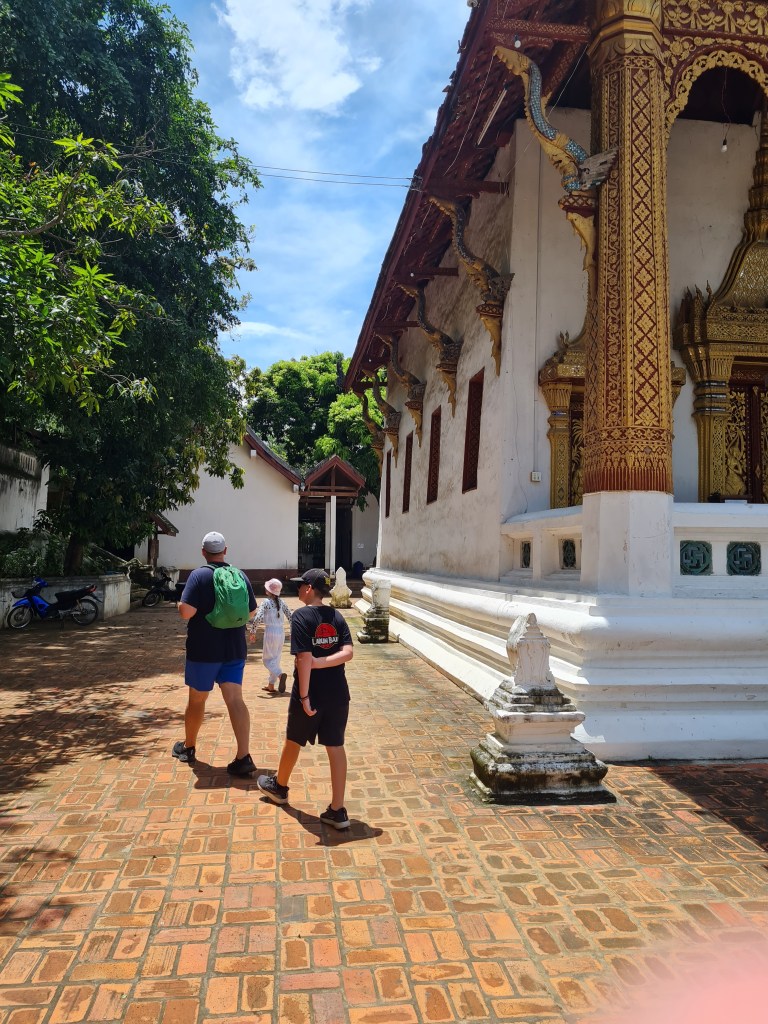

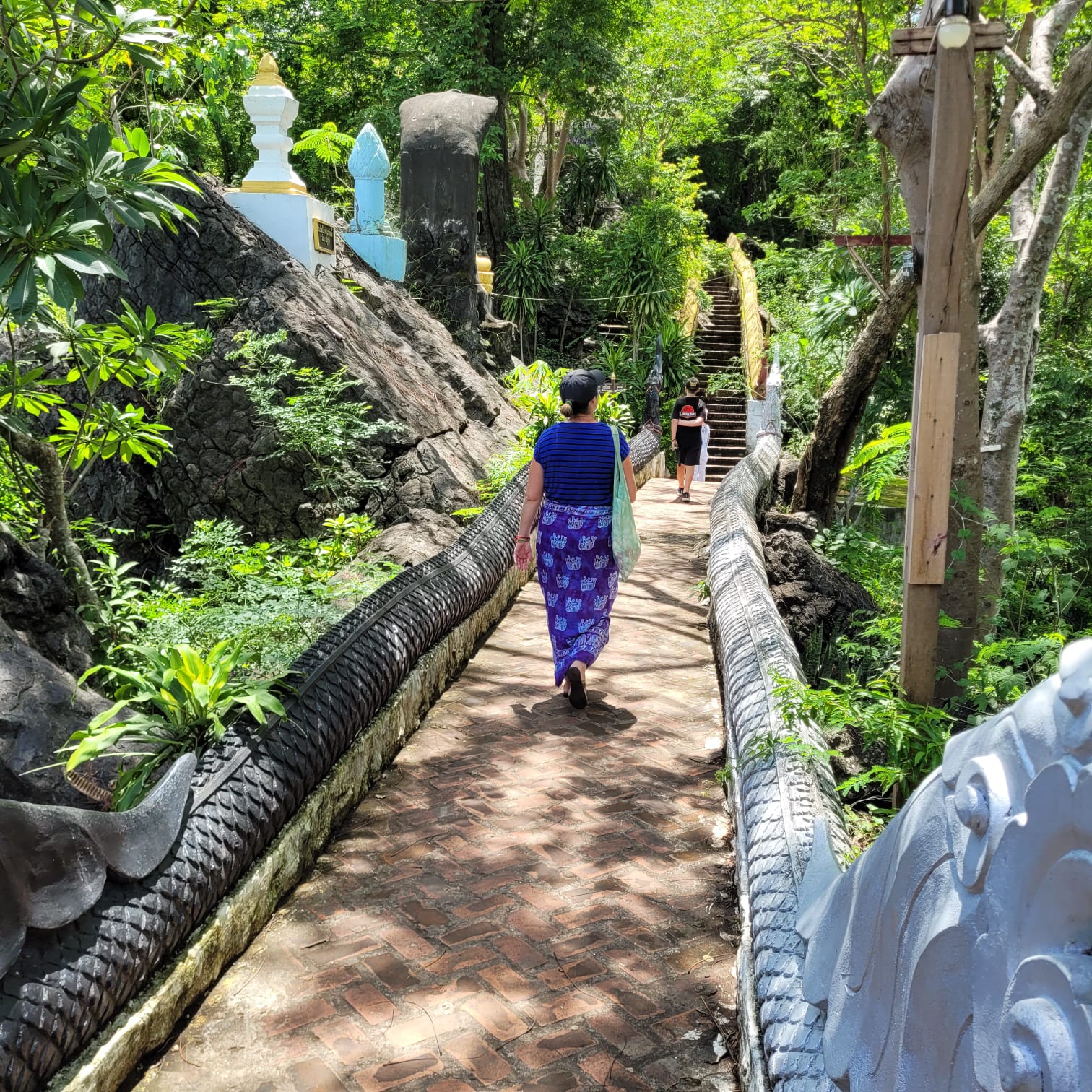
We then took the slightly more challenging path up Mount Phousi from Phousi Road, which has 355 steps, but it’s beautifully shady, thanks to all the trees growing there.
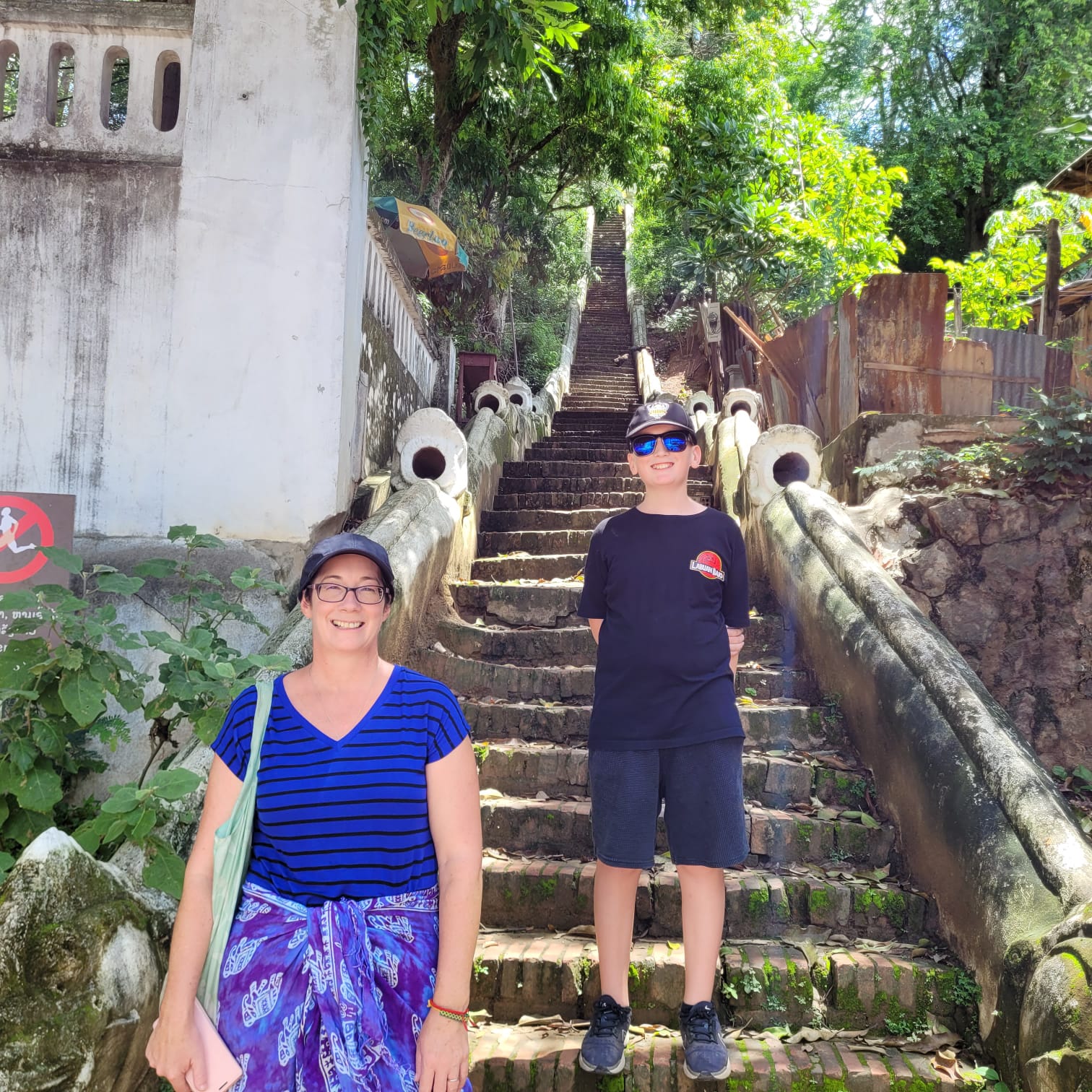
On the way up, we were able to enjoy the temple at the bottom, with its many Buddha statues. You can see in the photo above the Naga’s or serpents bodies extending up on either side of the steps.
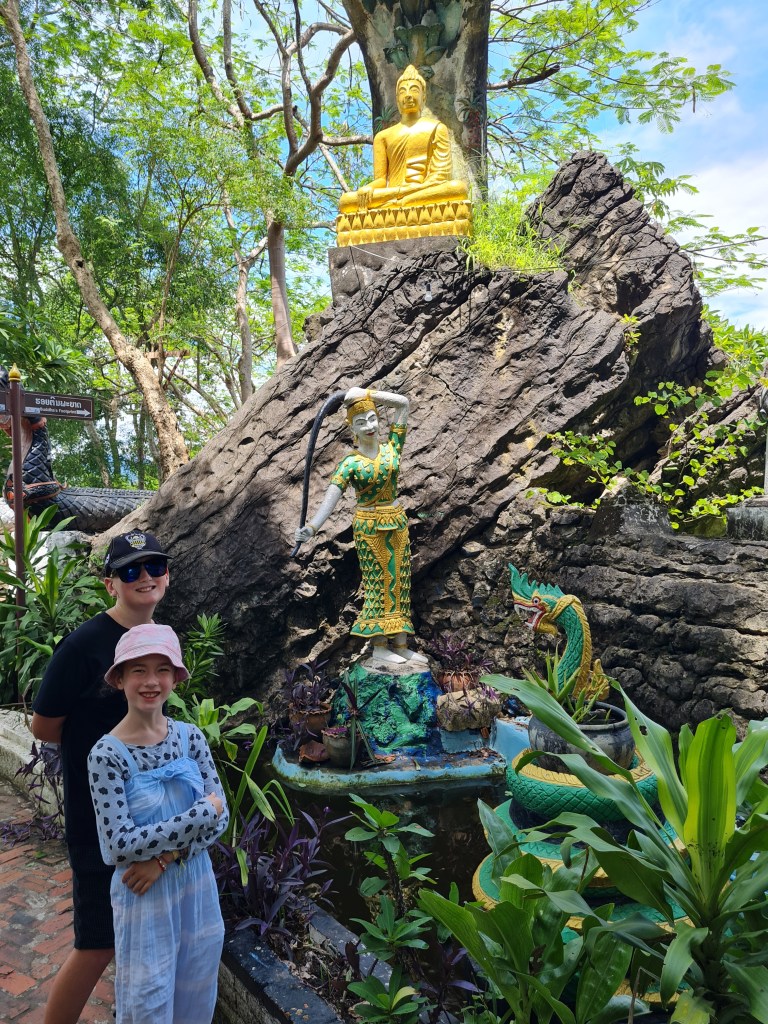

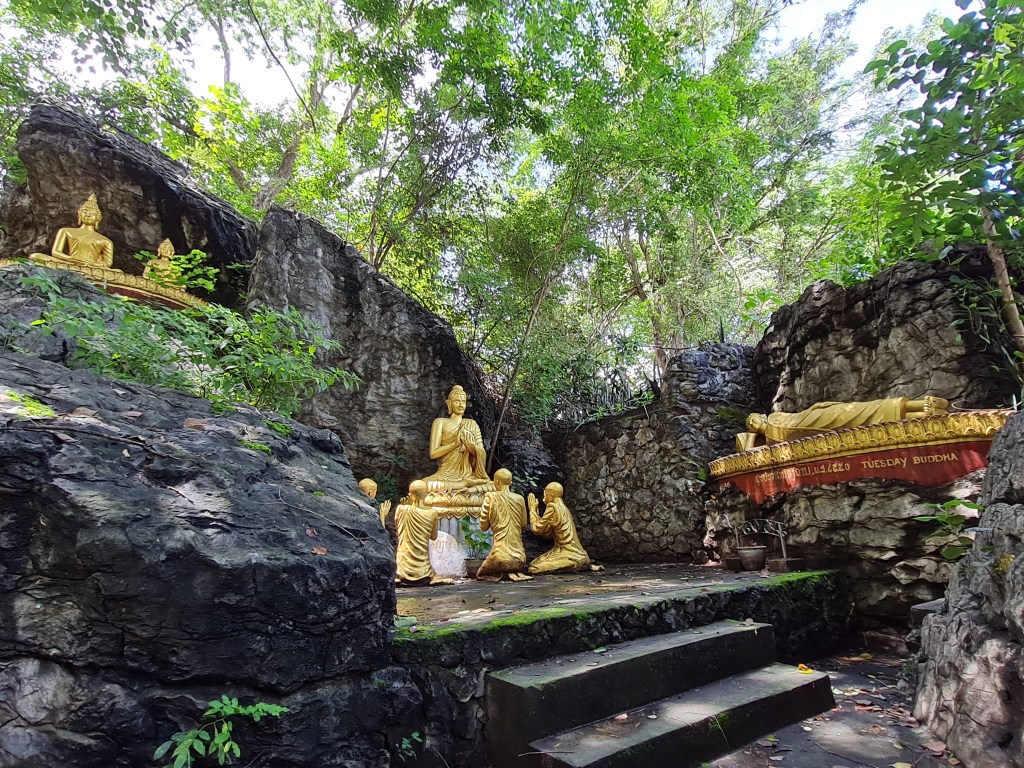

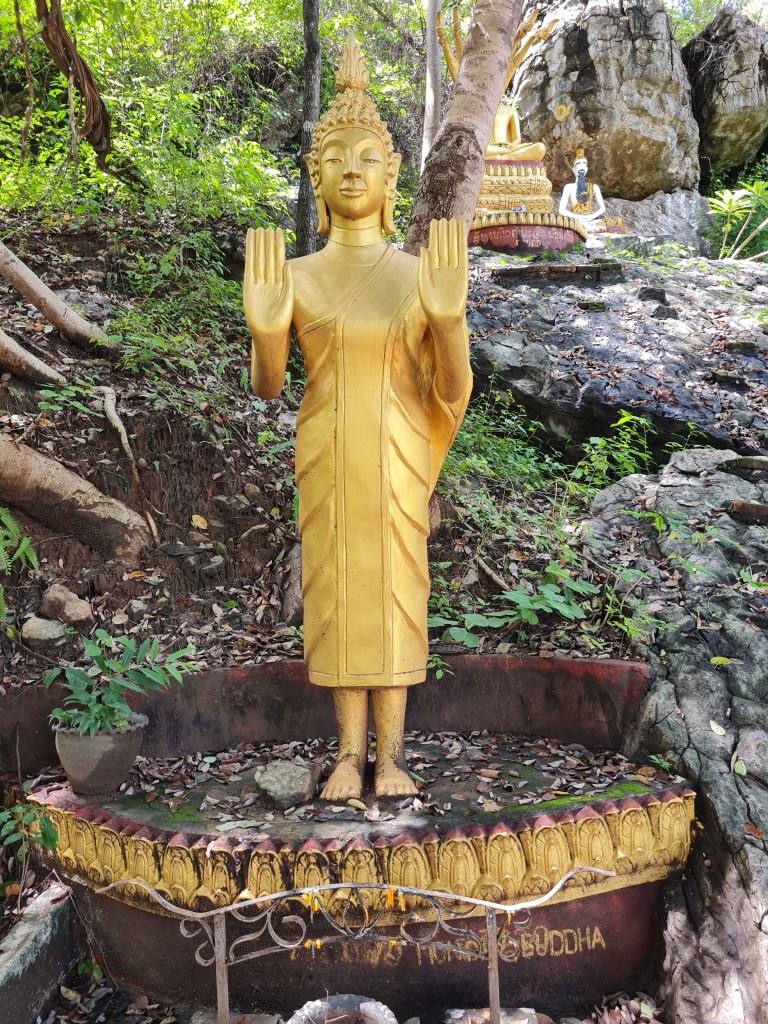
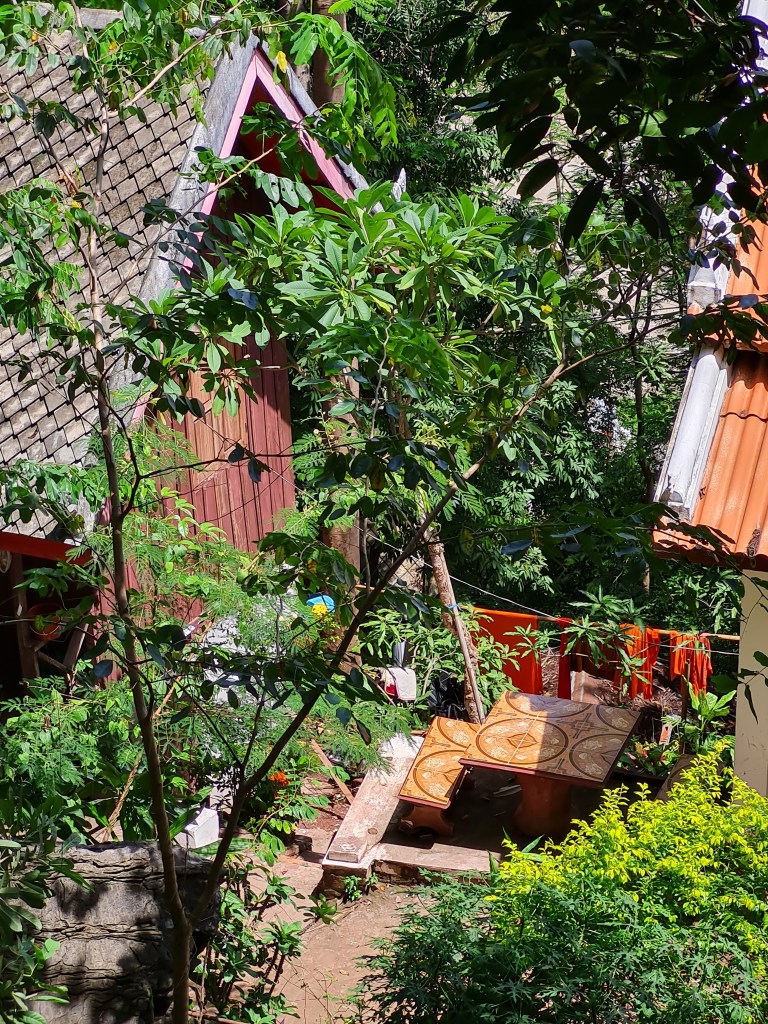
It must’ve been washing day at the temple, because outside the monks’ quarters, you could see their orange robes drying in the afternoon sun. Climbing all those steps in the heat was a real workout, but we made it to the top to enjoy the beautiful view.


At the top, there was a shrine with a Buddha statue and a stall selling drinks and refreshments, as well as a few souvenirs and an activity you can do, which involves buying a live sparrow in a tiny little bamboo cage and releasing it. We didn’t like seeing the captive birds, but we also didn’t want to encourage more trapping of birds by buying one to free it.
We walked down the path on the other side of Mount Phousi, ending up outside the Royal Palace, which was finally open after attempting to go several times earlier in the week. The surrounding gardens were a little unkempt, and we weren’t allowed to take any photos inside, so we don’t have any pictures to include for this part of the day. It was interesting to see all the beautiful murals on the walls in the entrance area of the Palace and to note how minimalist the interior was in terms of furnishings. The display of gifts from other countries to the King was very interesting to look at and the temple in the grounds was also beautiful.
Just as we were leaving, we bumped into our Austrian backpacker friends for the third time that week, and enjoyed a quick update on their activities. This was the same couple who had warned us about taking the boat when we were getting off the bus at the Thai-Laos border. They had caught the overnight bus from Huay Xay, and the first time we saw them was at the storytelling the day they arrived. We ended up chatting with them for ages after the show finished, comparing notes on our respective journeys. We then saw them again at the local carnival the night before. By the time we saw them at the palace, it was like catching up with old friends! It’s so interesting how travel breaks down the usual barriers. After wishing them well on their journey, we returned to Villa Pumalin to shower and enjoy the air-con for a bit before heading out for dinner.
A Sunset Dinner
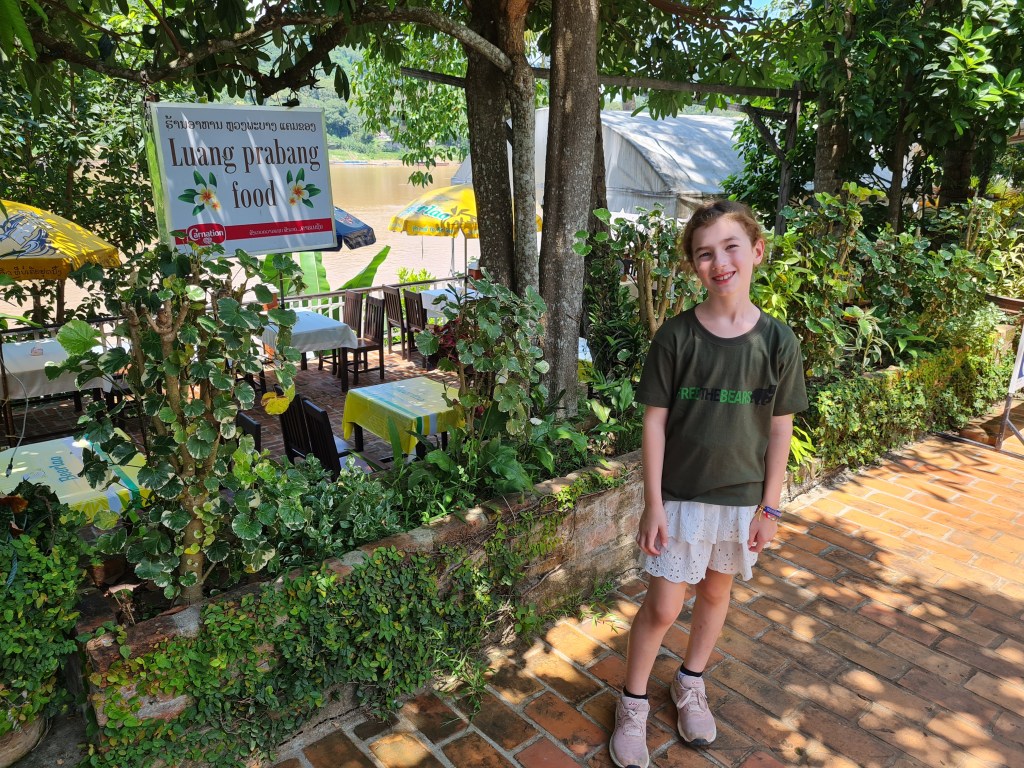
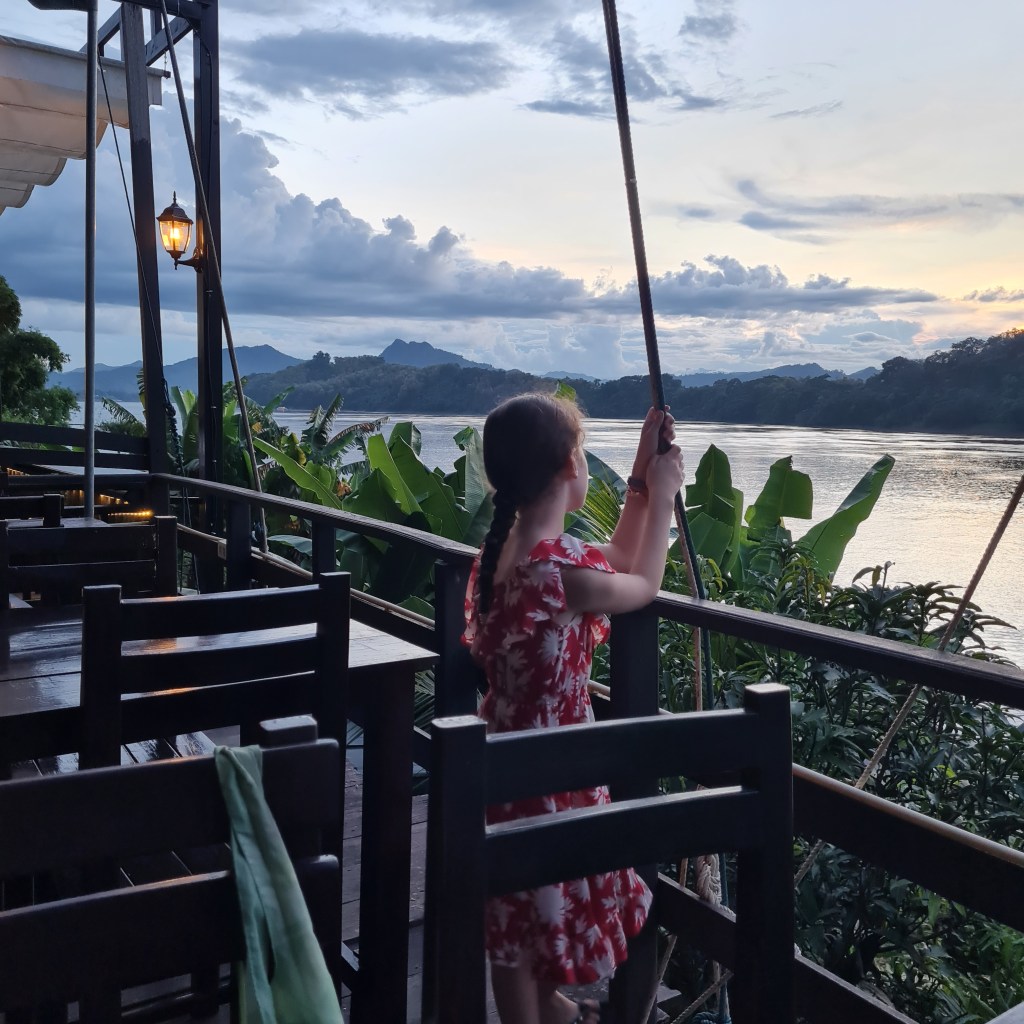
We decided to have a sunset dinner on the bank of Mekong for our last meal in Luang Prabang and found a local restaurant near our hotel that served reasonably priced food. It turned out to be delicious food as well and we all enjoyed watching the sun dropping down behind the hills as we ate.
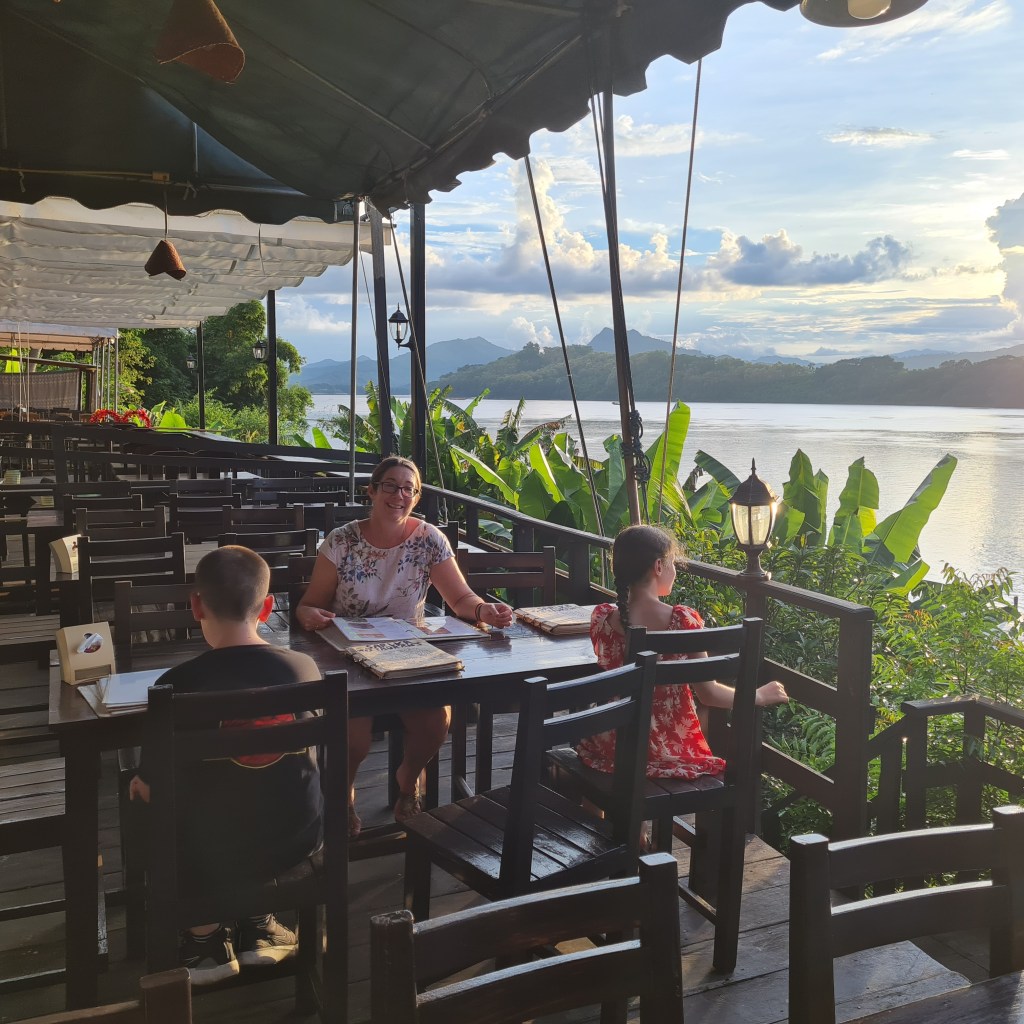
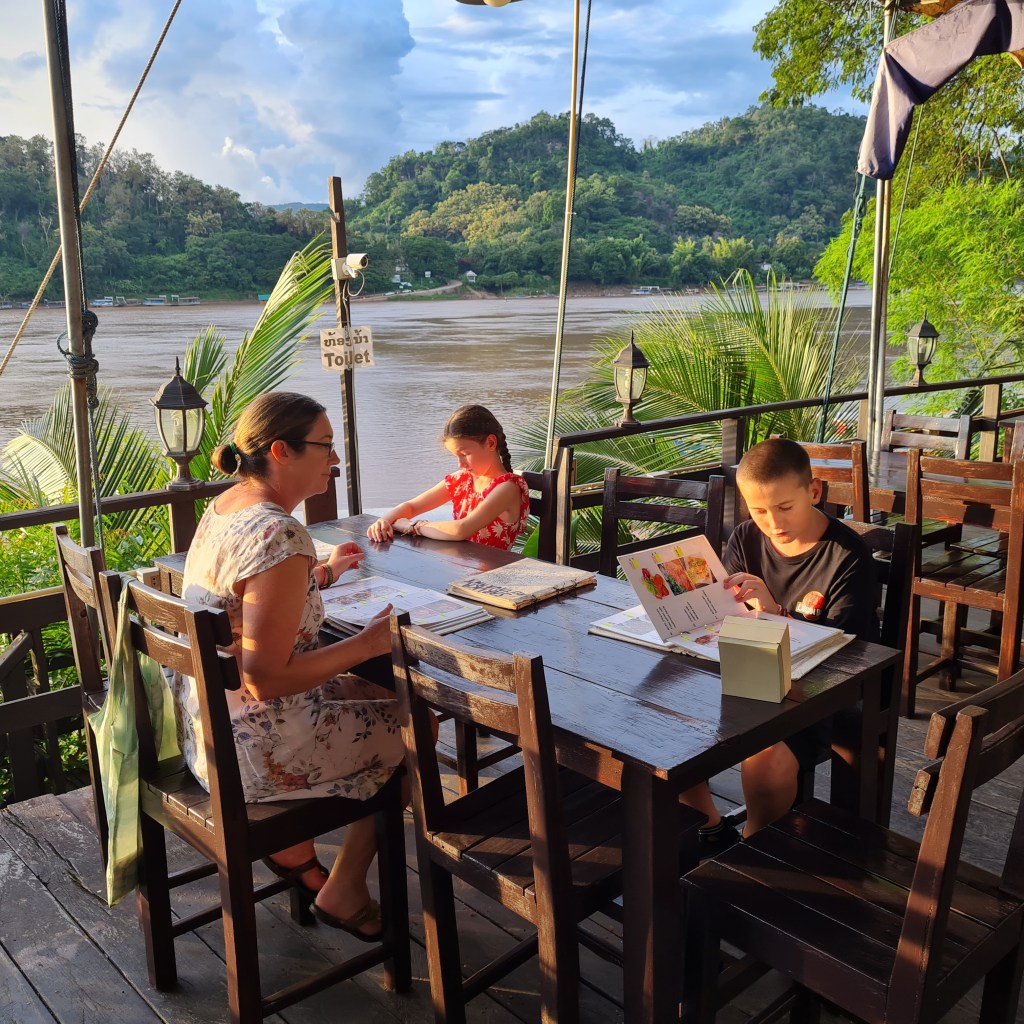
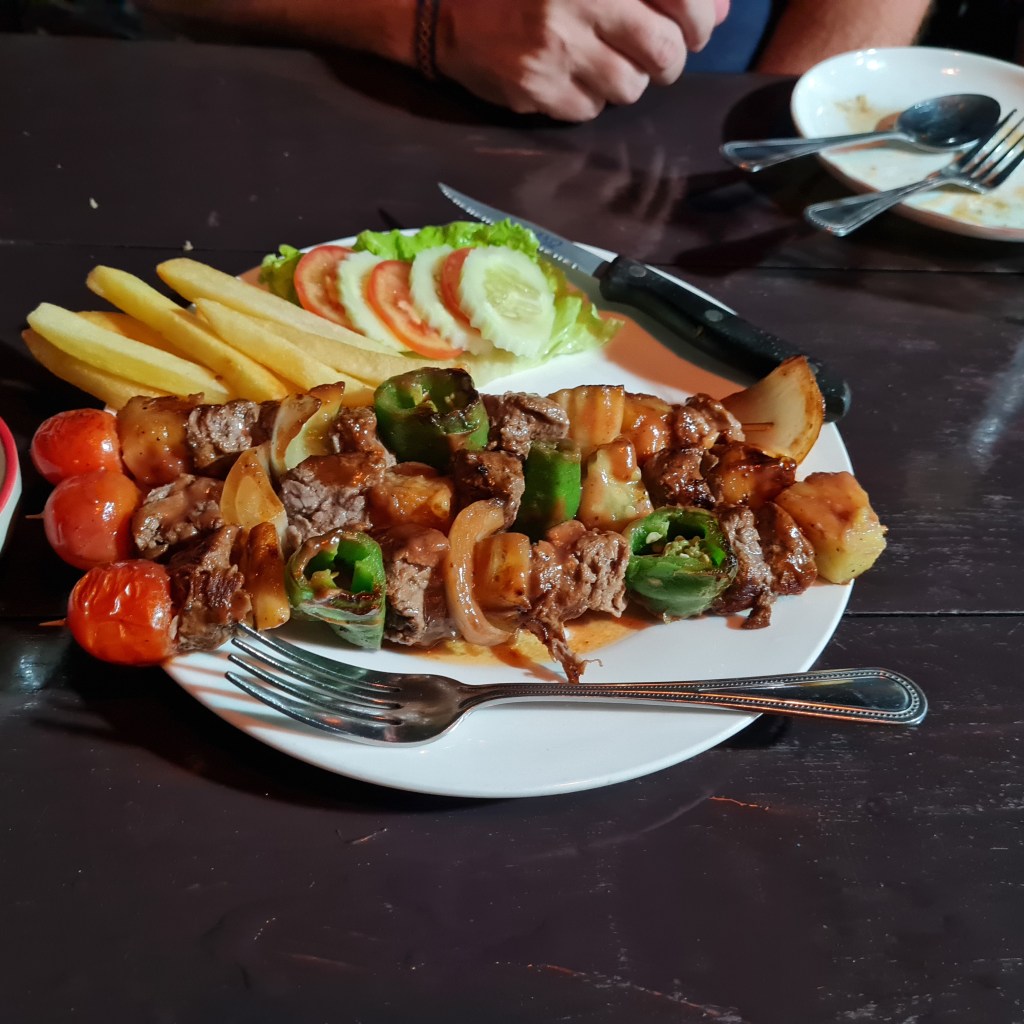
We enjoyed waving to the various sunset dinner cruises that drifted past as dusk turned into night. Some were romantically lit with a few couples on board, drifting silently past; one was a big, fancy boat, with white linen tablecloths and opera music playing; then there were the loud party boats, playing pumping music or hosting terrible karaoke. As a side note, terrible karaoke can be heard on almost any given night anywhere in Southeast Asia, whether its through apartment walls of an Airbnb in Malaysia, hotel windows in Thailand, across beaches in Indonesia and now, from the Mekong in Laos!

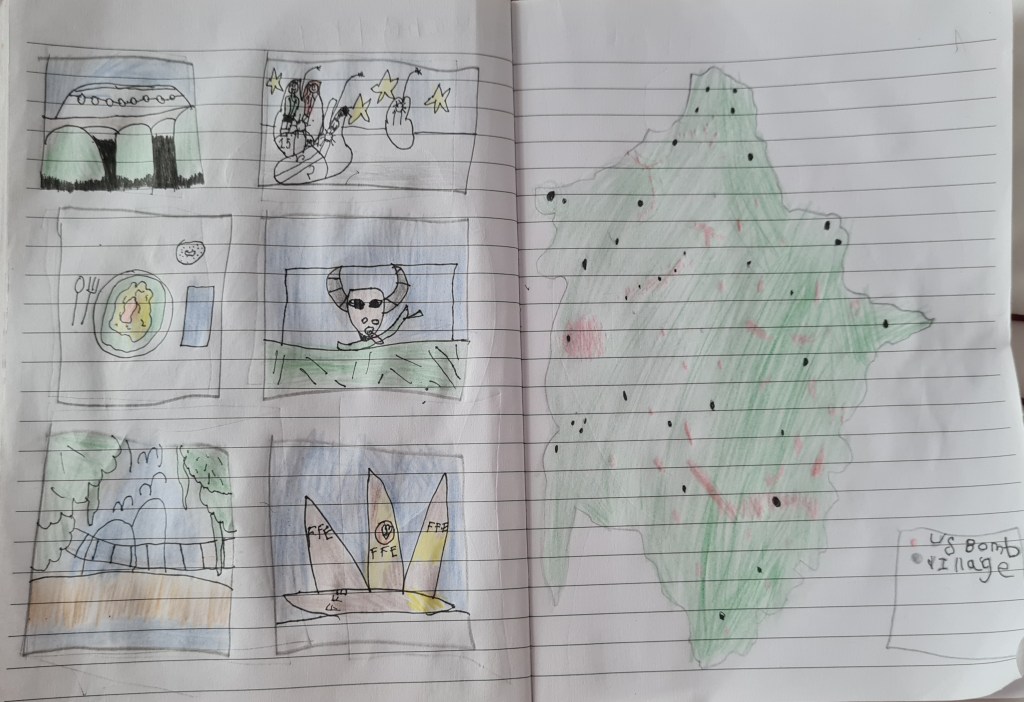
Anna’s Luang Prabang Highlights
A Reflection
Our week in Luang Prabang was truly wonderful and we all thoroughly enjoyed our many, varied experiences there, from the food to the activities to the education it gave us. We loved the friendly, kind Laotian people, the unexpected freshness of the food, and the deeply spiritual character of the city. It has culture and personality, and its incredible architecture, encompassed by two mighty rivers, makes walking down every street an aesthetically pleasing journey. We had to mentally prepare ourselves to leave that last evening, in much the same way that one does when leaving a loved one. I hope that one day, we can return.
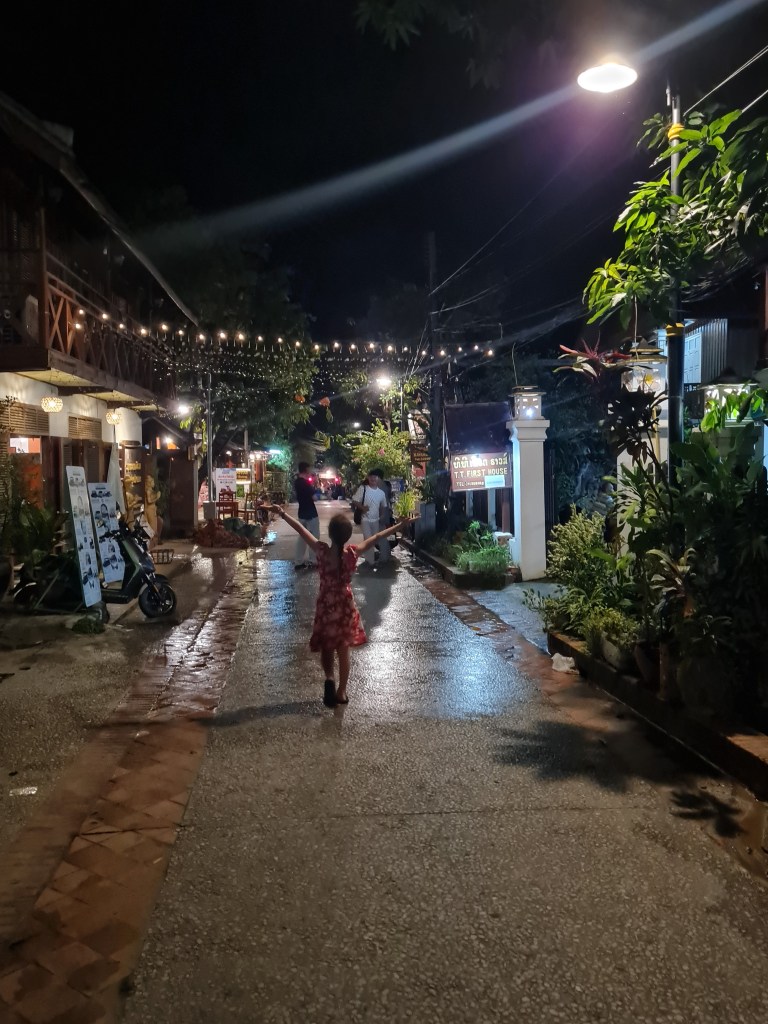
 Off On Our Next Adventure
Leave a comment